

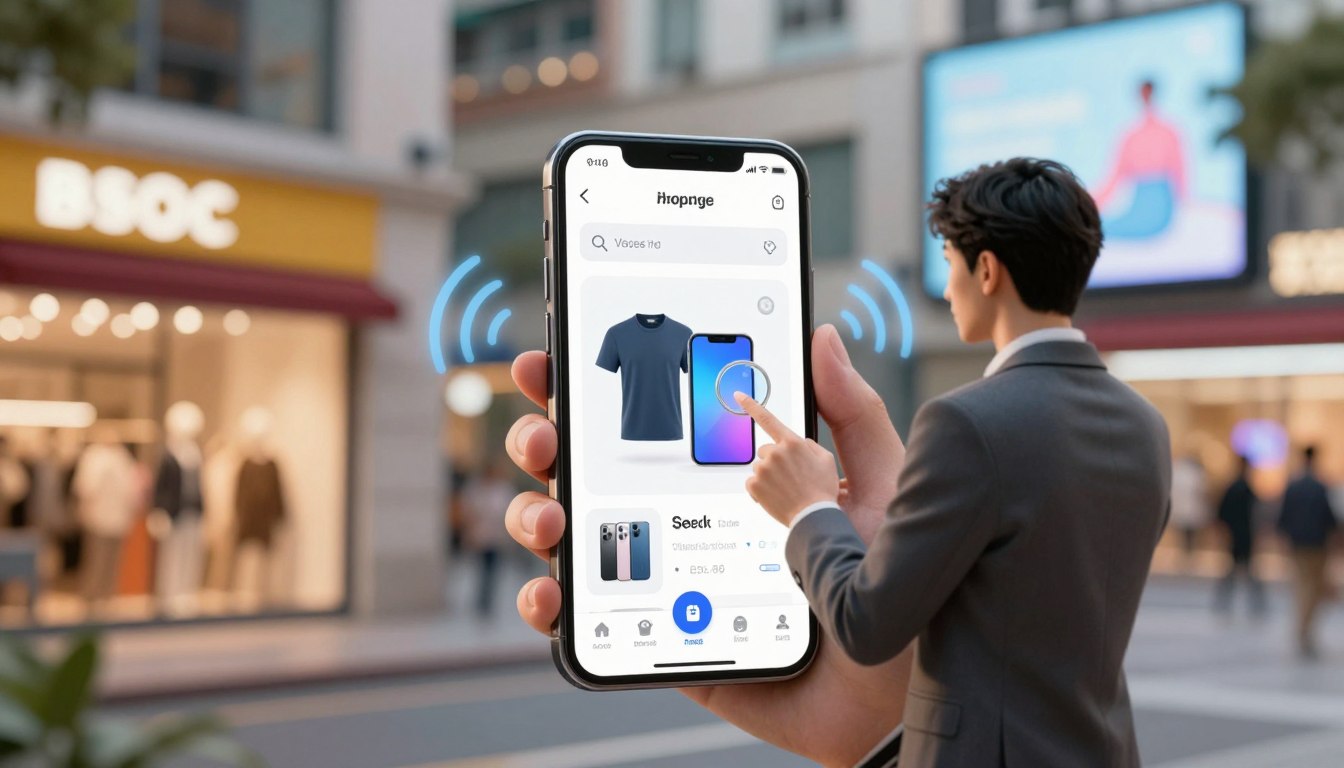
Companies that invest in visual and voice search in e-commerce reach an increasingly larger audience. In the Brazilian market, this type of interaction offers practicality and encourages quick product discoveries, as it reduces the time spent on research and improves the consumer journey.
Visual search allows people to find items from images, which eliminates the need to type long descriptions. This process makes navigation more dynamic and contributes to the satisfaction of those who expect to find options in an uncomplicated way.
Key Takeaways
- Visual search expands product discovery possibilities.
- The voice feature reduces barriers and saves time.
- Intuitive experiences strengthen user trust.
- Modern search tools make stores more competitive.
- Search innovations facilitate growth in Brazilian e-commerce.
Understanding the evolution of search technologies
Online searches took their first steps with simple interfaces. The user typed basic terms, expecting relevant results. Improvements emerged when giants like Google invested in algorithms capable of predicting intentions and suggesting personalized options. The popularization of smartphones has paved the way for solutions that recognize speech and adjust responses in real time.
Today, these tools include voice commands to find products more quickly.Voice devicesinterpret preferences of each consumer, reducing spelling errors and speeding up the purchasing process. Modern algorithms, combined with behavioral data, increase the accuracy of results, ensuring a more intuitive and dynamic experience.
Companies note that this evolution promotes accessibility and convenience. More and more people are using voice commands to speed up searches and resolve questions, transforming the way they interact with e-commerce. New tools emerge and improve this scenario, combining customization and efficiency in a single process.
How artificial intelligence powers shopping experiences
The optimization of each step in e-commerce has gained strength thanks to the use of artificial intelligence. It personalizes recommendations, anticipates desires and facilitates public decision-making. This advancement reinforces the feeling of agility and practicality, generating greater satisfaction.
Renowned companies, such as Amazon and Google, seek to integrate these resources throughout the purchasing journey, promoting more intuitive solutions. The technology understands behavior patterns and delivers tailored results, saving users time and resources.
Reduction of unnecessary clicks and steps
Intelligent algorithms can predict what the customer wants before they even complete the search. This efficiency avoids repetitive processes and enables fluid navigation on the website, reducing cart abandonment. Buying is no longer synonymous with long forms or extensive research.
Agility in responding to the consumer
Chatbots and service platforms equipped with artificial intelligence interpret requests in real time. Messages are analyzed and responded to instantly, creating a direct bridge between brand and customer. This strengthens bonds and boosts sales.
| Platform | Key Features |
|---|---|
| Google Cloud AI | Advanced data analysis and language models |
| Amazon Web Services AI | Chatbots, product recommendations and computer vision |
| Microsoft Azure AI | Natural language processing and CRM integrations |
The power of voice in the consumer journey
Voice interaction is gaining more and more prominence in e-commerce. Consumers prefer to speak directly to virtual assistants on smartphones or smart speakers. This format makes searching for products and resolving queries more agile. It reduces the need to type long terms.
When the voice guides each step, there is greater comfort when searching for items. The journey becomes intuitive and improves the user experience. Quick queries and checkout are achieved without large menus. This saves time and reduces barriers for those who want practicality.
This approach promotes engagement and allows brands to meet the needs of different customer profiles. The voice acts as an ally, expanding possibilities and optimizing each stage of the purchasing process.
Benefits of visual search for online retail
The adoption of visual search features brings greater convenience in everyday life. The user identifies an item through photos or screenshots and finds similar options in a few clicks. This facility paves the way for greater public satisfaction on online retail platforms.
How image recognition works
Intelligent mechanisms recognize attributes present in the image. Shapes, colors and details are analyzed to suggest products close to what the buyer is looking for. This analysis allows for an objective path, without extensive steps.
Accuracy and relevance of results
Modern algorithms compare multiple visual elements to ensure suggestions align with the searched item. This type of correspondence builds trust, as only offers appear that are highly likely to meet expectations.
Conversion and engagement
The increase in sales becomes noticeable when the tool saves time and delivers consistent results. Customers become more involved when they find what they want quickly, which strengthens loyalty and optimizes performance in online retail.
Integration of chatbots with voice capabilities
Chatbots gain prominence where voice interaction speeds up communication. Immediate responses occur without obstacles and favor user satisfaction. Large platforms, such as Amazon Alexa and Google Assistant, show how this feature can make customer service agile. This new development opens up opportunities for conversion and sales in various segments.
Optimizing user service
Implementing chatbots with voice commands reduces queues and eliminates complex menus. Fluid dialogue increases the confidence of those seeking immediate solutions. The support team stops worrying about repetitive questions and focuses on strategic tasks. This model raises the level of practicality for any online store.
Large-scale customization
Integrated systems analyze purchase history and preferences to suggest relevant products. Chatbots understand specific questions and direct offers that adapt to each person's profile. This boosts conversion and sales by providing targeted content, without the user having to navigate through extensive pages or lengthy tutorials.
Adoption of technology in the Brazilian market
The Brazilian market presents notable opportunities for innovations in voice and image search. Large retailers, including Magazine Luiza and Mercado Livre, signal interest in the use of AI in e-commerce, aligning digital strategies with modern demands. Investments in speech recognition and image analysis algorithms are gaining momentum, driven by the constant growth of online commerce.
Local companies value solutions that consider regional language and references. This care encourages more natural interactions and encourages consumers to experiment with automated search methods. Some factors impact adoption:
- Unstable connectivity in less urbanized areas
- Lack of digital training among part of the population
Brands that overcome these challenges find greater openness to personalized offers. Many users seek practicality in the purchasing journey and appreciate accurate recommendations. AI in e-commerce contributes to more assertive results, from product suggestions to improvements in the service experience.
Competitive differences when implementing Visual and Voice Search in e-commerce
Companies that want to stand out in the online scenario invest in resources that boost user interaction. In this sense, offering advanced searches has a direct impact on public satisfaction, as it expands the possibilities for product discovery. Solutions of this type favor consumer decision-making and increase the chances of sales.
With search optimization aligned to market demands, it becomes viable to offer more accurate results, contributing to greater relevance of each click. The adoption of technologies that increase customer convenience results in a difference that consolidates the brand in the minds of consumers.
Attracting new customers
Visual and voice search features attract the attention of those looking for practicality. In an increasingly competitive digital environment, making the research process agile and dynamic is essential. This aspect attracts potential buyers and encourages repeat visits.
Audience retention and loyalty
Satisfied customers tend to maintain a lasting relationship with the online store. When they find efficient tools, they return in search of more options, generating trust and increasing the chances of loyalty. This strategy strengthens the business reputation and encourages recommendations. The use ofsearch optimizationcomplements these actions, bringing consistent results.
| Feature | Benefit | Observation |
|---|---|---|
| Visual Search | Quick item identification | Improves convenience |
| Voice Search | More intuitive navigation | Expands the reach |
Main challenges and how to overcome them
Implementing voice and image recognition requires financial and specialized resources. Some managers are afraid due to the initial cost and complexity of maintenance. Multidisciplinary teams are crucial at each stage of development, ensuring robust solutions and quick adaptations according to market demands.
Technology partnerships help companies integrate tools and platforms effectively. Data collected from user behavior serves as a compass for adjustments, whileconstant testingindicate flaws or gaps. Dedication to team training favors continuous improvements and operational stability.
Consumer feedbackguides the prioritization of innovations. Evaluating the results of each implementation is vital to direct investments. Repeating this routine strengthens competitive agility in a sector in constant evolution, valuing tools and platforms that meet the public's demands.
| Challenge | Solution |
|---|---|
| High cost | Planning and partnerships |
| Maintenance complexity | Multidisciplinary teams |
| Difficult integration | Scalable technologies |
Future trends in image and voice search
The adoption of visual and voice solutions attracts those who want practicality. New tools promise more intuitive experiences, helping customers interact with platforms fluidly. These innovations go hand in hand withtechnology trendsthat transform e-commerce into an increasingly connected environment.
Advances in natural language processingenhance the understanding of each user’s intentions. More accurate algorithms see nuances of vocabulary and context, offering accurate results. Development teams invest in robust models, capable of dealing with regionalisms and typical everyday expressions.
Integration with augmented realityadds value to the purchasing journey. Products can be “tested” in a virtual environment, while the customer evaluates dimensions and styles without leaving home. This combination increases audience engagement and reflectstechnology trendsthat boost competitiveness in the sector.
| Factor | Possibility |
|---|---|
| Advanced processing | Intent-centric results |
| Immersive features | Virtual product simulation |
SEO strategies to optimize visual searches
E-commerce faces intense competition, requiring specific practices for products to stand out. Well-planned metadata and optimized images help algorithms understand content and position each item relevantly. This care increases visibility and the chance of attracting potential buyers.
Using effective tags and descriptions
Tags provide clear information about what each image represents. Very detailed descriptions facilitate the interpretation of search robots, which identify similarities between the text and the visual file. This generates more accurate classifications in the ranking, helping the user to find the right product.
Importance of high-quality images
Clear photos spark greater interest and create engagement. Adequate resolutions and correct dimensions avoid loading problems that harm the e-commerce shopping experience. This investment contributes to providing credibility and improving the overall performance of visual searches.
Best practices for voice commands in e-commerce
Brands like Mercado Livre and Magazine Luiza invest in resources that understand direct questions, without complex orders. Consumers look for short answers when looking at product details, prices or payment options. Natural language reinforces reliability, as it helps in interpreting accents and expressions.
Technical team adjusts catalogs and descriptions so that voice systems identify relevant terms. Objective sentences increase precision during interactions. Applications and voice assistants recognize linguistic variations, a crucial factor in expanding service and creating an inclusive experience.
- Development of simple itineraries for each category
- Adapting vocabulary to the target audience
- Prioritizing efficient responses
| Practice | Benefit |
|---|---|
| Optimize synonyms in the catalog | Find variations and avoid confusion |
| Test regional accents | Inclusion of different audiences |
| Maintain clear data structure | Facilitate indexing by voice engines |
Implementation tools and platforms
New technologies favor the adoption of resources that simplify the routine of online retailers. Invest intoolseimplementation platformshelps reduce support costs and improves the shopping experience. Smaller teams adopt simple solutions. Large operations explore robust customizations.
Market-ready solutions
Vendors like Amazon and Google make artificial intelligence APIs available tosearch by imageand voice. These options enable quick integrations and offer comprehensive support. Companies focused on agility use these services without requiring in-depth internal knowledge. Demand grows when e-commerce traffic increases.
Internal customization
In-house developers manage each step, shaping analysis flows and specific results. This approach addresses complex scenarios and creates unique solutions. Maintenance costs rise when specialized teams are required, but total control can generate greater competitive advantage.
Positive results emerge when each initiative reflects e-commerce goals. The union between voice search and images strengthens processes and increases customer satisfaction.
| Platform | Functionality | Emphasis |
|---|---|---|
| Amazon Rekognition | Advanced image recognition | Scalability and reliability |
| Google Cloud Vision | Object and text analysis | Simplified integration |
| Microsoft Cognitive Services | APIs for voice and images | Extensive support and documentation |
How to measure the performance and ROI of smart searches
Measuring results is crucial to verifying the impact of management tools.smart searchesin sales. Indicators such as conversion and bounce rates reveal whether consumers find what they are looking for quickly and efficiently. Site retention analysis adds insight into the engagement of these visitors.
Relying on platforms like Google Analytics or Adobe Analytics makes data collection and interpretation easier. Consistent reports guide decisions and show the effectiveness of investment. Strategic readjustments are possible when the numbers demonstrate points of improvement in the purchase flow.
Metric accuracy encourages continuous improvements, making the experience even more attractive to customers.
Mapping results and focusing on practical indicators consolidate the ROI ofsmart searchesand promote greater return on investment. These tactics turn each step into opportunities for growth.
Success stories of Brazilian companies
The adoption of visual and voice search has achieved notable results across multiple industries. Large retail chains have created dynamic solutions, combining image recognition and spoken command capabilities to speed up the shopping experience.
This integration brought more fluidity in identifying products and facilitating the payment process. Many stores reinforced public trust, as the search was guided by contextual understanding algorithms.
Example of increased sales
Magazine Luiza invested in a voice search tool that simplified the path to the shopping cart. Users can now locate items without extensive typing. This technology provided a jump in revenue and increased loyalty.
Case for improving user experience
Mercado Livre invested in image recognition to speed up the search for items by photo. Customers uploaded images of desired products and received accurate results within seconds. This removed barriers and made navigation more intuitive, which generated greater satisfaction.
Improving the user experience with voice and image technology
Interactive resources direct the consumer in an agile manner, increasing satisfaction and simplifying each purchasing step. This proposal creates more natural paths, as it reduces the need for multiple clicks and menus.
Usability and accessibility
Speech interfaces expand the inclusion of people with visual or motor limitations. This approach promotes direct commands and helps those who want to navigate without digital barriers. The same strategy appears on screens that offer object recognition, increasing the accuracy of the results.
“Voice-based devices make the routine of many consumers easier, as they make access to products and services more fluid,” comments Paula, IT consultant at Microsoft.
Practical implementation examples
Recognized companies, such as Magazine Luiza and Mercado Livre, develop tools that respond to verbal commands and identify product images in real time. This method creates opportunities to:
- Automated serviceno waiting lines
- Targeted search with less chance of error
Many brands invest in solutions that can be adjusted to different devices, making use intuitive and ensuring that each consumer feels safe when browsing and making purchases.
Conclusion
The adoption of visual search and voice search strengthens e-commerce in Brazil. The customer journey gains agility and convenience, generating greater satisfaction. Artificial intelligence allows for more accurate and personalized suggestions, which boosts sales and optimizes the entire purchasing process.
This trend requires continuous strategic planning. Retailers that adopt these solutions can stand out in the Brazilian market. The focus is on improvements in user experience and competitiveness, without losing sight of innovations that emerge every day.
Image recognition tools, such as Google Lens, or voice commands, such as Amazon Alexa, demonstrate the potential to attract different consumer profiles. The gradual adoption of these technologies shapes the future of online stores. The demand for convenience, speed and precision is growing, reinforcing the importance of investments in intelligent systems.

