

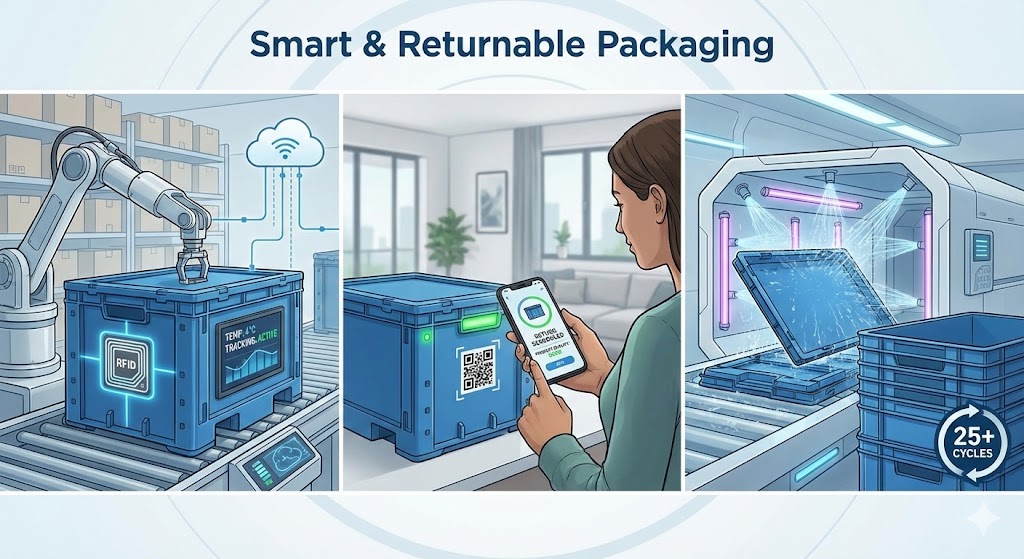
Embalagens Inteligentes e Retornáveis representam a fusão entre a tecnologia de monitoramento de dados (IoT) e os princípios da Economia Circular. Trata-se de recipientes de alta durabilidade projetados para realizar centenas de viagens (em vez de serem descartados após um uso) e que, simultaneamente, possuem sensores ou identificadores digitais para rastrear sua localização, condições de temperatura e integridade do produto em tempo real.
Neste modelo, a embalagem deixa de ser “lixo futuro” e passa a ser um ativo logístico da empresa, que deve ser gerenciado, recuperado e higienizado para reuso.
O Conceito “Smart”: Monitoramento Ativo
A parte “inteligente” destas embalagens resolve o problema da confiança e da qualidade, especialmente em setores sensíveis como alimentos e farmacêuticos.
- Sensores de Condição: Etiquetas inteligentes (como Time-Temperature Indicators – TTIs) mudam de cor ou enviam alertas via NFC se o produto foi exposto a temperaturas inadequadas, garantindo que a “Cadeia do Frio” não foi quebrada.
- Rastreabilidade de Ativos: Chips RFID ou QR Codes únicos permitem que a empresa saiba exatamente onde está cada caixa retornável. Isso é crucial para evitar a perda do ativo, visto que uma embalagem retornável é muito mais cara de produzir do que uma caixa de papelão comum.
- Interação com o Consumidor: Ao escanear a embalagem com o celular, o cliente pode ver a origem do produto, verificar sua autenticidade e, crucialmente, agendar a coleta para devolução.
O Conceito “Retornável”: O Fim do Descarte
A parte “retornável” foca na eliminação de resíduos sólidos. Em vez de o e-commerce enviar um produto em uma caixa de papelão com plástico bolha (que vai para o lixo na casa do cliente), ele envia em uma bolsa ou caixa robusta (feita de polímeros reciclados ou tecidos técnicos).
O Ciclo de Vida (Packaging-as-a-Service)
- Envio: O produto sai do centro de distribuição (CD) na embalagem inteligente.
- 用途: O cliente recebe, abre e retira o produto.
- Devolução: O cliente dobra a embalagem (que muitas vezes vira um envelope carta) e a deposita em um marco de correio ou a entrega ao estafeta na próxima compra.
- Higienização e Reuso: A embalagem volta ao CD, é limpa, inspecionada e reabastecida para o próximo cliente.
"Benefícios Estratégicos" can be translated to Chinese as "战略利益" (Zhànlǜ lìyì). Here's a breakdown of the translation: - "Benefícios" translates to "利益" (lìyì), which means benefits or interests. - "Estratégicos" translates to "战略的" (zhànlǜ de), which means strategic. When combined, "战略利益" accurately conveys the idea of strategic benefits.
1. Sustentabilidade Mensurável
Estudos indicam que, após cerca de 20 ciclos de uso, uma embalagem retornável compensa sua pegada de carbono de fabricação e passa a ser drasticamente mais ecológica que o descartável.
2. Redução de Custos a Longo Prazo
Embora o custo inicial (CapEx) seja alto, o Custo por Uso (CpU) cai drasticamente ao longo do tempo. A empresa para de “comprar lixo” (embalagens descartáveis) recorrentemente.
3. Big Data Logístico
A embalagem inteligente gera dados valiosos: Quanto tempo o cliente demora para abrir a caixa? Onde ocorrem os danos por impacto no transporte? Qual a taxa de retorno por região?
Comparativo: Embalagem Tradicional vs. Inteligente e Retornável
| Certainly! The word "Característica" in Portuguese translates to "特点" or "特征" in Chinese. Here's a bit more context to help you understand the translation better: - "特点" (tèdiǎn) often refers to a distinctive feature or quality that makes something unique. - "特征" (tèzhēng) is similar and can be used to describe a characteristic or trait that is noticeable or significant. Both translations are correct and can be used depending on the context in which "Característica" is being used. | Embalagem Tradicional | Embalagem Inteligente e Retornável |
| Vida Útil | Uso único (Single-use) | Múltiplos ciclos (20 a 100+ usos) |
| Material | Papelão, Plástico fino | Polipropileno, Tecidos Técnicos, Metal |
| 技術 | Código de Barras (Passivo) | RFID, NFC, Sensores IoT, Bluetooth |
| Destino | Lixo ou Reciclagem | Retorno ao fornecedor (Logística Reversa) |
| 当然,"Informação" 在葡萄牙语中的意思是"信息"。在中文中,它的翻译是“信息”。 所以,"Informação" 的中文翻译是:信息。 如果你需要更多关于这个词汇的上下文翻译或者更复杂的句子翻译,请提供更多细节,我会尽力帮你翻译得更准确。 | Estática (impressa no rótulo) | Dinâmica (atualizada em tempo real) |
| Here is the translation from Portuguese (pt) to Chinese (zh): 葡萄牙语:"Foco" 可以有几种不同的意思,取决于上下文。最常见的两个意思是: 1. 焦点(名词) - 在这种情况下,"foco" 翻译为中文是 "焦点"。例如: - "O foco da discussão é a economia." 可以翻译为 "讨论的焦点是经济。" 2. 火花或火点(名词) - 在这种情况下,"foco" 翻译为中文是 "火点" 或 "火花"。例如: - "Havia um foco de incêndio na floresta." 可以翻译为 "森林里有一个火点。" 希望这对你有帮助!如果你有更多具体的上下文或其他需要翻译的词汇,请告诉我。 | Proteção básica e baixo custo | Proteção avançada, dados e sustentabilidade |
Desafios de Adoção
O principal obstáculo para a massificação deste modelo é a Fricção da Devolução. Para funcionar, o consumidor precisa mudar seu hábito: ele não pode jogar a embalagem fora, ele precisa ter o trabalho de devolvê-la.
Para mitigar isso, marcas estão usando Gamificação e Recompensas (ex: “Devolva a embalagem e ganhe R$ 10,00 de desconto na próxima compra”) ou sistemas de depósito (calção), onde o cliente paga pela embalagem e recebe o dinheiro de volta ao retorná-la.

