

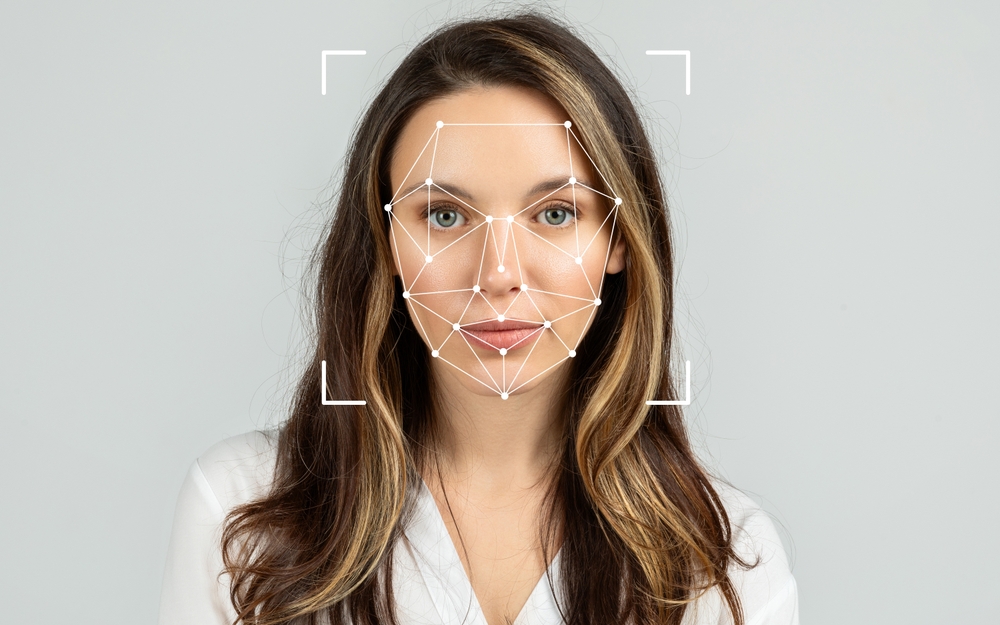
The Brazilian payments landscape has undergone significant transformation in recent years, largely thanks to Pix. Launched in... 2020 By the Central Bank of Brazil, this fee-free transfer system is used daily by Millions of people to send and receive money instantly. Now, a new evolution, launched and approved by the central bank in February, is on the scene, as part of the Open Finance agenda: Biometric photoThis next-generation payment experience further streamlines the checkout process, using facial recognition or fingerprint authentication to confirm transactions.
While simple in its user experience, biometric Pix was developed based on a secure process that guarantees ease and security.
Here's a guide on how biometric Pix works from the user's perspective:
''' Select biometric Pix: At the time of purchase, the user selects biometric Pix as the payment method.
''' Start registration/payment: The system sends the necessary payment information. If it's the first time the person is using Pix with that bank, the system also initiates a unique registration process.
''' Redirect to the banking institution (for registration): The user is securely redirected to your bank's app interface.
– Unique biometric registration: The bank institution requests biometric validation (facial recognition or fingerprint scanning) for confirmation. Once validated, the institution securely stores these data for all future payments with this specific bank.
Return to the app and complete the payment. Following this single registration (if applicable), or immediately for subsequent payments, the user is redirected back to the merchant's app. Payment is then authenticated through their biometrics, and the transaction is completed instantly.
Offering unparalleled security, instant convenience, and easy scalability, biometric Pix is perfectly positioned to redefine how payments are made across Brazil.
Here are four key reasons for this:
It's as easy as unlocking your phone.
With biometric Pix, making a payment feels as natural as unlocking your device. Instead of juggling multiple apps or copying complicated codes, the entire transaction is completed with a simple facial scan or fingerprint reading. The experience is similar to Apple Pay or Google Wallet, but with a crucial difference: there's no redirection. Users simply scan and pay, all within the same interface.
As César Garcia, CEO of OneKey Payments, explains: “Biometric payments have the potential to surpass Pix as the primary payment method in Brazil across all sectors, from betting to e-commerce. We're talking about a single click to scan your face or fingerprint, without having to open your bank app or copy codes. This reduces the payment process from 2 minutes to under 10 seconds, boosts conversion rates, and removes friction for users who want to enjoy the experience, not fill out forms."
2) Stronger security where it matters most
Security concerns are understandable, especially in a country where fraud is a constant threat. In 2024, over half of Brazilians reported being victims of financial scams. Almost half of these cases involved credit card fraud, while fraudulent QR Pix codes accounted for a third.
This is one of the key reasons why biometric Pix offers a smarter alternative. Instead of relying on static information like card numbers or Pix keys, it uses biometric authentication. This data is unique to each individual and incredibly difficult to replicate. Importantly, biometric information is never shared as raw data or images. Instead, it is encrypted and processed securely using advanced protocols that protect user privacy and prevent fraudsters from gaining access.
In practice, this means biometric Pix not only matches the security of older methods, but also enhances them. No copying, no counterfeiting, no intercepted codes. Just a facial scan or fingerprint, verified instantly and protected end-to-end.
3) Fewer steps, better results
Friction in payments is the silent killer of conversions, and the data proves it. OneKey Payments' recently released "Disruptive Payments" research shows that 63% of Latin American consumers abandoned purchases simply because they were asked to enter too much personal data. Meanwhile, over two-thirds (68%) abandoned purchases when redirected to a second screen to validate the payment. In Brazil, where average cart abandonment rates exceed... 80%These small interruptions have a big impact on business.
Biometric Pix removes these obstacles by linking biometric data directly to the user's bank account, allowing payments to be confirmed instantly within a single interface. This means no forms and no redirects. As a result, conversion rates using biometric Pix can reach 90%compared to only 38% with traditional QR code flows. Clearly, these conversion rates vary significantly depending on the business model and customer behaviour, but processes requiring rapid transactions, such as gambling and e-commerce, offer the most promising potential for growth in biometric technologies.
4) Designed for rapid adoption across all sectors
Biometric Pix is still gaining traction. However, its core technology is designed to scale across e-commerce environments and any sector handling payments. As it integrates directly with the existing Pix infrastructure (used by millions) and leverages biometric authentication users already familiar with through their smartphones, it requires no new habits or additional equipment.
From retail and transportation to delivery, entertainment, and other sectors, any platform accepting Pix can adopt Pix Biometric without difficulty. This represents a massive potential and a significant threat to traditional card models, even prompting major players like Visa and Mastercard to consider reinvention. Visa, for example, has already... announced Your entry into the open finance market with your own payment institution focused on Pix payment initiation.
Although still in its early adoption phase, the entry of such significant players into the open finance market and the Redirect-Free Journey (Biometric Pix) is likely to significantly boost this solution, making its dissemination a question of "when" – and no longer "if".


 Portuguese (Brazil)
  English
  Spanish
  German
  Chinese (Hong Kong)
  Russian
  Hindi
Hindi  French
  Italian
  Japanese
  Arabic
  Chinese (Taiwan)
  Bengali
  Bulgarian
  Czech
Czech  Danish
  Greek
Greek  Finnish
  Croatian
  Hungarian
  Indonesian
  Korean
  Lithuanian
  Dutch
Dutch  Norwegian
  Polish
  Portuguese (Angola)
  Portuguese (Portugal)
  Romanian
  Slovak
  Slovenian
  Swedish
  Thai
Thai  Turkish
  Ukrainian
  Vietnamese
  Chinese (China)