

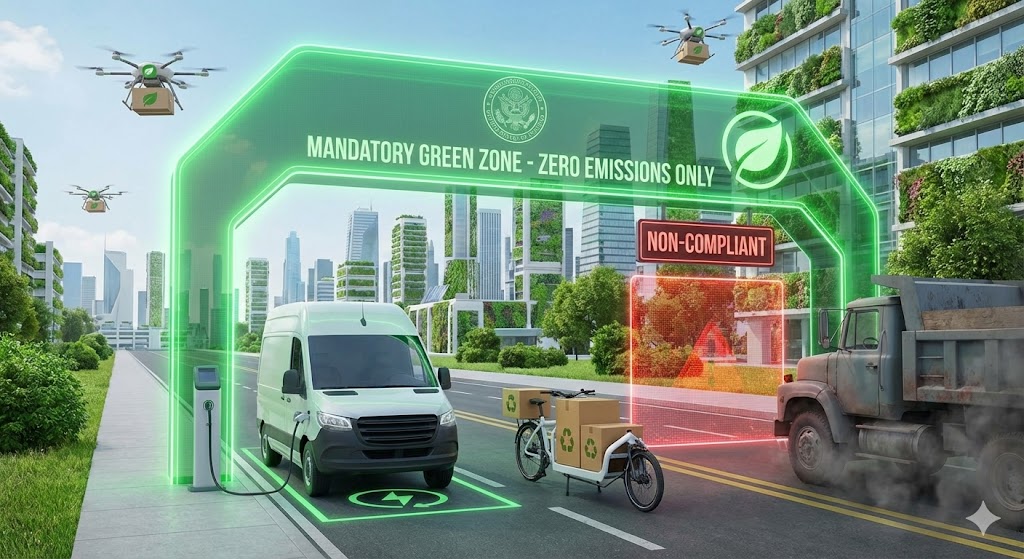
Mandatory Green Logistics refers to the new operational standard of the supply chain where sustainable delivery practices (low carbon emissions, biodegradable packaging, efficient reverse logistics) cease to be a "premium" option or a marketing differentiator and become a mandatory requirement , imposed by strict government legislation or the uncompromising social pressure from consumers.
In this scenario, companies that do not adapt their fleets and processes to environmentally friendly standards not only lose competitiveness, but also lose their Social License to Operate or are physically prevented from making deliveries in regulated urban centers.
The End of "Pay Extra to Be Green"
For years, e-commerce operated on the logic of Carbon Offset : "Click here and pay an extra R$2.00 to offset the carbon emissions of this delivery."
In Mandatory Green Logistics , this option disappears because carbon neutrality becomes the default . The cost of sustainability is internalized in the operation. The consumer of 2026 no longer accepts environmental responsibility as a paid choice; they demand that the brand be clean by definition.
The Two Driving Forces of Mandatory Compliance
The transition is driven by two simultaneous forces:
1. Regulatory Pressure (The “Stick”)
Governments around the world (and increasingly in Brazil) are implementing Low Emission Zones (LEZs) .
- How it works: Diesel trucks or polluting vehicles are prohibited from circulating in the central areas of large cities or pay prohibitive fees to enter.
- As a result, to deliver the "last mile" in these areas, carriers are forced to switch to electric fleets, cargo bikes, or deliveries on foot.
2. Social Pressure and ESG (The “License”)
Large investors and consumers (especially Gen Z and Alpha) audit companies' carbon footprint. Brands that use excessive plastic or generate a lot of waste in their packaging face boycotts and lose market value. Sustainability becomes a deciding factor in shopping carts.
Pillars of the Operation
To meet this new standard, logistics relies on:
- Fleet Electrification: Massive replacement of combustion engine vans with electric vehicles (EVs) for last-mile delivery.
- Frustration-Free and Circular Packaging: Boxes that adjust to the exact size of the product (avoiding the transport of "air") and made from 100% recyclable or compostable materials.
- PUDO (Pick Up Drop Off) Network: Encouraging the use of lockers and pick-up points. Delivering 50 packages to a single smart locker is drastically less polluting than the vehicle stopping at 50 different houses.
Comparison: Optional vs. Mandatory Green Logistics
| Feature | Optional Phase (Past) | Mandatory Phase (Present/Future) |
| Status | Marketing Differentiation | Operational Requirement (Compliance) |
| Cost | Passed on to the customer (Extra fee) | Absorbed at the margin / Diluted in efficiency |
| Vehicles | Mixed fleet (predominant diesel) | Electric Fleet or Soft Mode (Bike) |
| Packaging | Bubble wrap and large boxes | Paper, mycelium, and optimized size |
| Engine | Brand awareness | Legislation and Consumer Demands |
| Risk | Being seen as "not very innovative" | Fines, city blockades, and cancellations |
Strategic Impact
For e-commerce , mandatory green logistics requires a complete overhaul of the logistics network. The focus shifts from "speed at any cost" to "energy efficiency".
Interestingly, this often leads to cost reductions in the long term: electric vehicles have cheaper maintenance, and smaller packaging takes up less space in transport, allowing more products to be carried per trip.

