


The world of e-commerce does not stop changing, and 2026 promises to bring news that will mess with the way we buy and sell online. If you have a digital business or think about having one, it is good to keep an eye on the trends for e-commerce 2026. We know that keeping track of everything can be a challenge, but preparing now is what will ensure that your store remains relevant and selling well. Let's take a look at what to expect and how to adapt to this scenario that is always evolving.
Key learnings
- Customer experience is at the heart of everything in 2026. This means customizing every step of the purchase, from navigation to customer service, making everything easier and more enjoyable.
- Artificial intelligence is no longer luxury, it is necessity. It will help to understand the customer, show the right products, optimize ads and even answer questions, all more intelligently.
- Technology and infrastructure need to be strong.Flexible platforms, fast websites on mobile and systems that can handle the crash are essential to not lose sales.
- Agile logistics and secure payments are crucial.Fast deliveries, varied withdrawal options and reliable and modern payment methods will make a difference.
- Buying direct through social networks and the power of content creators will greatly influence buying decisions.
Customer Experience as a Central Pillar
In 2026, customer focus is no longer an option, it is the basis of everything. Virtual stores need to think through every detail of the purchase journey, from the first click to the after-sales. This means understanding what the consumer really wants and offer it in an easy and pleasant way.
Personalization of the Purchase Journey
Forget about generic emails and offers that have nothing to do with the customer. The idea now is to treat each person in a unique way. This involves using the data you have to show products that match the purchase history, or even what the person is looking at at that moment. Think of a site that changes a little for each visitor, showing categories and items that really interest. This attention to detail makes the customer feel seen and understood, which is great for the relationship and, of course, for sales. The customization of the experience becomes a competitive differential.
Intuitive Navigation and Simplified Checkout
No one likes to get lost in a website or having to fill out a lot of form to buy something. In 2026, simplicity is the key. Navigation needs to be clear, with menus easy to find and a search that works well. The process of finalizing the purchase, the famous checkout, has to be quick and direct. Fewer steps, less information requested and varied payment options help a lot. If the customer has to think a lot to buy, he can give up. The goal is that the purchase is as easy as talking to a friend.
Efficient and Humanized Customer Service
When the customer needs help, he wants a quick response and that solves the problem. In 2026, the service will mix the best of the machines with the human touch. Chatbots can solve common questions 24 hours a day, but when the subject is more complicated, it is important to have someone real to talk to. This person needs to have access to the customer history so as not to have to repeat everything. A service that understands the problem and offers a solution in a friendly way creates a strong connection and makes the customer come back.
Artificial Intelligence Driving Innovation
Artificial intelligence (AI) has gone from being a futuristic promise to becoming an essential tool in e-commerce. In 2026, its application goes far beyond simple chatbots.We are talking about systems that learn, predict and act, transforming the way virtual stores operate and relate to customers.
Customization of Showcases and Offers
AI allows you to create unique shopping experiences for each visitor.By analyzing browsing history, previous purchases and even real-time behavior, algorithms can dynamically adjust what is displayed on the screen.This means that the virtual showcase adapts, showing products and promotions that are more likely to interest each person. This deep personalization increases engagement and the chance of conversion.
Campaigns and Paid Media Optimization
Managing digital marketing campaigns can be complex, but AI simplifies this process. It analyzes large volumes of data to identify the most effective channels, the most responsive audience, and the best times to serve ads. This results in smarter use of media budget, with more assertive campaigns and an improved return on investment (ROI). AI also helps create ad variations and test different approaches to find what works best.
Automation of Service and Support
Virtual assistants, driven by AI, are increasingly sophisticated. They can handle a wider range of customer questions and problems, from order tracking to solving more complex issues. This frees the human team to focus on cases that require a more personal or strategic touch. Automation is not intended to replace human service, but rather make it more efficient and agile, responding quickly to consumer needs.
Predictive Analysis of Consumer Behavior
One of the most powerful applications of AI is its ability to predict future consumer behavior. By identifying patterns in historical and real-time data, systems can anticipate needs, predict buying trends, and even identify customers at risk of churn (abandonment). This allows companies to take proactive actions, such as offering a special discount to a customer who seems about to leave or suggesting a complementary product before the customer even thinks about it.
Artificial intelligence is redefining e-commerce by enabling a deeper understanding of the customer, from adapting the shopping experience in real time to anticipating future needs, making operations more efficient and interactions more meaningful.
Technology and Architecture for Performance
In 2026, the technology base of your e-commerce needs to be solid to keep up with the fast pace of the market. It is not just about having a beautiful website, but building a structure that supports growth, agility and an impeccable user experience. Your online store architecture is the foundation for sustainable success.
Adoption of Headless and Composable Commerce
The model headless separates the presentation of content (what the customer sees) from business logic (what happens behind the scenes). This means that you can create unique and personalized visual experiences on different channels (what the customer sees) without messing with the main structure. Think of it as having the freedom to change the facade of your store at any time, without having to reform the funds.
Already the composable commerce it goes one step further. It allows you to build your e-commerce platform from independent and interchangeable components. Need a new payment system? Change the module without affecting the rest. This flexibility is key to quickly adapt to market changes and integrate new technologies without major headaches.
PWAs Optimization and Mobile Performance
Progressive Web Apps (PWAs) are websites that work like apps. They load fast, work offline and offer a very fluid user experience, even on weaker internet connections.For the consumer, this translates into less frustration and more convenience.For your business, it means greater retention and conversion, especially on mobile, where most purchases happen.
The loading speed of a page is a decisive factor. If a website takes more than 3 seconds to open, more than 50% of visitors give up. This directly impacts your sales.
Robust Infrastructure for Scalability
Your online store needs to be prepared to grow. A robust infrastructure ensures that even in traffic peaks such as promotions or commemorative dates ¡SO, the site remains stable and fast. This involves from choosing a good hosting provider to optimizing databases and using content distribution networks (CDNs). Investing in scalability today avoids performance problems and loss of sales in the future.
Logistics and Operations: Agility and Convenience
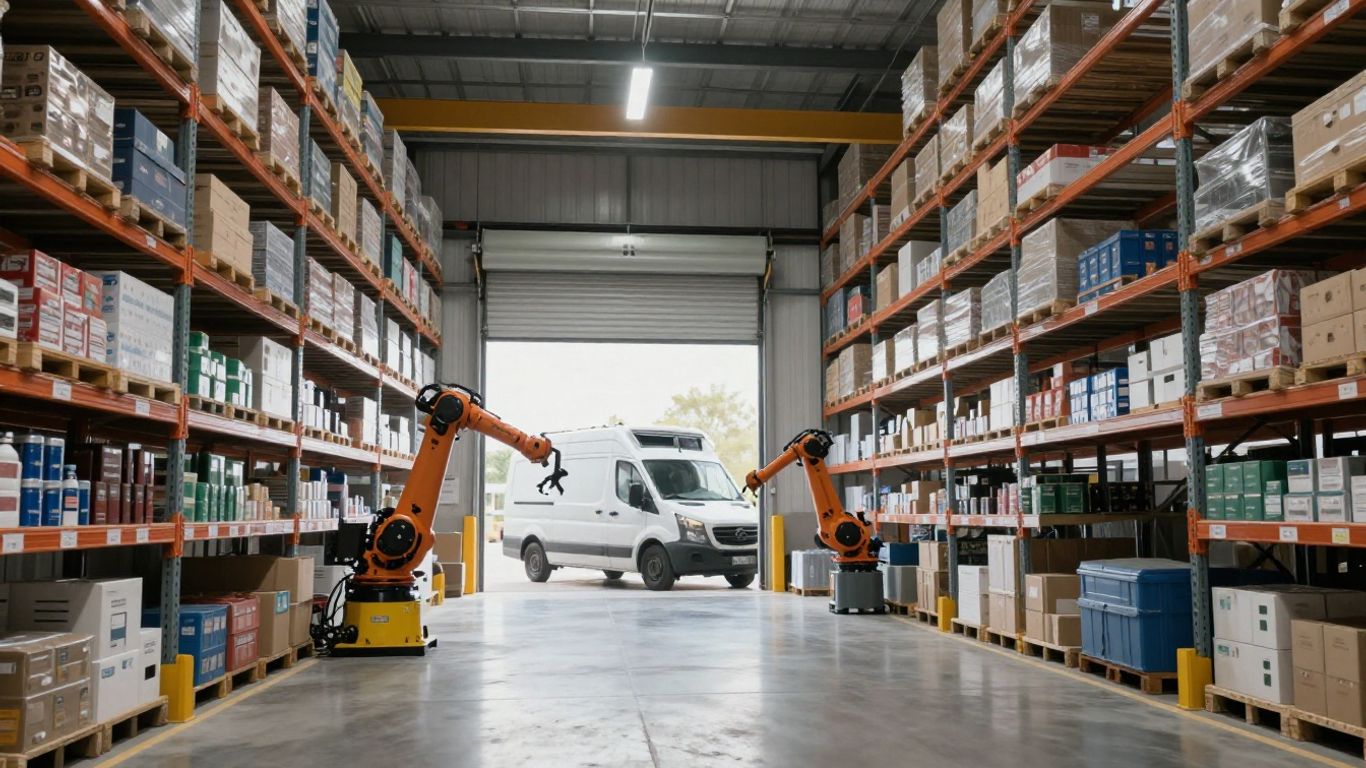
In 2026, the way products reach the consumer will continue to be a huge competitive differentiator. It is not enough to have a good product and a beautiful website; delivery needs to be fast and hassle-free.
Fast Deliveries and Flexible Withdrawal Options
Customer expectations for ever faster deliveries only increase. Models such as same-day (same day delivery) and nextday (delivery the next day) are no longer a luxury to become a necessity in many categories. For this to work, you need to have well-distributed stocks, optimized delivery routes and distribution centers that operate very quickly. This helps to reduce the number of people who give up the purchase at the last moment, you know? We see this preference for shorter deadlines everywhere.
In addition to speed, flexibility in receiving options is key. Withdrawal in physical stores, for example, works as a collection point. The customer buys online and chooses the nearest store to search. This eliminates the cost of shipping to him and can still bring more people into the physical store. Another option are the lockers, those smart cabinets in strategic locations. The customer receives a code and withdraws the order when it is more convenient, avoiding problems with those who are not at home at the time of delivery. Turn each physical store into a mini distribution center, the so-called ship-from-store, It is also a smart tactic.The order leaves the nearest store, which speeds up shipping and optimizes inventory, especially in areas with a lot of demand.
Sustainable Reverse Logistics
Returning a product can be boring, but when the process is well done and preferably sustainable, the experience improves a lot. Reverse logistics, which takes care of the return of products, needs to be organized and efficient. This includes everything from scheduled collection, not to bother the customer, to the reuse of packaging and the use of routes that reduce environmental impact. A simple and transparent return process can turn a negative experience into an opportunity to build customer loyalty.
The way companies handle returns says a lot about them. A complicated process can make a customer never come back, while an easy process with sustainable options can even generate a new sale in the future.
Innovations in Payment Methods and Security
Payment methods continue to evolve. In 2026, we will see even more integration of payments directly into messaging applications such as WhatsApp or Telegram conversational checkout it allows the customer to choose the product, pay and receive the tracking all within the chat, without having to leave for another site. This greatly reduces the chance of cart abandonment.In addition, solutions such as Pix and other forms of instant and secure payment are consolidated, offering practicality and agility both for the buyer and the seller. The security in all these transactions is, of course, a point that can not be overlooked, with increasingly robust technologies to protect the data of all.
The Power of Social Media and Content

Rise of Social Commerce and Live Commerce
Social networks are no longer just a space for interaction and have become true sales showcases social commerce it integrates product discovery, community-generated trust and buying into a single environment.Data shows that a significant portion of consumers have already made purchases after seeing ads on platforms such as Instagram, which reinforces the idea that the path to purchase is increasingly shortened. This trend transforms the shopping experience, making it more fluid and integrated into the user's daily life.
The live commerce it emerges as an evolution of this integration, offering interactive experiences with real-time product demonstrations. This modality allows brands to answer questions instantly, create exclusive offers and generate a sense of urgency and belonging. The dynamics of watching a live broadcast, interacting with the presenter and taking advantage of lightning promotions has proven very effective to increase engagement and reduce barriers to the purchase decision.It is a way to bring the physical store experience to the digital environment, with a touch of entertainment and exclusivity.
The Role of Creator Economy in Purchasing Decisions
The content creator economy, or Creator Economy, gained considerable space in marketing strategies. Creators of authentic content and with strong connection to their audience have a remarkable power of influence in purchasing decisions. Especially among younger audiences, recommendations and demonstrations made by creators they admire or identify with can be the decisive factor for an acquisition. This relationship of trust, built on authenticity and transparency, is a valuable asset for brands seeking to connect more deeply with their consumers. Brands that know how to collaborate with the right creators, aligned to their values, tend to see a significant increase in conversion and loyalty.
Engagement Through Nichada Communities
In a scenario where attention is disputed, building and nurturing niche communities has become a powerful strategy. Instead of trying to reach a massive audience, the focus turns to smaller, but more engaged and loyal groups. These communities, often formed around specific interests, shared values or common passions, offer an environment conducive to dialogue and building lasting relationships. Brands that can position themselves as an integral part of these communities, offering relevant content and actively participating in conversations, create an emotional bond that goes beyond the business transaction. This approach not only increases loyalty, but also transforms community members into true brand advocates. digital marketing in 2026 it points to this personalization and relationship as competitive differentials.
Sustainability and Consumer Awareness
Nowadays, it is not enough to just sell a legal product.People want to know if your brand cares about the planet and society.This concern for the environment and ethical practices is increasingly strong, especially among the younger. Companies that show a real commitment to sustainability tend to attract and retain more customers.
Ecological E-commerce Practices
Adopting greener practices in your online business is not only good for the planet, it is also a smart strategy. Think about how to reduce the environmental impact of your operations. This can involve from choosing recycled or biodegradable packaging to optimizing delivery routes to reduce gas emissions. The circular economy, which focuses on reuse and recycling, gains strength. Your store can encourage this, for example, by offering discounts to those who return packaging or promoting the sale of semi-new products. It is a way to reduce waste and still attract an audience that seeks more conscious alternatives.
Transparency in the Supply Chain
Consumers want to know where the products they buy come from and how they are made. Being transparent about the entire supply chain, from the origin of the raw material to the final delivery, builds trust. This includes informing about the working conditions of suppliers and the environmental impact of each step. If you have a clear policy on this, communicate! This can be a big differentiator. Remember that concern for data security is also high; being in compliance with laws such as the LGPD is an important step to show that you take care of your customers' information responsibly.
Impact of Sustainable Choices on Sales
Buying decisions are increasingly linked to consumer values. Brands that demonstrate socio-environmental responsibility reap the rewards. This is reflected in greater customer loyalty and, of course, better sales results. A study by Kantar showed that a significant portion of consumers are willing to pay more for products from sustainable brands. Therefore, investing in green practices and communicating these actions in an authentic way can be a powerful engine for the growth of your e-commerce. It is about building a deeper relationship, based on shared principles.
Ready for 2026?
Looking ahead, it is clear that e-commerce in 2026 will be an even more dynamic environment. Consumers expect more speed, customization and convenience at each stage of purchase. Technology, especially artificial intelligence, will be an important ally to meet these demands, optimizing from the experience on the site to logistics. Adapting to these changes is not only an option, but a necessity for those who want to continue growing and excelling in the digital market. Start planning now to ensure that your business is ready for what is coming.
Frequently Asked Questions
Why is customer experience so important in 2026?
In 2026, customers want to feel special. They expect online stores to understand what they like and offer just that, in an easy and fast way. A good experience makes them come back always!
How will artificial intelligence change online stores?
Artificial intelligence will help stores show you products you really want to see, create cooler ads and even answer your questions faster.
What is &Headless Commerce‘ and why is it important?
Think of ‘Headless Commerce’ as separating the part that the customer sees (the look of the store) from the part that makes everything work. This makes the store faster, more flexible and allows you to create new and creative ways to show the products.
Are fast deliveries really that important?
Yes! People do not like to wait. In 2026, having fast delivery options and being able to choose where to pick up the product makes a lot of difference. If the delivery takes a long time, the customer can give up the purchase.
What is & Social Commerce‘ and how does it work?
This is when you can buy things directly through social networks, such as Instagram or TikTok. You see a cool product in a post and you can already buy right there, without having to leave the application. It's super practical!
Why do brands need to be concerned about sustainability?
In 2026, stores that show they care about the environment, using better packaging and being transparent about where products come from, gain customer preference.


 Portuguese (Brazil)
  English
  Spanish
  German
  Chinese (Hong Kong)
  Russian
  Hindi
Hindi  French
  Italian
  Japanese
  Arabic
  Chinese (Taiwan)
  Bengali
  Bulgarian
  Czech
Czech  Danish
  Greek
Greek  Finnish
  Croatian
  Hungarian
  Indonesian
  Korean
  Lithuanian
  Dutch
Dutch  Norwegian
  Polish
  Portuguese (Angola)
  Portuguese (Portugal)
  Romanian
  Slovak
  Slovenian
  Swedish
  Thai
Thai  Turkish
  Ukrainian
  Vietnamese
  Chinese (China)