

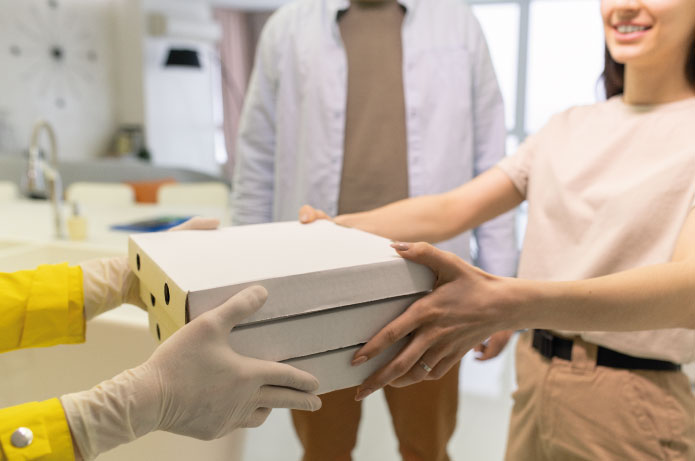
After years of being treated as a simple logistics layer, delivery finally assumes its true nature: an ecosystem. As Diego Barreto, CEO of iFood, has defended, delivery is no longer just a delivery channel to consolidate itself as an infrastructure that shapes consumption habits, generates recurrence and creates new economic dynamics.In 2026, we are no longer talking about a service that takes something from one point to another, but an ecosystem that connects convenience, data, frequency and new economies.
The so-called “war of delivery”, now intensified by the presence of three major national competitors, accelerated a transformation that was already underway. The dispute is no longer just for market share and has become relevant in people's daily lives. In this scenario, those who operate delivery today need to understand that is competing for time, preference and recurrence in consumer life.
The traditional model, based exclusively on ready meals, no longer sustains growth at the pace that the market demands. The consumer has changed and expanded his expectations. What he wants now is a unique point of convenience. This is where the “novo delivery” is born.
We see applications becoming true service hubs, with an increasingly diverse portfolio: market purchases, pharmacy, ready meals, last minute items, subscription products, daily coffees delivered directly to the customer, and even innovative formats that connect production and demand in a smarter and shared way.
This expansion is not only strategic, but inevitable. The delivery that thrives in 2026 is what can position itself as an essential layer for fast consumption, domestic supply and work routines. We enter a phase in which the platform not only responds to needs, but designs behaviors.
We are leaving behind the chapter in which delivery was seen as sporadic convenience. Now, it consolidates itself as a primary channel of daily consumption. The big change is to understand that who leads this new phase is not who delivers faster, but who builds more robust and integrated ecosystems.
If 2025 was the year of operational reorganization, 2026 is the year of intelligent expansion. A year in which logistics efficiency will be only the starting point. The real differential will be in the ability to integrate verticalizations, expand services, create recurrence and anticipate what the consumer will want before even verbalizing. Is your company prepared for this new era?!
*Ricardo Longa is CEO of voa.delivery, a complete logistics hub that brings intelligence to delivery operations, generating financial and operational efficiency for restaurants. The startup has already intermediated more than 2 million deliveries, serves more than 2,500 restaurants throughout Brazil, has 5,500 registered deliverymen and records an average time of 1 minute and a half for establishments to find the most appropriate deliverymen. Recently, voa.delivery started operations in Porto Alegre and is now present in the three capitals of the South Region, reinforcing its expansion and regional strategy.


 Portuguese (Brazil)
  English
  Spanish
  German
  Chinese (Hong Kong)
  Russian
  Hindi
Hindi  French
  Italian
  Japanese
  Arabic
  Chinese (Taiwan)
  Bengali
  Bulgarian
  Czech
Czech  Danish
  Greek
Greek  Finnish
  Croatian
  Hungarian
  Indonesian
  Hebrew
  Korean
  Lithuanian
  Dutch
Dutch  Norwegian
  Norwegian
  Polish
  Portuguese (Angola)
  Portuguese (Portugal)
  Romanian
  Slovak
  Slovenian
  Swedish
  Thai
Thai  Turkish
  Ukrainian
  Vietnamese