

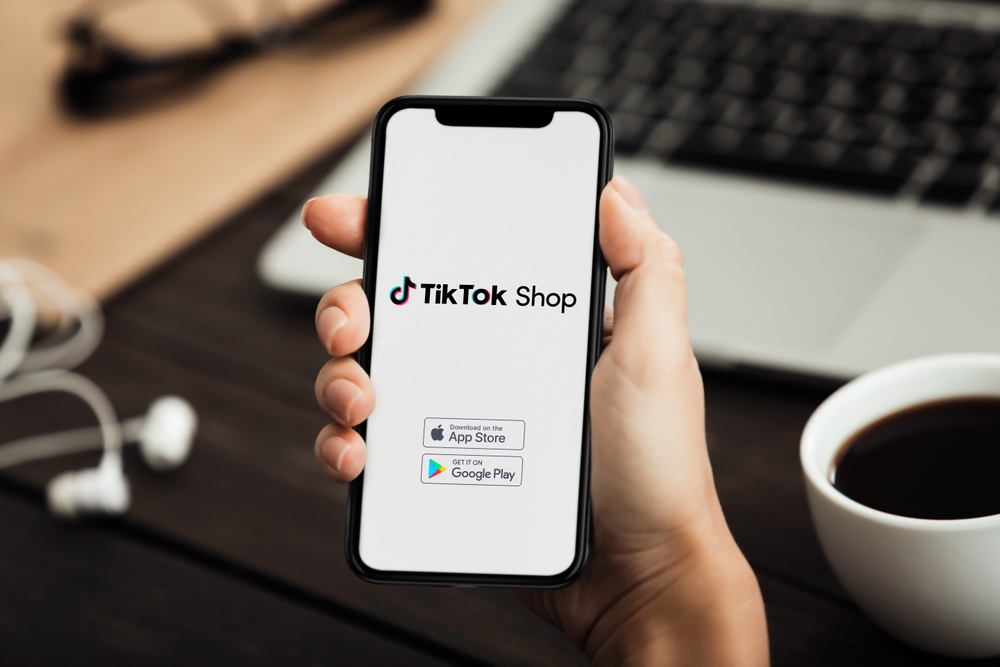
For a long time, TikTok was treated by the market as an experimental environment, focused on creativity, trends and brand visibility. But the 2025 edition of TikTok World marked a turning point in this positioning. By presenting a series of tools aimed at measuring, attributing and structuring campaigns, the social network signals that it intends to compete directly with Google and Meta in the fight for performance media budgets.
The change of route reflects a clearer ambition of the platform to consolidate itself as a full-day solution.For Bruno Cunha Lima, founder of Kipai, agency specialized in media, data and performance, the set of releases presented, including TikTok One, TikTok Market Scope and integrations with Marketing Mix Modelling (MMM) models, reinforces the intention of the network to establish itself as a media channel with delivery at all stages of the funnel.
“The” platform understood that, to participate in the core strategies of brands, it needs to go beyond awareness and prove impact on conversion, business and real results.And it is structuring technology for this”, says Lima.
In the expert's view, the platform no longer depends only on creative appeal and now offers a more robust operational logic, based on data, measurement and integration with other channels. The centralization of creative solutions in TikTok One and the deepening of measurement via MMM should accelerate this transition.
“The landscape changes when the brand has access to a data-connected creative framework and a solid attribution model.This transforms the way a campaign is planned, executed and measured within the” network, he says.
Despite technical progress, the maturity of brands is still seen as an obstacle to the full adoption of this new model. Many still operate with fragmented structures, with little integration between media, content and data intelligence.
“There is a distance between what the platform is already capable of offering and the way most brands use it today. TikTok is ready to be a performance channel, but many companies still treat it as an isolated space, of punctual actions or VIRals”, he notes.
Bruno sees this movement as an opportunity to redesign workflows and align strategies to a scenario of increasingly complete and demanding platforms.The challenge, however, is less in technology and more in the organizational structure of advertisers.
“The tools are available. But without integration between areas and a data-driven operation, this potential is lost. The bottleneck, today, is much more internal than external”, concludes the executive.


 Portuguese (Brazil)
  English
  Spanish
  German
  Chinese (Hong Kong)
  Russian
  Hindi
Hindi  French
  Italian
  Japanese
  Arabic
  Chinese (Taiwan)
  Bengali
  Bulgarian
  Czech
Czech  Danish
  Greek
Greek  Finnish
  Croatian
  Hungarian
  Indonesian
  Korean
  Lithuanian
  Dutch
Dutch  Norwegian
  Polish
  Portuguese (Angola)
  Portuguese (Portugal)
  Romanian
  Slovak
  Slovenian
  Swedish
  Thai
Thai  Turkish
  Ukrainian
  Vietnamese
  Chinese (China)