


Brazilians are reshaping retail logic: physical stores are no longer the final destination for purchases but are consolidating as spaces for displays, product testing, and customer engagement. According to the “Future Consumer” study by Serasa Experian, Brazil's first and largest datatech, 59.4% of consumers believe retail outlets serve more to showcase products than to actually sell them. This behavior is even more evident among younger generations: 63.5% of Gen Z and 61.4% of Millennials share this view.
For the datatech's CMO, Giovana Giroto, this reinforces the role of physical retail as a trusted proving ground, even amid digital advancements: “The Brazilian consumer hasn't abandoned physical stores but has instead assigned them a new role – as trusted spaces where they can test, compare, and interact directly with products. This shift demonstrates that retail doesn't disappear in the digital age but reinvents itself to meet different expectations across channels,” she states.
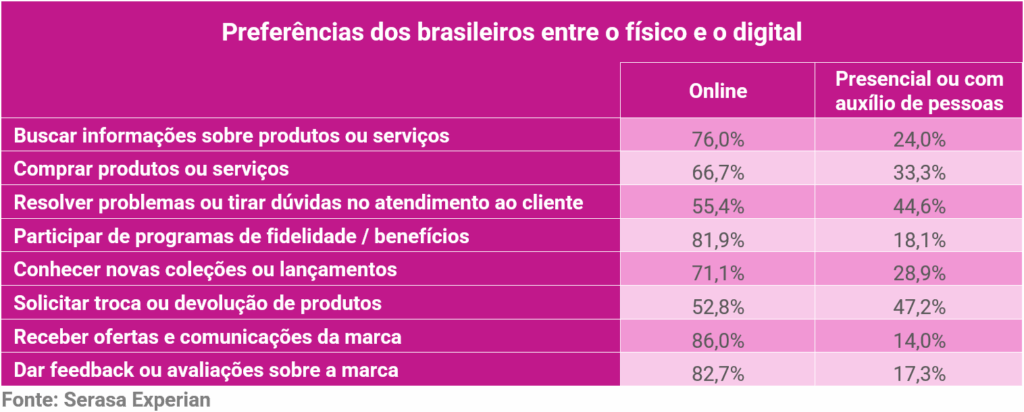
This shift doesn't mean abandoning physical stores: 74.9% of Brazilians still prefer trying on clothes, footwear, and physical items in-store before purchasing. However, when it comes to buying higher-value electronics and appliances, 65.4% opt for online channels, highlighting the maturity of e-commerce. Conversely, for situations requiring support like exchanges and returns, human assistance remains decisive, with 47.2% of consumers choosing in-person contact or specialist support. For consumers, this is where physical interaction adds value, emphasizing the importance of hybrid journeys where online and offline complement each other. See the table below detailing how Brazilians choose between physical and digital:
Digital as the primary connection with brands
If physical stores become showrooms, digital is where purchasing and relationships truly occur. The study shows that 86% of consumers prefer receiving offers through digital channels, and 79% use the internet to search for product and service information.
According to the datatech executive, the survey results indicate that digital transformation is no longer an option but a necessity, and the key now is personalization. “The consumer is already in the digital space and wants to be recognized in every interaction. Physical stores have transformed into testing spaces, but purchasing and relationship building happen online. In this context, the challenge for brands is to use data, intelligence, and sensitivity to generate brand consideration and deliver truly relevant and meaningful experiences. We've seen many of our B2B clients investing in this trend and increasingly segmenting optimal audiences with information that goes beyond interest to turn activation into real business conversion,” she declares.
Segmentation beyond interest
The research reinforces the importance of segmentation beyond interest. Today, Serasa Experian provides different layers of information that help companies not only identify who is inclined to buy online but also understand these consumers' actual payment capacity, credit scores, number of credit cards they hold, among other affinities. This integrated view of behavior and financial profile enables brands to build more relevant and secure customer journeys.

