

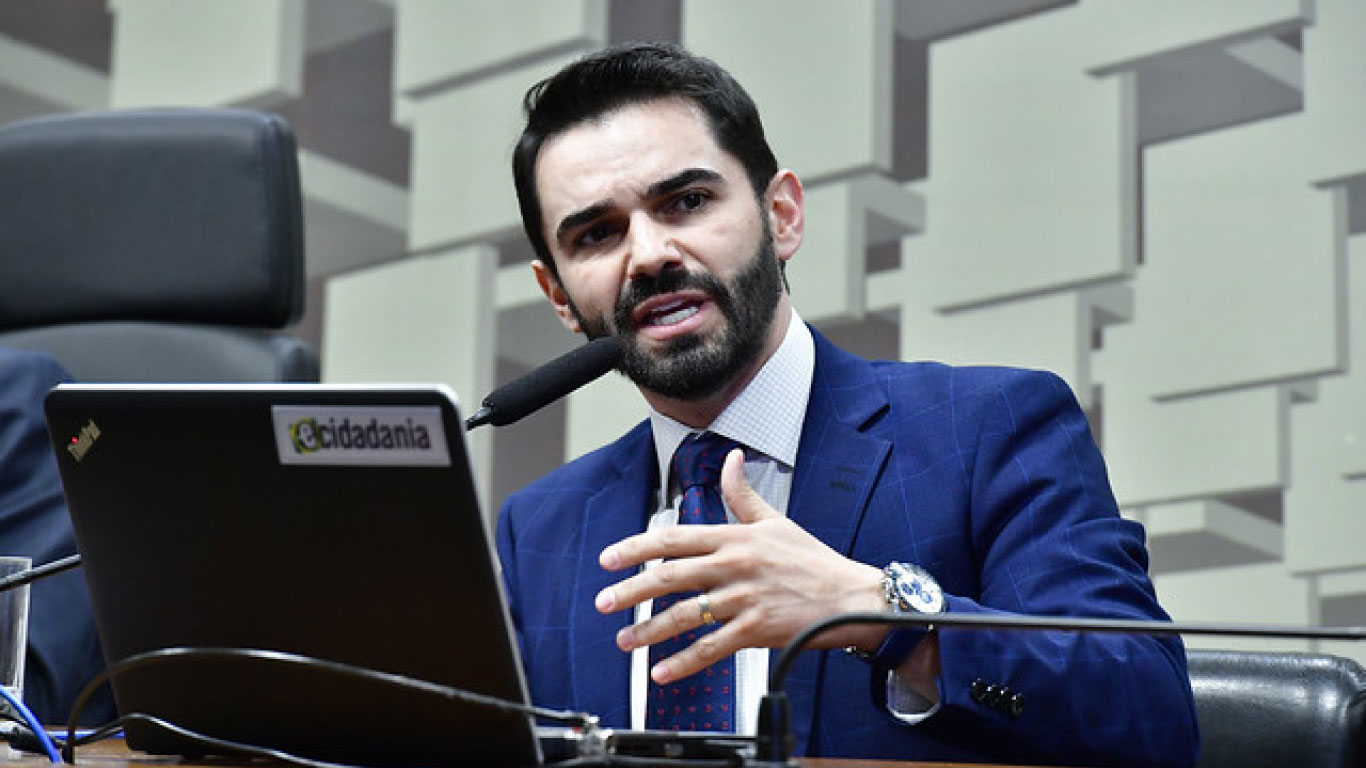
The simplification promised by the tax reform, in the regulatory phase in the National Congress, is still far from occurring. The alert is from tax lawyer Lucas Ribeiro, CEO of ROIT, an artificial intelligence company for the accounting, fiscal and financial management of corporations.”, back in 2033”, he says.
Ribeiro is the creator of the “Calculator of the Tax Reform”, developed by ROIT when the reform was still PEC 45/2019, to assist the Federal Senate in analyzing the impacts of the text. He presented his first version at a public hearing in the Senate Economic Affairs Commission (CAE), and the data were transferred to the Legislature to subsidize the work of parliamentarians.
Using resources such as artificial intelligence from the data of the Public Digital Bookkeeping System (Sped) and the schemes called XML of tax documents, the “Calculator of the Tax Reform” indicates that the combinations of rules currently in progress will result in the existence of up to 22.5 million new possible scenarios.
“A quantity may increase or decrease depending on the changes that the project will undergo in the” Congress, Ribeiro anticipates. Thus, the proposed “simplicity” promoted by tax reform can only be implemented in 2033, when the transition period between the current model and the changes brought by the reform will end.
The regulation of tax reform (Constitutional Amendment 132/2023) is currently based on two complementary bills. The first (PLP 68/2024) deals with the General Law on Goods and Services Tax (IBS), the Social Contribution on Goods and Services (CBS) and the Selective Tax (IS). The text, delivered by the Executive to the Chamber in April, has 306 pages and 499 articles. The project provides for an allotment of 26.5% (IS).
This project is a point taken by Lucas Ribeiro to federal deputies of the WG: a possible increase in the collection of PIS/Cofins in 2024 and 2025, “provoked by the collection eagerness of the Federal Government”, may significantly raise the rate of CBS, given the calculation formula indicated in PLP 68/2024.
Another project (PLP 108/2024) will deal with the performance of the IBS Steering Committee and the distribution of IBS revenues among federal entities, as reported by the Ministry of Finance and the Chamber of Deputies.
“The extraordinary secretary of Tax Reform, of the Ministry of Finance, Bernard Appy, told the press that the new system will require nothing more than just the simple issuance of invoice’. Now, this simplification, even if that way, will only be effective on January 1, 2033 and until then companies need to survive the two systems.”
In addition, there are numerous impacts for companies that go beyond the tax burden. There are many changes and preparations necessary to live with the two systems until 2033. In particular, the preparation of cash for working capital, review of purchase prices, sales prices, margin, management processes and more. “Nada of this is being said and the entrepreneur will soon wake up with a huge challenge to solve and perhaps it is too late”, warns Lucas Ribeiro.
Lucas also presented the need for a “plano B” for cases where Split Payment (the two-part IBS and CBS payment method) is not developed within the timeframe desired by the government.“Everyone knows that developing software is not at all simple and we may have surprises and delays”, he adds.“The taxpayer needs to continue to calculate the credits by the invoice until the system is deployed, it is not possible to follow up with an incomplete solution, or even with the emergency purchase of a Split Payment market solution, eventually even foreign”.
In addition, in the House and Senate, the texts will surely receive amendments, adding even more exceptions and particularities. “Here hundreds of new rules to be interpreted and applied by who?For the Treasury alone? (ISONly issuing a tax invoice?’ As if it were quite easy to combine more than 2 billion possible tax scenarios to issue a note today, added to the millions of new rules to come”, Ribeiro points out.
It is essential that companies of all sizes and accounting and taxation professionals start preparing deep impact studies and, above all, organize their management for the new system of credits and debts of the new Value Added Tax (VAT), consisting of CBS and IBS, underlines the CEO of ROIT.

