

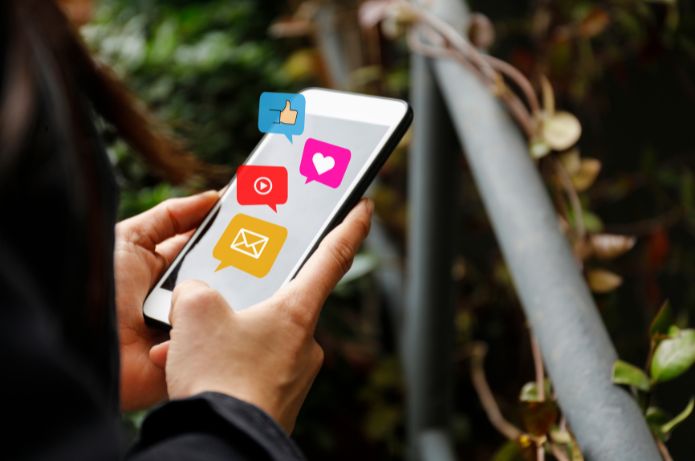
The new report by Latam Intersect PR, titled “2025: The Future of Social Media Consumption in Latin America”, indicates that the line between experience and consumption is increasingly blurring. Facebook, YouTube, Instagram, and TikTok are cited by respondents as popular alternative search mechanisms to Google.
The survey found that 31% of respondents use Facebook to search for products before purchasing them, 28.7% use YouTube, and 23.4% use Instagram. Furthermore, nearly one-third (31.5%) of respondents state they discover new products through video platforms, such as YouTube (16.3%) and TikTok (15.2%).
When asked if they had ever used social networks as alternative search mechanisms to Google, 30.4% of respondents said they had used Facebook, 28.5% YouTube, 22% Instagram, and 11.3% TikTok.
1,800 consumers were interviewed across six of the region's major economies: Argentina, Brazil, Chile, Colombia, Mexico, and Peru.
“We are witnessing a revolution in e-commerce, where the boundaries between entertainment, socializing, and shopping are rapidly dissolving. Social networks have evolved from simple brand exposure channels into complete purchasing ecosystems, requiring companies aiming for sales success to be increasingly digitally integrated,” states the co-founder of Boomer, a company specializing in performance media, growth marketing, data intelligence, and sales to accelerate brands, and digital marketing expert, Pedro Paulo Alves.
The report shows that social networks have reached new levels of penetration both in terms of the number of Latin Americans online and the time they spend connected.
Additionally, many of the region's most popular apps and platforms—such as Mercado Libre, WhatsApp, Pinterest, and TikTok—are increasingly integrating social networking, e-commerce, and payment features into a single interface, offering unparalleled convenience and new opportunities for brands to connect with users in a more integrated way.
The power of user-generated content
The study indicates that ads utilizing UGC achieve a click-through rate (CTR) 4 times higher and a cost per click 50% lower than the average. In other words: as social media increasingly blends with other forms of consumption, traditional paths such as SEO, Google, and corporate websites alone become less effective for reaching consumers.
“The contemporary consumer is not satisfied with just seeing a product; they want to understand how that item integrates into their lifestyle. User and influencer-generated content provides an authentic perspective that traditional ads simply cannot offer,” explains the expert.
2Flywheel replaces the traditional funnel
The report further highlights how TikTok's new “flywheel” (continuous cycle) model is redefining the consumer journey and brand engagement. The traditional funnel is evolving into a ‘flywheel,’ where discovery, engagement, and purchase merge seamlessly, showing that brands can no longer rely solely on traditional search—they need to be embedded in interactive spaces, turning curiosity into action, becoming an essential part of consumers' digital journeys.
“Social networks have ceased to be mere communication channels and have become true marketplaces. Today's consumer expects to discover, evaluate, and purchase products without leaving the platform,” states Pedro Paulo.
Instagram and YouTube lead in Brazil
The specific section on Brazil within the study shows that in our country, 47.8% of respondents choose Instagram as their preferred social media platform, the highest percentage among the surveyed countries. 36.2% of Brazilians state they use YouTube as an alternative search mechanism to Google.
In addition, 65.1% of Brazilian consumers claim to buy more online than in person, the highest percentage among the countries surveyed and well above the regional average of 40.5%.
“The Brazilian market has unique characteristics that make it extremely receptive to social commerce. We have a young, highly connected population that spends an average of 4.8 hours daily on social networks and values the opinion of their online community before making purchasing decisions. Companies that can create shopping experiences integrated into this social context will have a significant competitive advantage,” emphasizes the co-founder of Boomer.
Strategies for companies in the new digital landscape
To harness the full potential of social commerce, companies need to go beyond simply having a presence on social networks. As social media platforms become alternative search engines, traditional routes such as Google searches and corporate websites become less effective for reaching consumers. Brands need to establish a presence on multiple platforms and use content specific to each one, engaging customers where they are most active.
“O social commerce is not just a new sales channel, it is a complete reimagining of the shopping experience. Companies need to invest in technologies that eliminate friction between discovery and completion of the purchase.Each additional second in the process represents an opportunity for the consumer to give up”, adds Pedro.
“Brands that can unify behavioral data from social networks with their CRM systems will have a more holistic view of the customer journey, enabling them to create truly personalized experiences. This is the ideal time for companies to rethink their entire digital infrastructure to support this new reality where social, entertainment, and commerce merge into a continuous and integrated experience,” concludes the co-founder. from Boomer.


 Portuguese (Brazil)
  English
  Spanish
  German
  Chinese (Hong Kong)
  Russian
  Hindi
Hindi  French
  Italian
  Japanese
  Arabic
  Chinese (Taiwan)
  Bengali
  Bulgarian
  Czech
Czech  Danish
  Greek
Greek  Finnish
  Croatian
  Hungarian
  Indonesian
  Korean
  Lithuanian
  Dutch
Dutch  Norwegian
  Polish
  Portuguese (Angola)
  Portuguese (Portugal)
  Romanian
  Slovak
  Slovenian
  Swedish
  Thai
Thai  Turkish
  Ukrainian
  Vietnamese
  Chinese (China)