

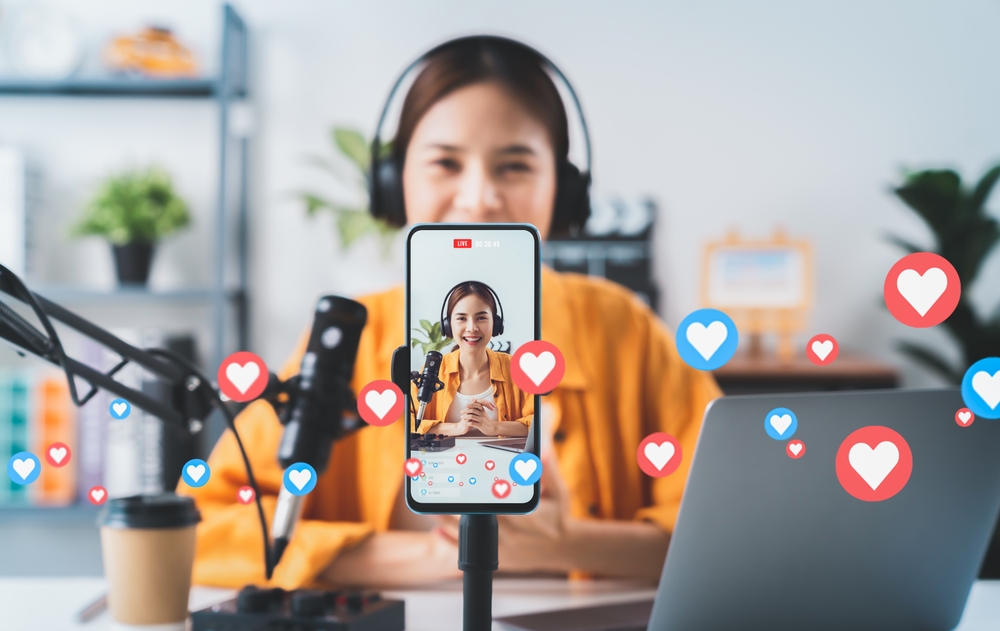
Companies that invested in content creators performed better on social media during Black Friday promotions. This was revealed by a study from HypeAuditor, a global leader in influencer campaign analytics and optimization, based on its analysis of campaigns conducted in this context last year.
The study evaluated Instagram posts between October 1 and December 15, 2024, containing hashtags related to the theme, including #blackfriday, #cybermonday, #blackweek, #blacknovember, #promoção, and others, to map the behavior of brands and influencers during the period.
The survey showed that the average engagement rate for promotions posted by brand accounts on Instagram was only 0.19%, a figure three times lower than that recorded among influencers. Nevertheless, the volume of posts from brands was still twice as high as that from content creators, indicating that many companies still fail to leverage the potential of influencers in their Black Friday strategies.
“Many brands still consider influencer campaigns to be exclusive to large corporations, but the data suggests otherwise. Collaborating with creators from different niches and sizes represents a significant opportunity for businesses of any size seeking connection and performance during promotional periods,” highlights Maria Marques, Marketing Manager for Latin America at HypeAuditor.
Nano and micro-influencers dominate the landscape
According to the study, celebrities accounted for 329 posts about Black Friday, with high reach but lower engagement and higher cost. Nano and micro-influencers, in turn, concentrated the majority of campaigns, with over 80,000 publications related to the event.
Brands that invested in highly visible names, such as Pichau, Chilli Beans, Mercado Livre, and TV Globo, reinforced their focus on national reach. On the other hand, market trends show a shift: diversifying investment among several smaller creators has proven more efficient in terms of engagement and conversion, which also opens doors for companies of different sizes and sectors to invest in influencer marketing effectively and strategically.
“What tends to perform better during promotional periods is more spontaneous content, with a close and genuine language, where the influencer gains the freedom to work their “magic”—that is, to create an authentic product about a specific brand or segment. This shows that a real connection with the audience outweighs the size of the follower base,” illustrates Maria Marques.
The power of emotional language
The textual analysis of the posts revealed that creators heavily rely on messages of urgency and scarcity, using expressions like “only today,” “last hours,” and “limited stock,” which stimulate FOMO (acronym for “fear of missing out”). Terms such as “free shipping,” “cashback,” and “up to 90% off” were also recurrent, reinforcing tangible benefits and perceived value for the consumer.
Influencers use simple, emotional, and action-oriented language, adapted to mobile behavior and fast scrolling on social media—a combination that proved decisive for the success of Black Friday campaigns in 2024.
Furthermore, the Reels format established itself as the most effective for generating attention and conversion, leading the lists of posts with the most likes, views, and comments. Short, dynamic videos enable storytelling, product demonstration, and emotion—three essential pillars for successful seasonal campaigns.

