



With the increasing digitalization of the food sector, small businesses are discovering new ways to highlight their products in the competitive online market. Artificial intelligence (AI) has been consolidating itself as an important tool to optimize “food styling” and improve restaurant visibility, providing high-quality images.
A recent study of HostGator it revealed that 61,41% of small and medium-sized enterprises (SMEs) in Brazil already use AI in their operations, and 68,34% believe that this technology will be key to their growth in the next five years.In the food sector, AI is transforming the way dishes are presented in delivery applications and social networks, increasing conversion and customer loyalty.
Food styling, the art of creating attractive visual scenarios for food, has always been an essential element for the sale of gastronomic products. Now, with advanced algorithms, AI software automates processes such as lighting adjustments, color correction, removal of imperfections, simulation of different environments for each type of product and images optimized for fast loading on digital platforms, to create professional images quickly.
According to a survey by Snappr, High-quality food photos can increase orders in delivery applications by up to 35%. This reinforces the importance of well-produced images for business success in the industry.
Democratization of access to cutting-edge technology
Before AI, photo editing was a manual process, requiring time and specific technical skills.Today, microentrepreneurs can access accessible and intuitive tools that allow them to create high-level images in minutes, without the need for large investments in photographic production.
“A AI is leveling the stage for SMBs and individual entrepreneurs.Small restaurants and local businesses can now compete with big brands, ensuring a visual standard of excellence much faster and more efficiently,”, says Matthieu Rouif, CEO and co-founder of Photoroom.
As technology advances, entrepreneurs who invest in automating their visual imagery and strategies will be more likely to stand out and retain customers.
The combination of realism and aesthetics has always been a challenge for the food industry.With AI, we have been able to create images that not only arouse desire, but also convey the true quality of products in an accessible and innovative way”, adds Photoroom CEO.
With the food delivery and e-commerce market booming, integrating AI solutions into the creative process becomes an essential competitive differentiator.“The future of food styling has arrived & it is smart” concludes Matthieu.
How the Photoroom API powers the projection of perfect product images
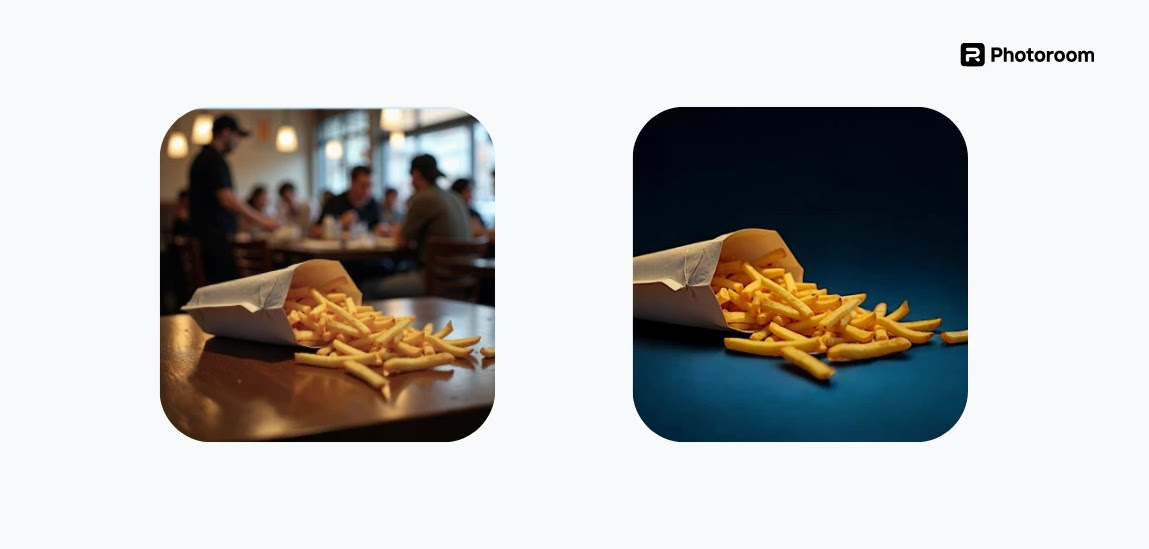
Photoroom offers a suite of innovative tools based on artificial intelligence to optimize the visual presentation of dishes and increase audience engagement. Among the main features are:
- Removal and customization of funds: ensuring a clean, distraction-free and standardized look for marketplaces and social networks.
- Automatic image enhancement: improved lighting, sharpness, color adjustment for more attractive photos and application of natural shadows for realism. In addition to automatic adjustment of image proportions for visuals according to the measure of each platform.
- Generation of custom scenarios with AI: in addition to the predefined templates, users can create unique images based on inserted prompts, allowing control over styles, colors, and visual elements.
- Large-scale production: ideal for large volumes of images, maintaining high quality and consistency in simultaneous edits, and with the possibility of working collaboratively and editing in teams.
- Logo creation with AI: for new companies or businesses that want to perform a rebranding, allowing the generation of customized logos quickly and efficiently, ensuring professional and brand-aligned visual identity.
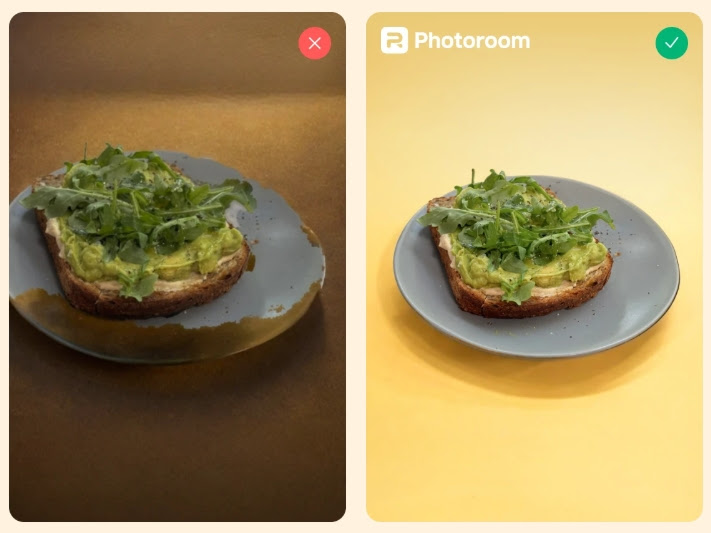
With these tools, small and medium entrepreneurs can raise the quality of their images without needing a professional studio, strengthening their visual identity and improving their competitiveness in the market.


 Português do Brasil
  English
  Español
  Deutsch
  香港中文
香港中文  Русский
  हिन्दी
  Français
  Italiano
  日本語
日本語  العربية
  繁體中文
繁體中文  বাংলা
বাংলা  Български
  Čeština
  Dansk
Dansk  Ελληνικά
  Suomi
Suomi  Hrvatski
  Magyar
  Bahasa Indonesia
  한국어
한국어  Lietuvių kalba
  Nederlands
  Norsk bokmål
  Polski
  Português de Angola
  Português
  Română
  Slovenčina
  Slovenščina
  Svenska
  ไทย
ไทย  Türkçe
  Українська
  Tiếng Việt
  简体中文
简体中文