

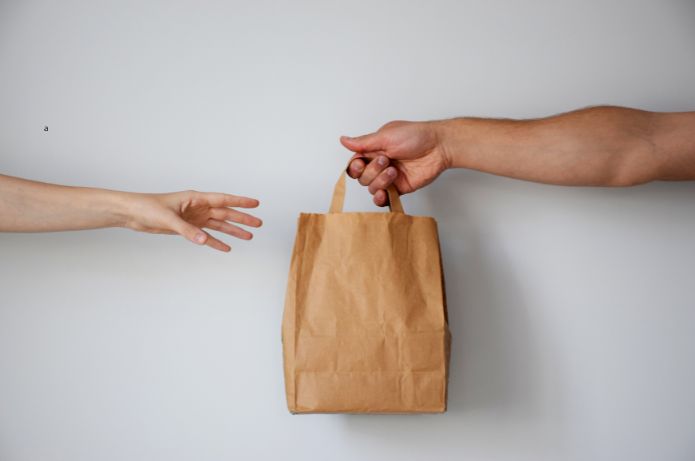
The food delivery sector has been growing worldwide, and Brazil is following this trend vigorously. A recent survey conducted by Ticket, interviewing almost 10,000 people, revealed that 4 out of 10 Brazilians regularly order delivery — that is, 40%. Among Generation Z, aged 15 to 28, this number rises to 51%. But what is the strategy of this sector to continue growing each year? It was in this context of a heated market that São Paulo hosted the Delivery Summit 2024, an event organized by Woovi, in partnership with WAbiz, which brought together specialists and entrepreneurs to share practices, technologies, and strategies that promise to transform delivery into a sales machine.
The event showcased trends and success stories for those looking to thrive in a rapidly evolving market. The agenda featured insights into emerging technologies, seasonal campaigns, and loyalty strategies, with practical examples demonstrating how to acquire and retain customers in an increasingly competitive environment. Supported by brands such as Heineken, Seara, OpenPix, Catupiry, Sr.Caixa, and Pietro Fornos, the Delivery Summit broke new ground as the first event focused on the food delivery sector in Brazil. According to the organizer, Woovi, companies that invest in innovation and customer experience will be ahead in the race for an increasingly dynamic and competitive market. According to Rafael Turk, CEO of Woovi, another point that deserves the attention of business owners in the sector is the "automation of transactions and an infrastructure that enables agility in payment processing, bringing differentials such as operational efficiency and customer satisfaction, from the moment of purchase decision to post-sales satisfaction.”
Among the speakers, Rafael Abath, founder of Zapy Pizza, highlighted the role of innovation in building successful businesses. He shared his company's experience in breaking the record for delivery in just 8 minutes. “Delivering in 40 minutes is no longer a differentiator. Those who don't adapt, fall behind,” said Rafael. The shared kitchen model is one of the secrets that guarantees this efficiency, allowing for cost optimization and efficient use of resources for different brands.
Another highlight was Valmor Friedrich, CEO of Kadalora Pizzaria, who presented his 44-year journey in the food sector, marked by overcoming challenges and expanding his business to 17 units. Valmor explained how he innovated by keeping his pizzeria open during hours when his competitors were not operating, thus attracting new customers. "While other pizzerias closed early, we stayed open and absorbed more clients," he revealed. Beyond pizzerias, Valmor diversified his businesses, creating an ecosystem that includes meat boutiques and cleaning product stores, leveraging synergies between the different sectors. His strategy not only increased revenue but also ensured a loyal customer base and a more robust operation.
The importance of strategic marketing was extensively discussed by the HS Marketing team. Based on optimized conversion funnels, the company highlighted that for every 1,000 ad views, 100 interact with the brand, 15 make purchases, and five become loyal customers. The focus of the 360º marketing strategy is on reducing dependence on marketplaces such as iFood and UberEats, promoting targeted campaigns for proprietary menus, and strengthening customer loyalty. For Rafael Turk, CEO of Woovi, “centralizing proprietary channels, in addition to marketplaces, allows opportunities to be explored throughout the customer journey, such as analyzing purchase recurrence and applying retention mechanisms, not to mention reducing payouts to these channels.”
The use of attractive visual content, such as 'foodporn', and partnerships with local influencers were highlighted as essential for engaging the audience and converting followers into customers. HS Marketing also presented successful cases, such as the 401% increase in Vila Anália's revenue, driven by community strategies, and the 50% increase in Chapéu de Couro's sales through urgent and personalized campaigns.
Jussara Calife, Trade Marketing Director for Heineken Group's online and offline channels, addressed the importance of adapting menus to specific occasions, such as barbecues and parties, to capitalize on holiday and weekend opportunities. She emphasized that personalized service, combined with the use of bots and organized WhatsApp lists, can increase operational efficiency and improve the customer experience. "Creating attractive combos designed for different occasions is essential to stand out in such a competitive market," explained Jussara, reinforcing that strong partnerships with suppliers are also fundamental to success.
Current trends in the food service sector include the importance of processes that provide consumers with personalized experiences, leveraging digital marketing strategies such as high-quality interaction, relationship management between stores and customers, and quick service, in addition to partnering with conventional marketplaces. Throughout the customer journey, from checkout to purchase decision, as well as potential product satisfaction, brand loyalty, and recommendation, it's crucial to streamline processes, simplify steps, and prioritize the customer.
Beyond practical cases and insights, the Delivery Summit 2024 presented important data on the growth of the delivery market. The sector has registered consistent increases, especially in premium segments and during peak seasons, showing that investing in strategic campaigns and loyalty programs can guarantee sustainable revenue. The event was marked by participant engagement; attendees left with a clear plan to apply the discussed strategies and transform their businesses. As Valmor Friedrich concluded: “Prospering is about preparing people and creating a business that makes sense in the long term.”


 Português do Brasil
  English
  Español
  Deutsch
  香港中文
香港中文  Русский
  हिन्दी
  Français
  Italiano
  日本語
日本語  العربية
  繁體中文
繁體中文  বাংলা
বাংলা  Български
  Čeština
  Dansk
Dansk  Ελληνικά
  Suomi
Suomi  Hrvatski
  Magyar
  Bahasa Indonesia
  한국어
한국어  Lietuvių kalba
  Nederlands
  Norsk bokmål
  Polski
  Português de Angola
  Português
  Română
  Slovenčina
  Slovenščina
  Svenska
  ไทย
ไทย  Türkçe
  Українська
  Tiếng Việt
  简体中文
简体中文