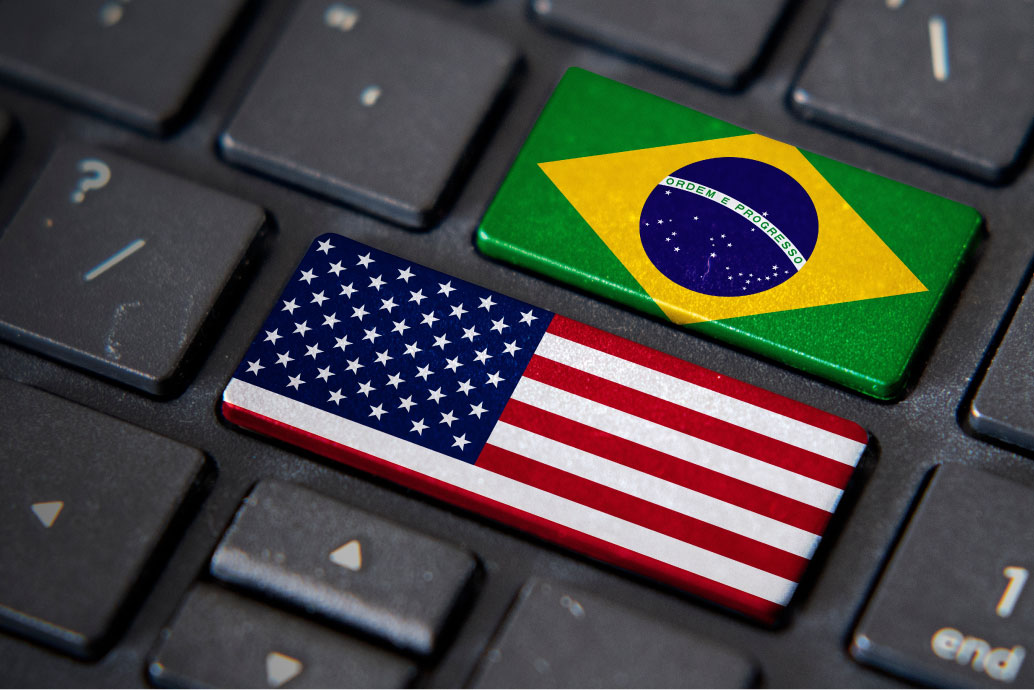
according to the U.S. Small Business Administration (SBA), small companies represent 99.9% of the total business in the United States, employ 47% of the private workforce and account for about 44% of the economic activity of the country. This environment, marked by debureaucratization and segmented consumer culture, has favored the entry of Brazilian companies in search of stability and opportunities in niche markets.
The analysis is provided by Alfredo Trindade, an economist graduated from PUC-SP, business administrator from Uniban-SP, and CEO of Ecco Planet Consulting, consulting with headquarters in Orlando and Miami specialized in internationalization of companies. With more than 25 years of experience and more than two thousand projects conducted, the expert says that the presence of small and medium-sized Brazilian companies in the USA is no longer just market expansion and has become a survival strategy.
“Even with lean structures, Brazilian businesses have occupied relevant spaces by betting on personalized products, specialized services and adapted cultural experiences.The differential is to respect local particularities and structure a solid operation from the beginning”, says the CEO.
Among the cases followed by the consultancy, Trindade cites family companies that migrated to Florida and tripled their revenues after adapting menus and certifications to the American standard.There are also examples in the technology sector, in which Brazilian startups replicated digital service methodologies in hubs such as Miami and Austin, increasing credibility with investors.
For the expert, the key to success lies in the balance between differentiation and planning.“It is not enough to register an LLC. It takes market study, cultural adaptation, product validation and understanding of local rules. About 70% of Brazilian companies that fail in the US have started operations without previously validating their business models”, he warns.
The internationalization movement also works as a protection against the economic instabilities of Brazil. Operating in dollars and in a predictable legal environment allows greater long-term planning and reduces exposure to internal crises.“Enter in the United States has been, for many Brazilian entrepreneurs, more than an expansion option. It is a form of shielding in the face of local uncertainties”, points Trindade.
In the CEO's view, the coming years should expand the space for smaller businesses that operate in a segmented way.“The American market is increasingly open to solutions that combine customization and efficiency.We see increasing opportunities in areas such as healthy eating, specialized digital services, corporate health, online education and technologies linked to the sustainability”, he projects.
The combination of diversified consumption, state incentives and regulatory predictability creates a fertile environment for lean business models. "The trend is for sectors linked to digitalization, well-being and clean energy to concentrate the greatest opportunities in the next decade”, concludes the expert.