

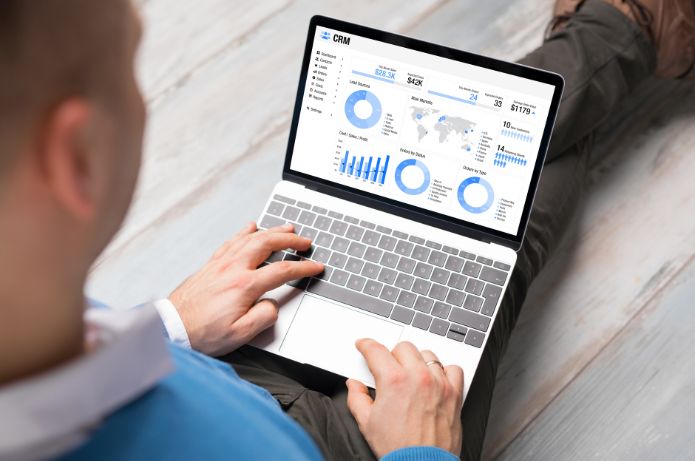
The proportion of people working from their homes has increased significantly in the last ten years, according to data from the last National Survey by Continuous Household Sample (PNAD Continuous). Taking away public servants and domestic workers, 8.3% of people occupied in the country in 2023 carried out their activities directly from their homes. It is noted that the growth of this group, which was zero between 2012 and 2016, jumped as a result of the pandemic, reaching 8.5% in 2022.
Although it has lost some traction since the pandemic, home office & remote work (IS a model that is here to stay, which means that a series of adaptations have been implemented in companies to ensure the quality of work and the well-being of teams. However, working outside the office can raise some assumptions that do not necessarily correspond to reality. One of them is the idea that bullying does not happen from a distance. “In general, people feel less afraid of being held accountable and reprimanded in a virtual environment. This makes remote work vulnerable and as conducive to harassment as the classroom”, points out Alessandra Costa, a psychologist and only from the company S2 Consulting, Brazilian reference in risk behavior management.
Because it is a novelty for many people, it is not always easy to identify the signs of problems in the remote environment. To raise this debate and bring more visibility to the subject, Alessandra selected some of the main behaviors that configure bullying in the home office, based on the data and experience of S2 in dealing with risk prevention and corporate investigation.
- Invasive communication
The way in which communication has been established in a given team must be respected by everyone. When, for example, there is the use of corporate numbers, sending messages or calling the personal number of an employee can be classified as problematic behavior.
“Exceptions can happen, but should not overlap with anyone's privacy.Personal phones, social networks and other ways to try to force a contact outside the company's channels can become a type of harassment, especially when there is an” insistence, says the psychologist.
- Excess messages
Even when the right channels are used, some moderation is still needed. “We live in an era of great urgency and, from time to time, it is normal for an accumulation of tasks and consequently information to occur. But the excess of messages and demand for constant returns is an open door to anxiety, lack of prioritization and discomfort. People can not work properly if they need to respond someone all the time, and this can lead them to cases of exhaustion quickly”, explains Alessandra.
- Disrespectful to the schedule
Every work model may involve overtime, but there is greater pressure to act outside the agreed time when the environment is remote. Whether in the period before or after the correct or even reducing lunch time, this type of practice is classified as bullying.
Alessandra points out: “Managers who require attention outside working hours are disrespecting the contract between the parties and pressing collaborators, often stating that it is only this time’, but repeating the situation at other times. It is also necessary to be aware of threats, veiled or not, to professionals who refuse to respond or act outside the” time.
- Overcontrol
The need to know everything that each employee is doing at all times is a problem that can arise in any environment, but becomes more pronounced in the home office through monitoring tools and constant contact requirement.
“This type of situation comes from the lack of trust and can develop in order to complicate all the coexistence of the team, and even the quality of the business. In S2, we have seen cases of managers demanding the camera in online meetings for not believing that employees were busy at the same time in meetings with their customers”, exemplifies the expert.
- High pressure
When there is a negative preconception about remote work, some behaviors become harmful. “Pense, for example, in meetings (surprise’, sometimes even in the first minute of the day or at times close to the breaks for rest. If the professional does not appear immediately, there are managers who claim that this means that he is lazy or lying, perhaps even in front of the rest of the team. It is a type of humiliation, and certainly configures harassment”, informs Alessandra.
In all these situations, it can be difficult for victims to seek help, possibly out of fear of retaliation, shame and guilt from the act suffered, lack of trust in management, and lack of safe channels to seek help.
To ensure that harassment is distant from your company, remotely or not, some tips are essential, such as having a secure reporting channel and encouraging its use, having transparent communication with the entire team and having an updated code of conduct. “It is also recommended to promote training and lectures on bullying, as well as apply an integrity test to prevent risky behaviors from even happening”, concludes Alessandra.


 Portuguese (Brazil)
  English
  Spanish
  German
  Chinese (Hong Kong)
  Russian
  Hindi
Hindi  French
  Italian
  Japanese
  Arabic
  Chinese (Taiwan)
  Bengali
  Bulgarian
  Czech
Czech  Danish
  Greek
Greek  Finnish
  Croatian
  Hungarian
  Indonesian
  Korean
  Lithuanian
  Dutch
Dutch  Norwegian
  Polish
  Portuguese (Angola)
  Portuguese (Portugal)
  Romanian
  Slovak
  Slovenian
  Swedish
  Thai
Thai  Turkish
  Ukrainian
  Vietnamese
  Chinese (China)