

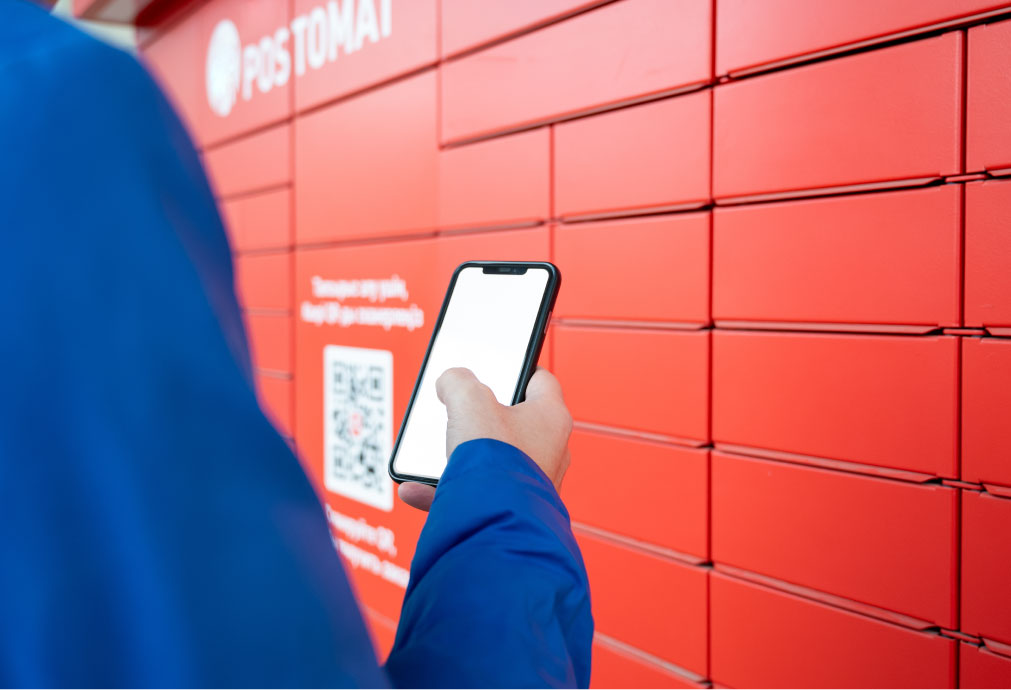
For decades, retail has treated logistics infrastructure as an invisible cost - IT warehouses under the radar, last-mile outsourced, improvised withdrawal points. It worked, but it did not build a brand. This model begins to lose relevance. In contemporary retail, infrastructure ceases to be a rack and assumes a central role, becoming a presence. And, in urban space, presence is reputation smartlockers they clearly express this turnaround and are no longer just an operational solution to act as structural brand assets, with a direct impact on efficiency, perceived reliability and the consumer experience.
an locker well positioned is able to generate a type of presence that digital campaigns do not achieve. It occupies the physical space in a continuous, predictable and everyday way. While physical stores require high CAPEX, dedicated teams, long-term contracts and exposure to real estate risk, lockers operate as compact units of service, always active, with lean structure, controlled cost and low operational friction. In this model, each unit is no longer just a point of withdrawal and starts to function as a microextension of the brand, visible, functional and integrated into urban dynamics.
In Brazil, the progress of lockers it is a territorial capillarity, with presence both in large centers and in peripheral regions. It is not a scale by volume, but a strategic occupation of the territory. This proprietary mesh is rare in a sector historically dependent on third parties precisely in the most sensitive stage of the journey. The final contact with the customer. By assuming this point of contact, the brand ceases to only promise efficiency and begins to materialize it in the physical world.
For the consumer, the logic is simple: trusted brands are available brands. By eliminating waiting, mismatch and uncertainty, automated withdrawal points transform the delivery experience into concrete and predictable access, without vague promises. The consumer begins to decide when to withdraw, where to withdraw and how to interact, which returns control to the end of the journey and structurally changes the power relationship between brand and customer. Not by chance, McKinsey studies indicate that about 75% of consumers consider convenience a decisive factor in purchasing decisions, understood not only as speed, but as the feeling of control over the consumer journey itself.
The value of smartlockers it is not only in what they deliver, but in what they come to represent within the retail strategy. Today, they already operate as exchange and return points, withdrawal of gifts, promotional activations, distribution of documents and vouchers and even as autonomous technical support. With each new incorporated function, they expand their role as a relationship infrastructure. In regions without physical stores, they often become the only tangible point of the brand in the territory, a silent, constant and functional presence.
That's the point at which branding it ceases to be discourse and becomes operation. While part of retail still discusses customer experience in presentations and strategic plans, smartlockers operate in the real world. They reduce logistics costs, increase the success rate of deliveries, improve indicators such as NPS and create a positive dependence on the part of the consumer. When this infrastructure is proprietary, the brand ceases to dispute attention and becomes part of the habit.
Therefore, therefore, smartlockers they are not media, they are not accessories and neither a passing trend. They are operational and reputational heritage. The future of retail will be less about how many stores open and more about how to occupy the territory with efficiency, consistency and purpose. In this scenario, this automated withdrawal infrastructure responds with pragmatism, offering frictionless convenience, presence without excess and experience without empty promises. In the end, it is not about technology, but about physical strategy in a digital world. Brands that understand that infrastructure also builds reputation will come out ahead for the space they can occupy.
*Gustavo Artuzo is CEO and founder of Clique Retire, logistics company for e-commerce. Before that, he was director of business development at private equity fund Patria Investimentos, as well as CFO at Delly’s, a leading distribution company for food service. He also has relevant experiences in the real estate sector, working at Cyrela, Directional Engineering and Cury Construction. Gustavo is an engineer graduated from ITA, with an MBA from Wharton School.


 Português do Brasil
  English
  Español
  Deutsch
  香港中文
香港中文  Русский
  हिन्दी
  Français
  Italiano
  日本語
日本語  العربية
  繁體中文
繁體中文  বাংলা
বাংলা  Български
  Čeština
  Dansk
Dansk  Ελληνικά
  Suomi
Suomi  Hrvatski
  Magyar
  Bahasa Indonesia
  한국어
한국어  Lietuvių kalba
  Nederlands
  Norsk bokmål
  Polski
  Português de Angola
  Português
  Română
  Slovenčina
  Slovenščina
  Svenska
  ไทย
ไทย  Türkçe
  Українська
  Tiếng Việt
  简体中文
简体中文