

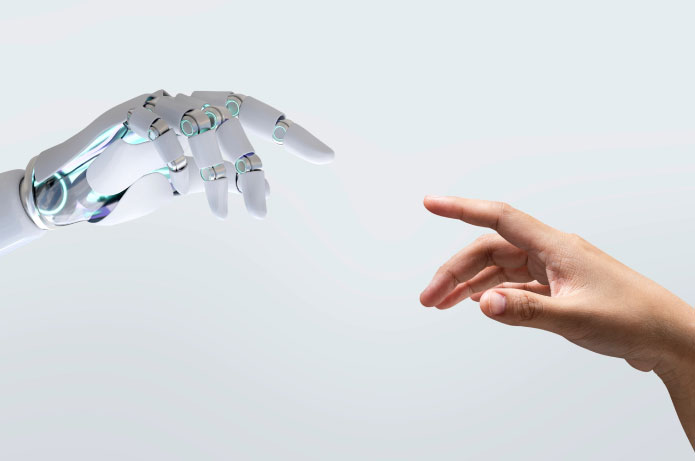
In recent years, HR has ceased to be a support area to consolidate itself as a strategy center within some companies that understood its role in the business. In 2026, this change is expected to intensify and people management will occupy a decision-making role and direct impact on corporate results, with leaders increasingly data-driven, technology and an integrated view of human and organizational performance.
The transformations that are underway are summarized, but not limited to, to the way HR positions itself within the company. The focus is no longer just to attract, develop and retain talent, but rather improve systems that anticipate behaviors, adjust processes and connect resource management to the business objective. The area should stop acting reactively to act as a strategic radar, capable of predicting scenarios, proposing solutions and measuring the impact of decisions in real time.
Technology as the engine of a new people management
the report“ The future of HR in Brazil”, produced by Dell, indicates that more than 70% of HRs already automate processes and 89% intend to automate within the near future. However, 25% of the companies still remain without using HR software and only 42% adopted AI in some process.
This is only possible because technology has opened new frontiers for HR. Artificial intelligence, for example, has already been used as a partner in the selection, reading of data and even in performance conversations, transforming analyzes that were previously subjective into decisions based on evidence. People Analytics tools also gain strength, allowing leaders to understand what really motivates, retains and develops their teams, without relying solely on intuition or individual perception.
Sensitivity technology: the balance that defines 2026
Another movement that must be consolidated is the integration between technology and human sensitivity. According to a survey by Deloitte, 79% by HR leaders believe that digital transformation is essential for the future of people management. However, technology alone is not enough, as it is necessary to humanize processes. In this context, the leaders who stand out in 2026 will be those capable of using data to guide decisions, but without giving up the genuine look, and, thus, the strategic HR is strengthened as a bridge between the rational and the emotional.
work models
Work models also enter this equation. Hybrid and remote formats have been consolidating in recent years as models that allow greater flexibility. According to a survey carried out by Gartner in 2023, about 75% of business leaders intend to permanently adopt hybrid work in their organizations, due to increased employee satisfaction and reduced operating costs.
Despite the numbers favorable to the hybrid and the remote, it is important to recognize that each model has advantages and limitations and that the ideal choice depends on the moment and strategic needs of each company. While flexible formats bring relevant benefits, face-to-face work still stands out as one of the most effective models for many businesses. Among its main guarantees are the faster construction of bonds, the stimulation of spontaneous collaboration, the strengthening of the organizational culture and the acceleration of learning, especially for professionals at the beginning of their careers.
Generation Z and the pressure for new management models
The arrival of Generation Z in the labor market has also been accelerating transformations in companies. More connected, informed and demanding about the purpose and well-being, these professionals challenge traditional models of leadership and management and bring expectations of flexibility and demands for innovative and technological environments. According to the 2025 People Management Trend Report, developed by the GPTW and Great People ecosystem, Generation Z was pointed out by 76% of respondents as the biggest challenge for people management, far ahead of baby boomers (born between 1945 and 1964), with 8%.
From my point of view, many companies have been lost in this debate. While it is critical for managers to communicate in the same language as their teams, I do not believe that the way is to shape organizations exclusively to what Generation Z says they want. There are young people with very different profiles, rhythms and ways of working, and the company's role is to have (and give) clarity about its characteristics and its attractions and sustain it consistently.
And this clarity, by the way, is something that Generation Z itself values deeply. As in social networks, where people who take positions stand out, demonstrate authenticity and are not afraid to expose their points of view, even if this displeases part of the audience, the same thing happens in the corporate environment. Whoever stands builds confidence. On the other hand, those who live “on the fence”, just following trends and avoiding conscious choices, lose strength, relevance and ability to attract the right talents. When the culture is transparent, each individual can assess whether that environment is compatible with who he is and what he is looking for, regardless of the generation to which he belongs.
culture measured, not just declared
Organizational culture, in turn, ceases to be a discourse and is measured. Climate, engagement and behavior monitoring tools will enable leaders to accurately understand the real needs of their teams, creating environments that are increasingly conducive to human development and team evolution.
What used to depend on subjective perceptions is now supported by data that reveal patterns, challenges and opportunities for growth. Integrated with platforms that connect purpose, performance and well-being, these metrics make the culture more palpable and actionable. Thus, instead of acting just to avoid crises, companies start to use qualified information to strengthen bonds, enhance talent and promote more coherent and healthier work experiences.
In a scenario of rapid changes and scarcity of skilled talents, the role of HR is to ensure that the company learns and adapts faster than the market. This requires leaders capable of testing, measuring, leading and continuously improving their practices, like any other strategic area of the business. The HR that stands out in 2026 is not the one that adopts all new tools, but the one who knows how to use them intelligently, in the service of a living, human and high-performance culture.
Finally, the great leap in the area is to stop being a mediator to become a catalyst: driving innovation, strengthening culture and creating an environment where individual growth and business growth go hand in hand. In 2026, the HR that will make a difference will be one who understands that technology does not replace leadership, but certainly expands its reach.
Graduated in Psychology from PUC-Campinas, with an MBA in Project Management from FGV, Giovanna Gregori Pinto is the founder of People Leap and a reference in structuring HR areas in growing technology startups. With two decades of experience in fast-culture companies, he built a solid trajectory in giants such as Ifood and AB InBev (AmBev). At Ifood, as Head of People – Tech, he led the expansion of the technology team from 150 to 1,000 in less than four years, following the jump from 10 to 50 million monthly requests. At AB InBev, as global director of HR, tripled the team before the deadline, raised the People's NPS by 670%, increased engagement by 21% and reduced the technology turnover to the lowest level in the company's history.


 Portuguese (Brazil)
  English
  Spanish
  German
  Chinese (Hong Kong)
  Russian
  Hindi
Hindi  French
  Italian
  Japanese
  Arabic
  Chinese (Taiwan)
  Bengali
  Bulgarian
  Czech
Czech  Danish
  Greek
Greek  Finnish
  Croatian
  Hungarian
  Indonesian
  Korean
  Lithuanian
  Dutch
Dutch  Norwegian
  Polish
  Portuguese (Angola)
  Portuguese (Portugal)
  Romanian
  Slovak
  Slovenian
  Swedish
  Thai
Thai  Turkish
  Ukrainian
  Vietnamese
  Chinese (China)