


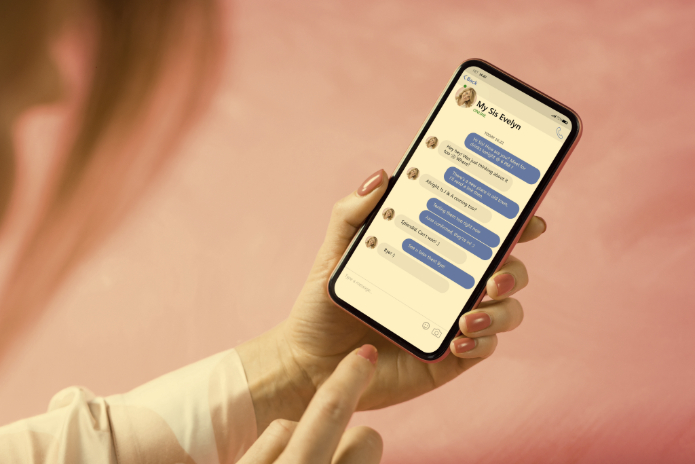
In 2020, during an interview, I said: ''Quem did not prepare for WhatsApp ate the ball’. At that time, it was already evident that the application would become indispensable in the daily lives of Brazilians, given that the average daily use time of the application was close to an hour and a half. Today, this forecast came true: WhatsApp is not only a means of communication, but a hybrid space that mixes personal and professional interactions. This fusion between personal life and work reflects a unique behavior of the Brazilian market, creating an ideal environment for financial innovation.
We are among the largest app markets in the world, alongside India and Indonesia. WhatsApp has already become an essential technology for millions of Brazilians. More than a messaging app, it has transformed into a day-to-day operating system, where businesses are closed, customers are served and transactions happen.
We are witnessing a change of era, where artificial intelligence (AI) is no longer a distant promise, but a practical and accessible tool, capable of transforming the way we manage our finances.
Over the last decades, we have witnessed several technological transformations: the internet era (1995-2000), the cloud computing era, the mobile era and now the AI era. In the transition from the mobile era, where usability and design predominated, to the AI era, we are migrating from a model focused only on user experience to one also focused on task execution. Google pioneered integrating machine learning into its searches, but OpenAI revolutionized by transforming “search” into “answer”.
Traditional banks still impose bureaucracies and time-consuming processes.Fintechs have brought innovation, but many maintain monetization models that make no sense to the small entrepreneur, with fees, monthly subscriptions and excess functionality that end up being underutilized.
What entrepreneurs really need is not a solution full of technical resources, but an intuitive, efficient and, above all, accessible service. Instead of navigating through complex menus or filling out multiple forms, a user should solve their financial need through a simple voice command or text messagethe.
The next evolution of conversational platforms in the financial sector is not limited to the automation of customer service, but rather to the creation of continuous and integrated experiences. This means that a user can initiate a transaction in a messaging application, continue in the browser and complete the operation on another device without losing the flow of interaction.
This omnichannel connectivity, coupled with AI, will make the experience more fluid and efficient, allowing entrepreneurs and consumers to save time, eliminate red tape and reduce operating costs.
The growth of conversational platforms in the financial sector demonstrates that the future will belong to solutions that reduce complexity, optimize processes and put technology to work in favor of users. The trend is clear: money and financial services will be increasingly accessible within the communication platforms that are already part of the daily lives of the population.
As new technologies emerge, these solutions are expected to not be limited to banking operations alone, but to integrate payments, financial analysis, lending and investment in a simple and efficient way.
Traditional banks will need to reinvent themselves. Fintechs that do not prioritize the intuitive experience will lose ground.True innovation will be in the solutions that truly empower the user, making finance more accessible, agile and connected to the real world.
The future has already begun and it will be conversational.


 Português do Brasil
  English
  Español
  Deutsch
  香港中文
香港中文  Русский
  हिन्दी
  Français
  Italiano
  日本語
日本語  العربية
  繁體中文
繁體中文  বাংলা
বাংলা  Български
  Čeština
  Dansk
Dansk  Ελληνικά
  Suomi
Suomi  Hrvatski
  Magyar
  Bahasa Indonesia
  한국어
한국어  Lietuvių kalba
  Nederlands
  Norsk bokmål
  Polski
  Português de Angola
  Português
  Română
  Slovenčina
  Slovenščina
  Svenska
  ไทย
ไทย  Türkçe
  Українська
  Tiếng Việt
  简体中文
简体中文