

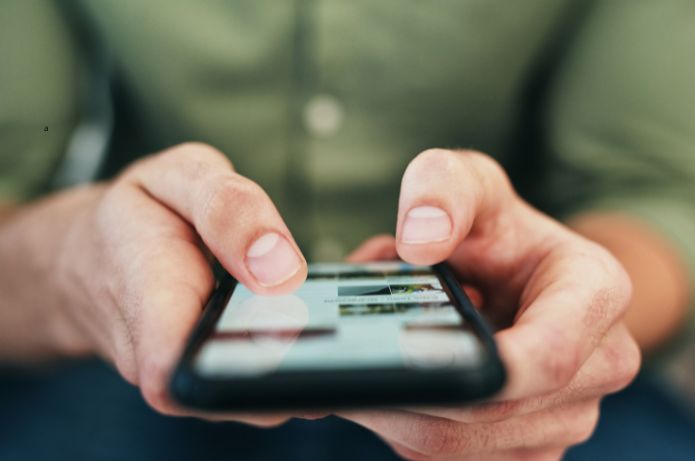
Digital accessibility has become a growing priority on social media platforms as companies recognize the importance of creating an inclusive environment for all users. With more than one billion people living with some form of disability, according to the World Health Organization (WHO), digital inclusion is not only a matter of social responsibility, but also an opportunity to reach a wider audience.In this article, we explore the social media platforms that are leading the way in terms of accessibility resources for users with disabilities.
Facebook has invested significantly in accessibility features. One of the most notable tools is the “Antative Text Automatic” (AAT), which uses artificial intelligence to describe images to visually impaired users.In addition, the platform supports screen readers and allows the customization of subtitles in videos, facilitating navigation for hearing impaired users.
Instagram, which belongs to Facebook, has also taken steps to improve accessibility.The platform allows users to add alternative text to their photos, which helps visually impaired people understand the content of the images. Recently, Instagram introduced the option of automatic subtitles on videos on IGTV, Stories and Reels, making content more accessible to people with hearing impairment.
Twitter has been noted for its accessibility initiatives, including the implementation of image descriptions and automatic captions for videos. The platform has also launched an Accessibility Committee, composed of employees dedicated to improving the experience of users with disabilities.In addition, Twitter supports screen readers and allows the customization of colors and contrasts, benefiting users with visual impairments.
TikTok
TikTok, the popular short video platform, has been investing in accessibility features to make content more inclusive. The platform has introduced automatic subtitles for videos, allowing content creators to make their videos accessible to people with hearing disabilities.In addition, TikTok offers text and contrast customization options, helping visually impaired users navigate the platform more easily.
LinkedIn, the leading professional social network, is also committed to accessibility.The platform allows users to add image descriptions and supports screen readers.In addition, LinkedIn has been working to ensure that its forms and interfaces are compatible with assistive technologies, making it easier for users with various disabilities to navigate.
YouTube
YouTube, the world's largest video sharing platform, has implemented a number of accessibility features.The platform offers automatic subtitles for videos in multiple languages, allowing people with hearing disabilities to follow the content.In addition, YouTube allows the customization of subtitles, such as size and color adjustment, to better meet the needs of users with visual impairments.
Conclusion
Social media platforms are increasingly aware of the importance of accessibility and are implementing innovative features to ensure that all users, regardless of their abilities, can fully participate in online interactions. These initiatives not only promote inclusion, but also extend the reach of platforms, benefiting both users and companies themselves. As technology continues to evolve, more advances are expected to be made, making the digital environment increasingly accessible to all.


 Portuguese (Brazil)
  English
  Spanish
  German
  Chinese (Hong Kong)
  Russian
  Hindi
Hindi  French
  Italian
  Japanese
  Arabic
  Chinese (Taiwan)
  Bengali
  Bulgarian
  Czech
Czech  Danish
  Greek
Greek  Finnish
  Croatian
  Hungarian
  Indonesian
  Korean
  Lithuanian
  Dutch
Dutch  Norwegian
  Polish
  Portuguese (Angola)
  Portuguese (Portugal)
  Romanian
  Slovak
  Slovenian
  Swedish
  Thai
Thai  Turkish
  Ukrainian
  Vietnamese
  Chinese (China)