

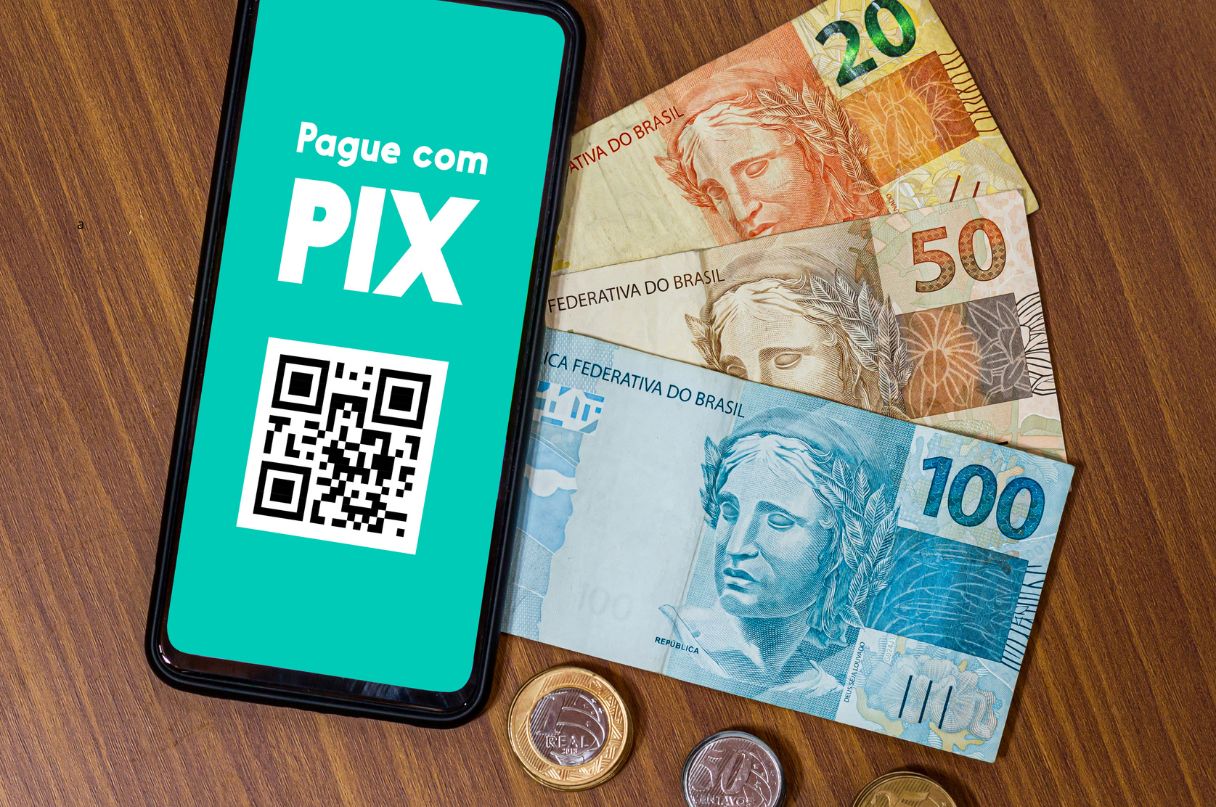
About to complete four years of operation, Pix consolidated among the means of payment in Brazil. The modality of immediate transfer & free & value WON the Brazilians, having revolutionized their financial daily. According to data from the Central Bank (BC), last September, 5.6 billion transactions were made through Pix, with 169.3 million users. Compared to the same period of 2023, the highs were 46.7% and 9.5%, respectively. However, success does not allow the authorities to accommodate themselves. As with all innovation, it is necessary to make constant adjustments to improve the system.
With Pix is no different. Being a widely used and accepted means of payment in the country, it needs constant monitoring for prevention, control and solution of scams and frauds. This constant surveillance helps to maintain the solidity and reliability of this means of payment. Not by chance, on November 1st new rules from the BC to the Pix. The intention of the monetary authority is to strengthen security for users.
One of the main changes is the mandatory device registration by banks for full access to the system. With this new rule, users will need to register their devices (mobile phones, laptops and desktops) to make transfers via Pix. Without registration, the maximum amount per transfer will be only R$ 200, with daily ceiling of R$ 1,000. In practice, this measure aims to restrict movements through new or unknown devices, ensuring more security in situations where bank access occurs via third-party devices 8 which is very common in data leakage or theft of logins and passwords.
On another front, the BC encourages financial institutions to adopt more effective methods to identify transactions outside the behavior profile of each user. With this action, it intends to lead banks to prevent fraud proactively. Along the same lines, the BC requires financial institutions to internally promote periodic customer checks (4KKnow your customer” (KYC) (KYC) every six months. The idea is that institutions compare data with fraud records kept by the BC.
Together, these actions have a double positive effect. In addition to contributing to reduce the problems with scams and fraud related to Pix, they tend to strengthen the entire financial ecosystem.This is because they hinder the action of criminals who often exchange devices to avoid tracking WHETHER in fraud with Pix or with other instruments of the financial market. In other words, the protection of the system as a whole should become even more robust.
The four-year anniversary of Pix does not only have news related to the issue of security. The BC also starts to adopt innovations expected for some time. A good example is the recurring Pix, which should start in 2025. This tool will allow the automatic payment of consumer bills (water, light, telephony, among others), which will provide greater convenience for both customers and suppliers.
Gradually, with the help of good acceptance of Pix, features such as the DDA (authorized direct debit) and the recurring Pix tend to overcome the initial resistances of users and gain more and more memberships. This is happening as these tools prove effective in increasing the security and convenience in payments for essential services. These innovations offer benefits not only to consumers, but also to suppliers, who can count on greater financial predictability.
This whole context reflects a natural evolution of the instant payments ecosystem in Brazil, driven by the wide adoption of Pix in Brazil. And, with continuous improvements, the system adapts to market demands while improving security, creating opportunities for products and services in various sectors that already use Pix as the main means of financial movement.


 Portuguese (Brazil)
  English
  Spanish
  German
  Chinese (Hong Kong)
  Russian
  Hindi
Hindi  French
  Italian
  Japanese
  Arabic
  Chinese (Taiwan)
  Bengali
  Bulgarian
  Czech
Czech  Danish
  Greek
Greek  Finnish
  Croatian
  Hungarian
  Indonesian
  Korean
  Lithuanian
  Dutch
Dutch  Norwegian
  Polish
  Portuguese (Angola)
  Portuguese (Portugal)
  Romanian
  Slovak
  Slovenian
  Swedish
  Thai
Thai  Turkish
  Ukrainian
  Vietnamese
  Chinese (China)