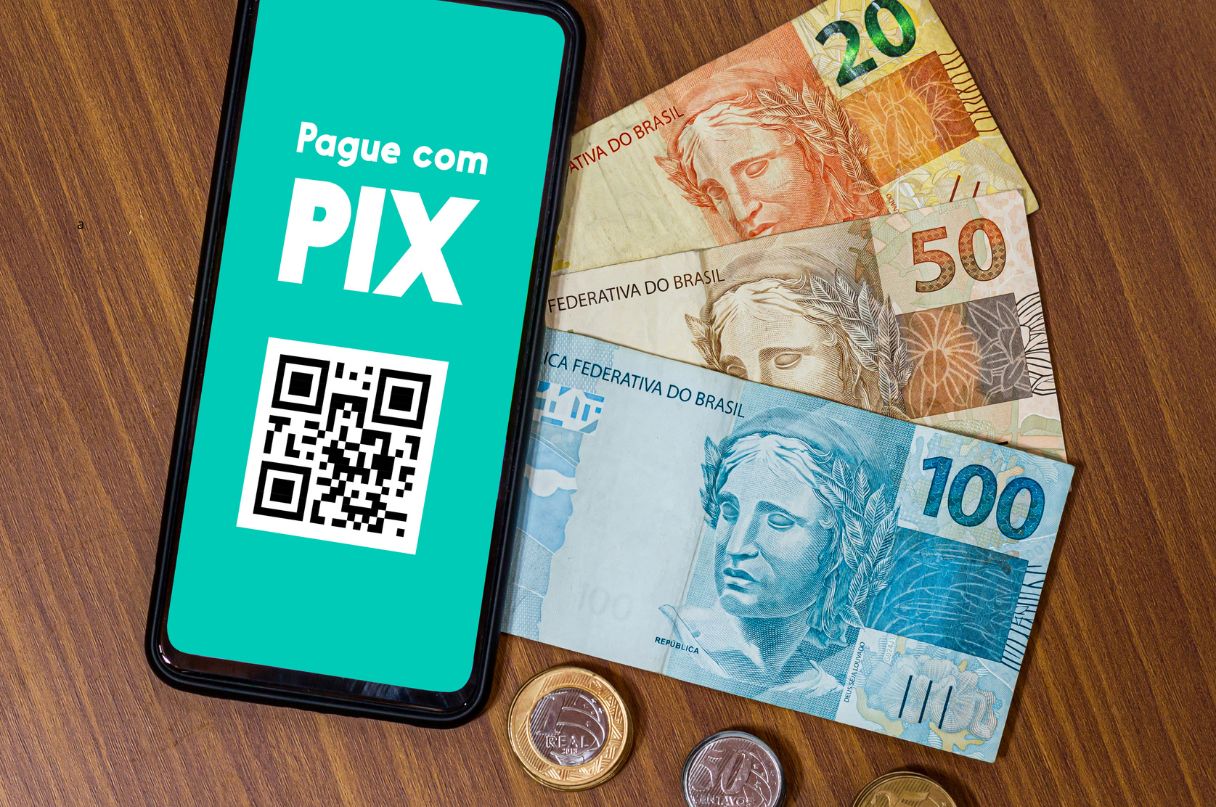
In these times of accelerated advancement of new technologies, agility in operations is no longer a choice to become an imperative for companies. After all, being fast and efficient in business can make a difference when it comes to creating a product or service, serving a customer or managing your own cash. It is at this point that instant payment systems such as the Brazilian Pix & Pix have much to offer companies, transforming what was a slow and costly process into something immediate and cheap.
And this evolution is just beginning. It is certain that in the coming years, instant payments will become the norm, probably incorporating technologies such as artificial intelligence (AI) and the internet of things (IoT). Allowing transactions with different currencies and creating solutions that go beyond borders, these payments turbocharged with technological tools will offer both those who pay and those who receive more convenience and efficiency. These are agile, safe and permanent operations: they are available 24 hours a day, seven days a week.
Several industries are impacted by instant payments: retail (physical and online), financial services, supply chain and logistics, utilities, gaming and betting industry, just to name a few. Digital betting platforms, for example, have increased the amount of users, the total amount processed and the revenues after adopting instant payment services.
Technically, instant payments (also called instant payments or real-time payments) are transfers of resources that leave one account and reach another within ten seconds of processing the transaction.This regardless of whether the transfer is from legal account to physical account (B2C), from legal account to another legal account (B2B), from one physical account to another physical account (C2C) or between accounts (A2A). Before that, bank transfers typically required at least one business day of waiting. Such agility of instant payments comes from the fact that these transactions are processed without intermediaries, such as clearing houses or correspondents.
Apart from the issue of agility, instant payments also have the advantage of reducing costs. In this new system, there are no transaction fees and other costs associated with traditional payments, such as check processing fees and transfers between banks.In addition, real-time payments have a positive impact on cash flow management.This is because, since transactions are completed instantly, it is avoided to make a payment unfeasible due to lack of funds.
Instant payments are now developing in full swing in several markets around the world, already consolidating as the most advanced in the payment industry. It is customary for each country to create models of resource transfers adapted to its own reality, bequeathing the operation of the system to central banks or private entities. Examples already in operation and projects are not lacking, and experience shows the enthusiasm of users in membership 'just see the numbers of the success pix in Brazil.
In the United States, there is FedNow, launched in 2023 and which, as its name suggests, is operated by the Central Bank of the country. In Canada, Real-Time Rail (RTR) is scheduled for release in 2026, while in the euro zone SEPA Instant Credit Transfer has been operating since 2017. Other experiences are Faster Payments, launched in 2018 in the United Kingdom; unified Payments Interface (UPI), in operation since 2016 in India and one of the examples of greater success and popularity among the instant payments operating in the Payments (1st Payments, the Payments, the Hong Kong, the First 1st Payments, the Payments (Fast Singapore, the 1, the Payments).
The next few years will certainly witness the consolidation of this mode of payments around the world, and companies that do not want to be left behind definitely need to follow this evolution.