

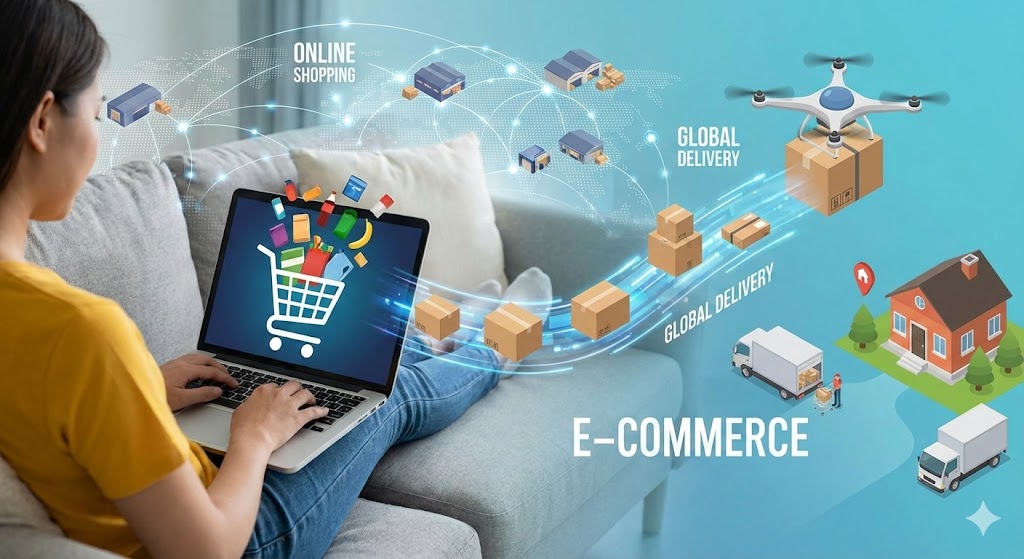
The e-commerce revolutionizing the way in which companies and consumers conduct business transactions.This is a model of business which allows the sale of products and services by internet, without the need for a physical presence.
In recent years, the and e-commerce it has shown an accelerated growth in Brazil, becoming a viable option for beginning entrepreneurs, with low initial investment compared to shops physicals.
By understanding the fundamental aspects of e-commerce, entrepreneurs can start and develop a business successful online, expanding your sales and reaching new customers.
Key Takeaways
- E-commerce is a business model that allows the sale of products and services online.
- E-commerce has shown accelerated growth in Brazil.
- It is a viable option for beginning entrepreneurs with low investment.
- Allows sales expansion and reach new customers.
- It is essential to understand the basics of starting an online business.
What is E-commerce?
E-commerce is a form of trade which uses a internet to carry out commercial transactions. This modality of business it allows businesses and individuals to sell products and services online, reaching a global audience.
The definition of e-commerce is intrinsically linked to the concept of e-commerce, which involves the purchase and sale of goods or services by electronic means.
Definition and Concept
E-commerce is characterized by its ability to connect buyers and sellers efficiently and securely. This is made possible thanks to the internet infrastructure, which allows the creation of robust and scalable e-commerce platforms.
There are several shapes e-commerce, including B2B (Business-to-Business), B2C (Business-to-Consumer), C2C (Consumer-to-Consumer), among others. Each of these modalities has its particularities and is adapted to the specific needs of businesses and consumers.
| Modality | Description |
|---|---|
| B2B | Business transactions between companies |
| B2C | Selling products or services directly to the consumer |
| C2C | Transactions between consumers, usually through platforms |
The Right Graphic: E-commerce, Ecommerce or E-Commerce?
The spelling of the term e-commerce may vary, with some people writing “ecommerce,” “e commerce,” or other variations.However, the most recommended and accepted form in Brazil is “e-commerce,” with hyphen.
The origin of the term comes from the english expression “electronic commerce,” that was adapted to portuguese as “e-commerce.” Hyphen spelling is the most widely used in official documents and marketing materials.
- The spelling “e-commerce” is the most accepted in Brazil.
- The term“electronic commerce” is the direct translation of the term“electronic commerce.”
- The use of the hyphen is recommended to maintain consistency with the original spelling.
The History of E-commerce
The history of e-commerce is a fascinating journey that began decades ago.E-commerce has evolved significantly since its beginnings, transforming the way we buy and sell products.
Origins in the 70s and 80s
E-commerce has its roots in the 70s and 80s, when technology began to integrate with traditional commerce.At that time, the first electronic transactions emerged, marking the beginning of a new era in commerce. Advanced technology has allowed companies to start exploring new ways to sell and buy products. Although still in its early stages, e-commerce has shown great growth potential.
Evolution of E-commerce in Brazil
In Brazil, the first e-commerce was founded in 1995: the Book Net, by Jack London.In 1999, the store was sold and renamed as Submarino, a brand that became a great representative of the brazilian e-commerce. From then on, interest in e-commerce began to become popular.In the 90s, giants such as Amazon and eBay began to invest in the brazilian market, boosting the growth of the e-commerce in country.
The Brazilian e-commerce market has continued to evolve over the decades, with the entry of new players and the development of technological and logistics infrastructure. Today, e-commerce is an integral part of the market retail in Brazil, with several shops online offering a wide range of products.
Types of E-commerce
There are several types of e-commerce, each with its characteristics and directed to different audiences and needs. Understanding these models is fundamental for any business that wants to establish itself in the digital market.
B2B Business to Business
The B2B model refers to business transactions between companies. This type of e-commerce is common in markets where companies sell products or services to other companies, such as raw materials or components example classic are the business shopping platforms.
B2C Business to Consumer
B2C is one of the most well-known e-commerce models, involving direct transactions between companies and consumers in this model, companies sell products or services directly to end users, as occurs in online retail stores.
B2E Business to Employee
The B2E model focuses on transactions between a company and its employees. This may include selling products or offering exclusive services to employees, improving the employee experience within the company.
B2G Business to Government
B2G involves transactions between companies and government entities.This model is used to provide products or services to public bodies, usually through government procurement or purchasing processes.
C2B - Consumer to Business
In the C2B model, the consumers offer products or services to businesses. One example common are freelancers who provide services to companies or individuals who sell their skills to corporations.
C2C - Consumer to Consumer
C2C trade is conducted between consumers endings, which commercialize products this model is facilitated by online platforms such as Mercado Livre and Enjoei, which allow users to buy and sell used or new products directly from each other.
The C2C model revolutionized the used products market, creating a circular and shared economy ecosystem.The main platforms that enable C2C commerce in Brazil offer a wide range of products and facilitate direct negotiation between the two sectors customers.
The advantages of the C2C model include more affordable prices and the possibility of direct negotiation, as well as promoting sustainability by giving new life to products that would be discarded.
However, C2C commerce also faces specific challenges such as trust and security issues in transactions. To mitigate these risks, it is important to follow practical guidelines such as verifying the reputation of sellers and using secure payment methods.
How E-commerce Works
To understand how an e-commerce works, you need to consider the fundamental elements that underpin it. An e-commerce is a shop virtual that allows the purchase and sale of products or online services.
Customer Purchase Journey
The buying journey of client it is a crucial aspect of any e-commerce. It starts with the visit to the shop online, where the customer navigates the products the ease of navigation and the presentation of products directly influence the purchase decision.
During the journey, the customer can add products to the shopping cart and proceed to the payment. The security and variety of means of payment are fundamental to complete the sales successfully.
Rack Operations
Behind one shop virtual success, there are several operations that are invisible to the customer, but essential for the operation of e-commerce. One of these operations is the management inventory, which involves controlling the products available for sale.
The processing of requests it is another critical operation. From confirmation of purchase to separation of products and preparation for delivery, Each step should be efficient and accurate.
| Operation | Description |
|---|---|
| Stock Management | Control of products available for sale. |
| Order Processing | Confirmation of purchase, separation of products and preparation for delivery. |
| Logistics | Storage, packaging and shipment of products. |
In addition, financial management is vital, involving reconciliation of payments, chargebacks and revenue control. The integration between the different operating systems is critical to ensure the efficient operation of the shop virtual.
Main Components of an E-commerce
For an e-commerce to be successful, it is crucial to understand its core components.An effective e-commerce is composed of several elements that work together to deliver a smooth and efficient shopping experience.
E-commerce Platform
The e-commerce platform is the heart of any online store.It provides the necessary tools to manage products, process payments and handle shipments.There are several platforms available, each with its own characteristics and benefits.
Means of Payment
Payment methods are essential for customers to complete their purchases safely and conveniently. Payment options range from credit and debit cards to bank slips and digital wallets.
Shipping Forms
Shipping ways are crucial to ensure that products reach customers efficiently. Key options include Post and private carriers.The choice of the proper shipping way depends on the type of product and the location of the customer.
Delivery logistics is a key component to customer satisfaction. The main shipping options available in Brazil include Post offices, private carriers and express deliveries.
- Presentation of the main shipping options available for virtual stores in Brazil.
- Detail on how freight calculation works and the variables that influence its value.
- Analysis of the advantages and disadvantages of each shipping method.
Differences Between E-commerce and Marketplace
The distinction between e-commerce and marketplace is critical to understanding online sales strategies. While both are used for selling products or services online, they operate in different ways and offer different advantages.
What is E-commerce Own
An e-commerce itself refers to an online store that is managed by a single entity. In this model, the company is responsible for the entire operation, from inventory management to the service of the customer client. having your own e-commerce means having full control over the user experience, being able to customize the shop according to the identity of the brand.
Some of the main features of an e-commerce itself include:
- Full control over the presentation of products and user experience.
- Direct management of sales and stock.
- Ability to customize the platform according to the needs of the brand.
What a Marketplace is
an The initiative broke away from traditional campaign formats and redefined the point of sale through a proprietary algorithm responsible for pricing the items based on the type and quantity of content to be published, encouraging creativity and connecting creators, brands, and consumers through an interactive and shareable experience. In just 40 hours, the store sold 100% of its inventory. There were 624 visitors who produced over 1,800 pieces of content. The campaign resulted in 4.8 million organic impressions on social media and led to a 43% increase in visits to the fashion category on Mercado Livre's it is an online platform that brings together several shops or sellers in a single virtual space.In this environment, sellers can offer their products a broad base of customers. Os marketplaces best known in Brazil include Mercado Livre, Magazine Luiza and Americanas.
The main characteristics of a The initiative broke away from traditional campaign formats and redefined the point of sale through a proprietary algorithm responsible for pricing the items based on the type and quantity of content to be published, encouraging creativity and connecting creators, brands, and consumers through an interactive and shareable experience. In just 40 hours, the store sold 100% of its inventory. There were 624 visitors who produced over 1,800 pieces of content. The campaign resulted in 4.8 million organic impressions on social media and led to a 43% increase in visits to the fashion category on Mercado Livre's include:
- Single platform that houses multiple sellers.
- Sellers pay commissions on the sales accomplished.
- Great visibility for products due to high traffic of customers on the platform
Advantages of Having an E-commerce
Having an e-commerce offers several competitive advantages for modern businesses.With the growing demand for online shopping, establishing a robust digital presence is crucial to the success of any venture.
Low Initial Investment
One of the main advantages of starting an e-commerce is the low initial investment required. Compared to physical stores, which require significant expenses with rent, decoration and inventory, an e-commerce can be started with much less capital. This allows more entrepreneurs to enter the market, promoting innovation and competition.
Operating 24 Hours a Day
E-commerce allows businesses to operate 24 hours a day, 7 days a week. This means that sales can occur at any time, without the need to have a team physically present.The automation of processes and integration with payment systems facilitate this continuous operation, increasing sales opportunities.
Extended Geographic Reach
With e-commerce, businesses can reach customers anywhere in the world, overcoming geographical barriers.This opens up new opportunities for growth and expansion, allowing companies to sell to markets that were previously inaccessible.
Data Analysis and Personalization
E-commerce provides the ability to collect and analyze data on customer behavior.This information can be used to personalize the shopping experience by offering relevant products and promotions to each customer. Personalization increases customer satisfaction and can lead to higher conversion rates.
Scalability of Business
Scalability is one of the most significant advantages of an e-commerce. It means that businesses can grow without a proportional increase in costs. Digital infrastructure facilitates expansion without the need for new physical spaces or large hires. Strategies such as process automation, system integration and operations outsourcing are critical to scale an e-commerce efficiently.
When planning the growth of an e-commerce, it is crucial to identify bottlenecks and implement early solutions. Examples of Brazilian e-commerce that have escalated rapidly demonstrate the importance of well-planned strategies and the ability to adapt to market changes.
How to Build an E-commerce from Zero
Building an e-commerce from scratch may seem like a challenging task, but with proper planning, it is possible to achieve success.In this guide, we will explore the essential steps to create a successful e-commerce.
Choosing a Market Niche
Choosing the niche market is one of the most important decisions when setting up an e-commerce. It is essential to select a niche that is profitable and that you have knowledge or passion.
Definition of Products and Suppliers
Defining products and finding reliable suppliers is crucial.You need to ensure that products are of quality and that suppliers can meet demand.
To find suppliers for e-commerce, you can attend trade shows, use supplier directories, or contact manufacturers directly.
Regularization and Legal Aspects
Regularizing e-commerce involves obtaining the necessary records, such as CNPJ, and complying with tax obligations.In addition, it is important to have a clear term of use and privacy policy.
Trademark and Domain Registration
Registering the brand and domain is essential to protect the identity of your e-commerce. This helps to avoid legal problems and establish a strong online presence.
Financial Planning
Financial planning is crucial to the success of an e-commerce.This includes calculating initial and ongoing costs, setting selling prices, and estimating the working capital required.
It is important to consider costs such as e-commerce, marketing, inventory, and logistics platform.In addition, calculating the sale price considering fixed costs, variables, taxes, and desired profit margin is critical.
To keep the operation running until it reaches break-even point, it is necessary to estimate the required working capital.
Monitoring financial indicators such as cash flow, contribution margin, and ROI is essential to business health.
Choosing the Ideal E-commerce Platform
The e-commerce platform is the backbone of your online business, and choosing it carefully is critical. With so many options available, it is crucial to evaluate the features and features offered by each.
Free vs. Paid Platforms
E-commerce platforms can be free or paid, each with its advantages and disadvantages.Free platforms are ideal for beginners or small businesses, but may have limitations in terms of features and customization.
Paid platforms offer more advanced features, such as marketplaces integration and email marketing automation, plus greater flexibility to customize the virtual store.
Key Resources to Consider
When choosing an e-commerce platform, it is essential to consider the features it offers robust catalog manager it is critical to organize products, variations and categories efficiently.
In addition, resources of Checkout and payment, As automatic freight calculation and multiple payment methods, are crucial for a smooth shopping experience. marketing & sales, Like discount coupons and loyalty programs, they can also increase sales.
Mobile responsiveness is another important factor, considering that most online purchases are made via smartphones The integration and analytical reports they can help optimize the operation and improve sales.
Payment Methods for E-commerce
In the context of e-commerce, varied payment methods are crucial to meet customer needs. Offering multiple payment options can increase conversion and improve the buyer experience.
Credit and Debit Cards
Credit and debit cards are widely accepted means of payment.They offer convenience & security for customers, enabling fast and secure transactions.
Boleto de Bancario
The bank slip is a popular option in Brazil, allowing customers to pay offline.It is a safe way to carry out transactions, especially for those who prefer not to use cards.
PIX and Transfers
PIX and bank transfers are instant and efficient methods.They offer agility & safety, being especially useful for higher value transactions.
Digital Wallets
Digital wallets such as PicPay, Mercado Pago, PayPal and Google Pay are gaining popularity. They offer practicality, additional security and can help in customer loyalty.The integration of these wallets in e-commerce can reduce friction in checkout and increase conversion rate, especially on mobile devices.
| Payment Method | Advantages |
|---|---|
| Credit/Debit Cards | Convenience, safety |
| Boleto de Bancario | Security, offline option |
| PIX/Transfers | Agility, safety |
| Digital Wallets | Practicality, additional security |
Logistics and Delivery in E-commerce
Efficiency in logistics and delivery can be the differential between a successful e-commerce and another that cannot meet customer expectations. Good logistics ensures that products reach customers quickly and safely.
Post and Carriers
Post offices and carriers are fundamental for the delivery of products in an e-commerce. They offer several shipping options, such as standard shipping and express shipping, Allowing customers to choose the option that best suits their needs.
Dropshipping
Dropshipping is a logistics model in which products are shipped directly from the supplier to the customer, without the need for inventory reduces costs and increases efficiency on delivery.
Stock Management
Inventory management is crucial to the success of an e-commerce.It involves the control of products, stock and sales, Ensuring products are available when customers need. One inventory management system helps to keep track and avoid ruptures or excess stock.
Efficient inventory management avoids breakdowns and fixed capital, presenting methods and tools for inventory control. Indicators such as turnover, coverage and accuracy are important to monitor the health of the stock.
Digital Marketing for E-commerce
Modern e-commerce relies heavily on digital marketing strategies with growing online competitiveness, it is crucial to have a robust digital presence to attract and retain customers.
SEO for Virtual Stores
The SEO (Optimization for Search Engines) it is vital to increase the visibility of online stores in search results. This involves optimizing products and descriptions with relevant keywords, improving website speed and ensuring a good user experience.
Social Networks and Social Commerce
The social networks they are powerful channels to connect with customers and promote products social commerce it allows consumers to buy directly from social media platforms, simplifying the buying journey.
Email Marketing and Automation
The email marketing it remains an effective tool for direct and personalized communication with customers.Welcome campaigns, cart abandonment and after-sales are examples of how email can increase customer sales and improve customer experience.
A marketing automation it allows you to create personalized journeys based on customer behavior, increasing the efficiency of campaigns.
Customer Service in E-commerce
In the world of e-commerce, customer service is crucial to building loyalty and trust. A good shopping experience depends heavily on the service offered by the company shop virtual.
Service Channels
Service channels are critical for consumers to get the information or solutions they need shop virtual should offer multiple communication channels, such as live chat, email, phone and social networks, to meet the various preferences of the customers.
Exchange and Return Management
The management of exchanges and returns is a critical aspect of customer service in e-commerce politics clear and efficient exchanges and returns is essential for the credibility of the shop. According to the Consumer Protection Code, consumers are entitled to exchanges and returns within a certain period.
| Consumer Rights | Store Responsibilities |
|---|---|
| Right to exchange or return within the established period | Offer a clear exchange and return policy |
| Receive refund or exchange of the product | Quickly process exchange or return requests |
One politics well-structured exchanges and returns not only meet legal requirements, but also improve the experience do consumer, increasing confidence in shop.
Essential Metrics and Indicators
Understanding e-commerce metrics and indicators is vital to optimizing strategies and improve results. These metrics provide data crucial to evaluate the performance of an online store and make informed decisions.
Conversion Rate
Conversion rate is an indicator that measures the percentage of visitors who make a purchase. A high conversion rate indicates that the online store is effectively attracting and converting visitors into customers. to improve this rate, it is essential to optimize the user experience and simplify the purchase process.
Average Ticket
The average ticket represents the average amount spent for each client increasing the average ticket can be achieved by offering related products or special promotions, which can increase revenue without the need to purchase new ones customers.
Cart Abandonment Rate
Cart abandonment rate measures the percentage of carts that are abandoned before checkout. Reducing this rate involves strategies such as simplifying the checkout process and sending reminders about abandoned carts.
ROI and CAC
The ROI (Return on Investment) and the CAC (Cost customer Acquisition) are key metrics.RIO measures the efficiency of a investment in marketing, while CAC calculates the cost of acquiring a new one client. The relationship between CAC and LTV (Customer Life Value) is crucial; a low CAC and a high LTV indicate a strategy effective marketing.
E-commerce Trends for the Next Years
As e-commerce continues to grow, several trends are emerging to shape the halfway online shopping environment.These trends include technological advances, changes in the habits of consumers and innovations in business practices.
Artificial Intelligence and Automation
A artificial intelligence (AI) it is revolutionizing e-commerce by enabling personalized and efficient shopping experiences. Automation of processes such as customer service and inventory management is also becoming commonplace.
- Personalization of customer experience
- Automating business processes
- Demand forecasting and inventory management
Augmented and Virtual Reality
A augmented reality (AR) and virtual reality (VR) they are transforming the way they consumers interact with them products online. These technologies allow customers to view products in their environment before making a purchase.
| Technology | Application in E-commerce |
|---|---|
| Augmented Reality | Visualization of products in real environment |
| Virtual Reality | Immersive shopping experiences |
Sustainability in E-commerce
A sustainability it is becoming a crucial factor in e-commerce, with companies seeking to reduce its impact environmental. practices such as the use of packaging ecological and optimized logistics are gaining prominence. Sustainability is not just a trend, it is a necessity for the future of e-commerce.
Conclusion
E-commerce has transformed the way businesses operate and interact with customers. Throughout this guide, we explore key aspects of e-commerce, from its definition to future trends and e-commerce offers significant competitive advantages such as low initial investment and expanded geographic reach internet constantly evolving, new opportunities for business now is the ideal time to start your journey in e-commerce, applying the knowledge acquired. Remember that continuous adaptation is crucial to success in the market e-commerce.

