

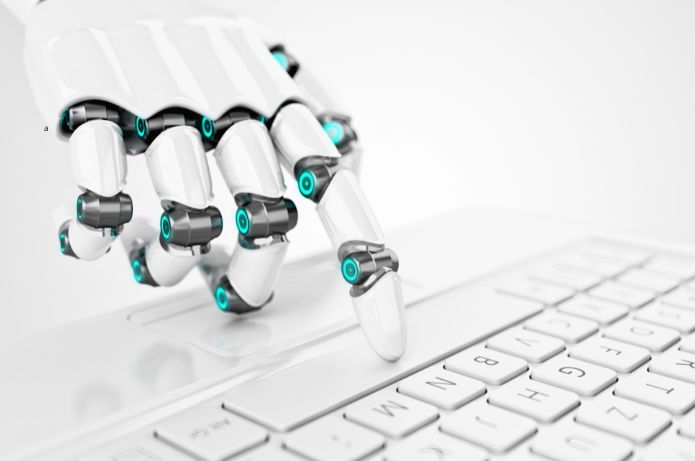
Currently, an Buzzword what anyone knows and uses is Artificial Intelligence (AI): it has taken over the conversation wheels, the operations of companies and is not just a passage, it is here to stay. AI has some models and the term of the moment is Generative Artificial Intelligence (IAG), which is able to learn from all the “pegadas” that we leave on the internet to generate information and, from there, generate answers to questions we ask through commands that are called commands prompt.
But what made this “boom” happen for a technology that is no longer new?It has approached common use and become simpler.This is because IAG is a technology that can generate new content, such as text, images and music, by being “trained” in a dataset.
It is important to remember that IAG is a tool and, like any tool, can be used for good or not. It is our role to ensure that it is used responsibly and that society is protected from misuse of this technology.
I like to point out that THE HUMAN it is essential throughout this journey to determine the creative, informative and useful profile. It is the human who guarantees the use of the IAG for good and not for evil. This is our greatest task facing this future. I will highlight below examples of the “IAG of good”.
Daily use
On a daily basis, we use maps with routes and spreadsheets that help us create formulas without having to be experts. Other examples of how people are using IAG positively are:
- Creative content . OpenAI has created the GPT-3 language model that can generate human-quality text in response to a wide range of questions.
- Translation . Can translate languages.Google Translate uses AI to translate more than 100 languages.
- Writing . Can write different types of content, such as articles and emails, with correction.Grammarly uses AI to check for grammatical and spelling errors in human-written texts.
- Answers . Siri and Google Assistant use AI to answer questions on a wide range of topics.
Use in marketing
IAG is also present in marketing, especially in internet and social media actions, such as content relevance (analyzing browsing patterns and interactions) and user experience (engaging you when personalizing content and ads).
Use in education
In education, IAG makes it possible to increase the interest of students through:
- Personalized and adaptive learning & learning it analyzes, in real time, the progress and needs of students, adjusting their experiences based on difficulties and learning facilities.
- Gamification '^ it can add gamification features and make learning more attractive to students.
- Virtual tutors 5 Can create virtual tutors with individualized attention that helps students with their assignments.
Use in art and music
An interesting field of application of IAG is the creation of art and music from a database and artistic styles. The Adversarial Generative Neural Networks (GANs) and the Variational Autoencoder Neural Networks (VAEs) are technologies used for this purpose. Artists such as John Whitney (computer animator), Vera Molnar (computer artist), SKYGGE (musician), Refik Anadol (designer), Mario Klingemann (computer artist) and Robbie Barrat (designer) have explored IAG in their works.
However, this situation provides intellectual property questions.First, the concept of authorship becomes nebulous when it comes to works of art generated by IAG. Who should receive credit?Would the programmer, machine or user provide the initial parameters for the creation of the work?These questions still do not have definitive answers.
In Brazil, there is an important discussion of the use of images of artists who have died in advertisements, such as the case of Elis Regina in Volkswagen advertising: the National Council for Advertising Self-regulation (CONAR) has entered with an ethical representation against advertising by consumer complaints about respectability and about fiction x reality.
IAG and the Future
For all this, IAG is redefining boundaries and indicating a future in which it will be an integral part of almost every aspect of our lives.
The capacity for innovation from IAG is democratizing creativity.As IAG becomes more present, the need for digital awareness and education also increases. Understanding how these systems work and how they can be used is an essential component to navigating safely.
It is critical that appropriate policies and regulations are developed to ensure that the IAG is used correctly: issues of data privacy, security, equity and accountability need to be addressed to ensure that the IAG is used in a way that benefits everyone, without increasing inequalities or undermining individual rights.
Finally, as we prepare to welcome the IAG into our future, we must also strive to shape that future in a way that respects human values and promotes the common good.


 Portuguese (Brazil)
  English
  Spanish
  German
  Chinese (Hong Kong)
  Russian
  Hindi
Hindi  French
  Italian
  Japanese
  Arabic
  Chinese (Taiwan)
  Bengali
  Bulgarian
  Czech
Czech  Danish
  Greek
Greek  Finnish
  Croatian
  Hungarian
  Indonesian
  Korean
  Lithuanian
  Dutch
Dutch  Norwegian
  Polish
  Portuguese (Angola)
  Portuguese (Portugal)
  Romanian
  Slovak
  Slovenian
  Swedish
  Thai
Thai  Turkish
  Ukrainian
  Vietnamese
  Chinese (China)