

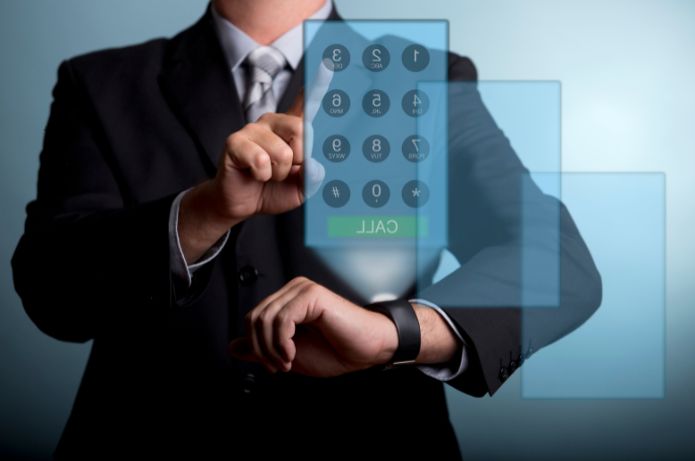
In the ever-evolving landscape of e-commerce, where the pursuit of more immersive and personalized shopping experiences is relentless, a technology emerges that promises to revolutionize customer service: holograms. This futuristic innovation is bridging the barriers between the physical and digital worlds, offering a new dimension to the interaction between consumers and brands in the online environment.
The Technology Behind Holograms
The holograms used in e-commerce are high-definition three-dimensional projections that can be viewed without the need for special glasses or other devices. These images are created through advanced projection techniques and can be interactive, responding in real-time to customer actions and questions.
Applications in E-commerce
1. Virtual Shopping Assistants
Sales assistant holograms can guide customers through the purchasing process, offering personalized recommendations and answering questions in real-time.
2. Product Demonstrations
Products can be displayed in 3D, allowing customers to visualize details and features in a more realistic way than with traditional 2D images.
3. Virtual Fitting Rooms
In the fashion sector, holograms can create virtual fitting rooms where customers can “try on” clothes and accessories without leaving home.
4. Interactive Technical Support
For complex products, holograms can provide assembly or usage instructions, demonstrating step-by-step in a visual and interactive manner.
5. Personalized Product Presentations
Holograms can create product presentations tailored to each customer's individual preferences, increasing engagement and conversion chances.
Benefits for E-commerce
1. Enhanced Shopping Experience
Holograms offer a more engaging and memorable shopping experience, closer to the feeling of shopping in a physical store.
2. Reduced Purchase Hesitation
By providing more detailed and interactive product visualizations, holograms can reduce customer uncertainty, decreasing return rates.
3. Brand Differentiation
Companies that adopt this technology position themselves as innovative, standing out in a highly competitive market.
4. Personalized Service at Scale
Holograms allow for personalized, high-quality service to be offered to a large number of customers simultaneously.
5. Increased Engagement Time
Customers tend to spend more time interacting with holograms, increasing cross-selling and upselling opportunities.
Challenges and Considerations
Despite the revolutionary potential, the implementation of holograms in e-commerce faces some challenges:
1. Implementation Cost
Holographic technology is still relatively expensive, which can be an obstacle for smaller companies.
2. Infrastructure Requirement
Customers will need compatible devices to view the holograms in their entirety, which may limit initial reach.
3. Data Privacy and Security
Interaction with holograms may raise new questions about the collection and use of personal data.
4. Consumer Acceptance
Some consumers may feel uncomfortable or resistant to this new form of interaction.
The Future of Holographic Customer Service in E-commerce
As technology advances, we can expect even more impressive developments:
1. Haptic Holograms
Technology that allows one to “feel” holograms, adding a tactile dimension to the virtual experience.
2. Holographic Assistants with Advanced AI
Holograms powered by sophisticated AI, capable of learning and adapting to each individual customer.
3. Fully Holographic Shopping Spaces
Completely immersive virtual shopping environments where customers can “walk around” and interact with holographic products.
4. Integration with Augmented Reality (AR)
Combining holograms with AR to create hybrid experiences between the real and virtual worlds.
Conclusion
Holographic customer service in e-commerce represents a quantum leap in how companies interact with their customers online. By offering a more immersive, interactive, and personalized shopping experience, this technology has the potential to redefine consumer expectations and set new standards of excellence in customer service.
Although there are challenges to overcome, the possibilities are vast and exciting. Companies that can effectively integrate holograms into their e-commerce strategies will be at the forefront of a new era of e-commerce, where the boundaries between physical and digital become increasingly blurred.
As holographic technology continues to evolve and become more accessible, we can expect to see growing adoption in the world of e-commerce. This will not only transform the online shopping experience but also completely redefine the concept of customer service in the digital environment.

