

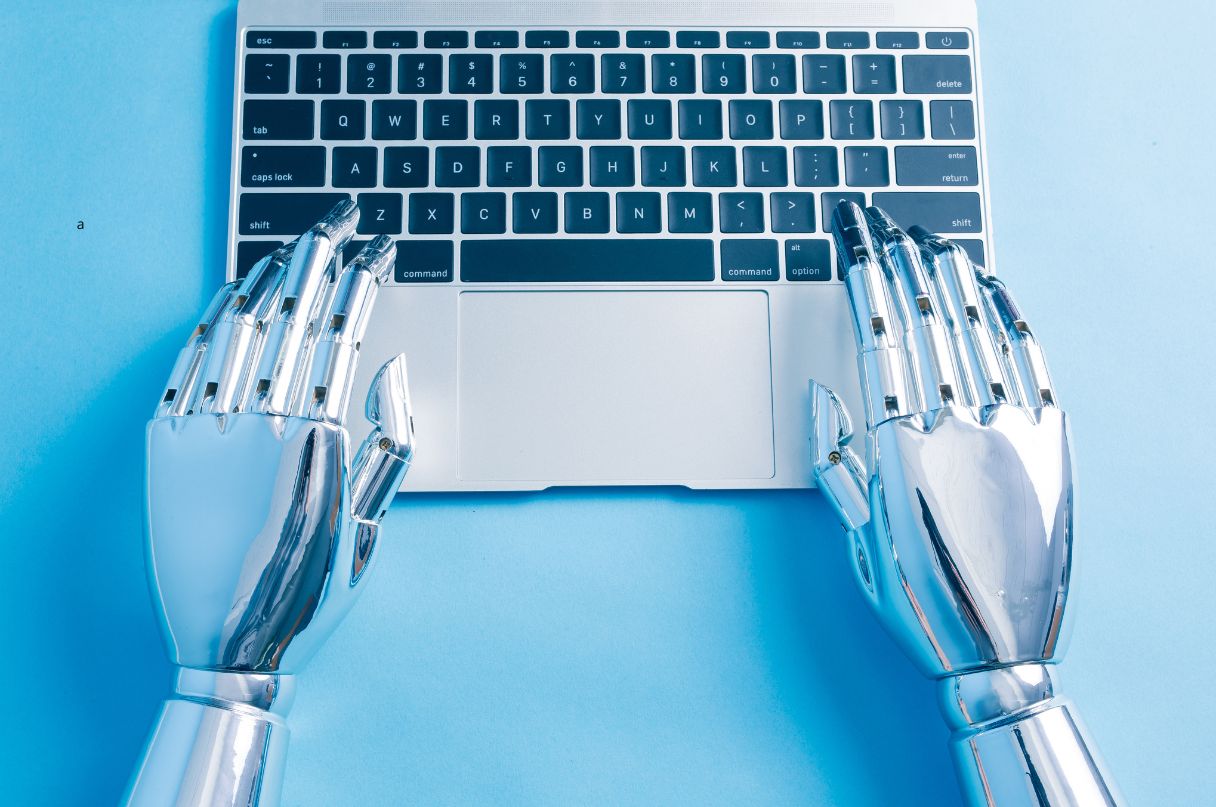
By developing a well-designed digital strategy, we cannot suppress the possibilities of hypercollaboration. Advances in artificial intelligence (AI) and multimodal language models (LLMs) grant a distinct mode of interaction between humans and machines. However, thinkers such as Jaron Lanier, warn that this is not a reason for dilution of human values and creativity. On the contrary, the human factor is the essential engine that drives innovation and productivity in the digital universe.
Lanier, often called the “pai of virtual reality”, explains that technology should enhance human expression, never neglect it. His works underscore the importance of authorship and individual contribution to a fairer and fundamentally more creative system. This view coincides with the capabilities of AI models such as LLMs, which operate multimodally & process text, images, sound and even video to offer more substantial insights and results. Still, such tools reach their full potential when guided by human intuition, empathy and inventiveness.
Talking about hypercollaboration means talking about a kind of harmony between human possibilities and the instrumental supports of AI. For example, in complex projects, LLMs can provide data, analysis or initial ideas, which can guide many of the human intuitions. Basically, this is a foundation capable of being used to conceive, from complementary human capabilities, extraordinary ideas. Multimodality broadens the spectrum of this collaboration, allowing professionals to combine languages, images and sounds to build richer and more engaging narratives.
As Lanier emphasizes, if human contributions are taken over by systems that only replicate existing data, the human touch disappears.This is where the preservation of creativity becomes crucial: recognizing that the role of the human is not only to operate machines, but also to be the visionary, the narrator and the innovator within this context.
When well-targeted, digital hypercollaboration fosters an era of unprecedented productivity. AI models can generate sketches of solutions and the human factor, refining these creations to meet cultural, ethical and behavioral needs. By valuing human capabilities, we ensure that technology remains an instrumental addition and thus enable consistent competitive differentials.
Keeping this seemingly simple idea as the destination of technology allows us to exalt the union of forces between humans and machines, ensuring that the entire continuous journey of digital evolution is still a truly human and productive journey.


 Portuguese (Brazil)
  English
  Spanish
  German
  Chinese (Hong Kong)
  Russian
  Hindi
Hindi  French
  Italian
  Japanese
  Arabic
  Chinese (Taiwan)
  Bengali
  Bulgarian
  Czech
Czech  Danish
  Greek
Greek  Finnish
  Croatian
  Hungarian
  Indonesian
  Korean
  Lithuanian
  Dutch
Dutch  Norwegian
  Polish
  Portuguese (Angola)
  Portuguese (Portugal)
  Romanian
  Slovak
  Slovenian
  Swedish
  Thai
Thai  Turkish
  Ukrainian
  Vietnamese
  Chinese (China)