


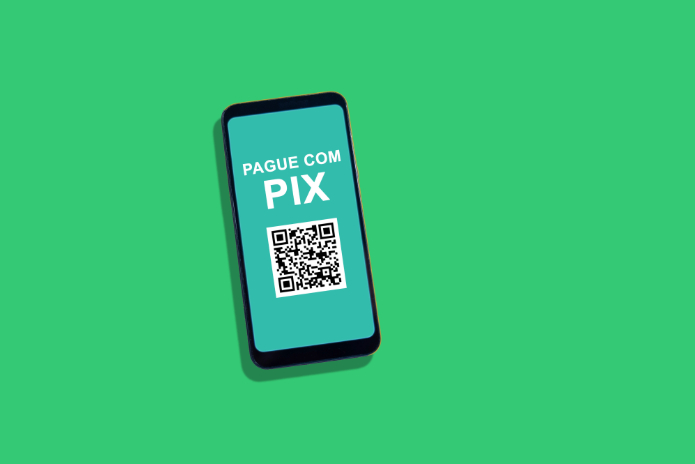
Since its launch in November 2020, Pix has become part of Brazilians' daily routine and quickly emerged as one of the most significant transformations in our financial system. Created by the Central Bank, it has changed the way we pay, receive, and transfer money. It has made life easier, reduced costs, and paved the way for more people to access banking services. Due to its efficiency, Pix has also become a reference abroad, inspiring similar solutions in other Latin American countries.
Pix was designed to be a faster, simpler, and more accessible alternative to traditional options such as TED, DOC, and boleto. In less than four years, it has demonstrated its value: according to the Central Bank, over 170 million Brazilians already use the system, and it moves trillions of reais every month. A result that speaks for itself.
Its success can be attributed to features such as being free for individuals, which made it popular among the population; 24/7 availability, eliminating banking hours barriers; settlement within seconds, facilitating commerce and digital services; and integration with the financial ecosystem, allowing fintechs and digital banks to grow on this infrastructure.
Pix has not been limited to everyday transfers. It has also become an ally in public and social policies, assisting in government benefit payments and facilitating collections. A tool that has brought money even closer to those who need it most.
The success of Pix has attracted the attention of Latin American neighbors, where financial inclusion remains a challenge. Countries such as Colombia, Argentina, Mexico, Chile, and Peru have studied or are already implementing systems inspired by the Brazilian model. The most representative case is CoDi in Mexico, which attempts to replicate the proposal of instant transactions via QR Code. Colombia, in turn, has advanced with Bre-B, while Argentina is betting on the integration of Transferencias 3.0.
The key differentiator is that Pix was not just a technological solution but a state project, with centralized regulation and strong private sector adoption. In many Latin American countries, regulatory fragmentation and the power of traditional banks hinder similar advancements. Nonetheless, Brazilian influence is clear: governments and central banks have begun prioritizing the creation of more open and universal payment systems.
The evolution of Pix has not stopped. Today, there is already discussion about Pix Internacional, which will enable real-time transactions with other countries. If realized, this project could serve as a catalyst for economic integration in Latin America, reducing the costs of international remittances—something especially relevant for regions with high migrant circulation.
Furthermore, new functionalities such as Pix Garantido (a form of integrated installment payments) and Pix Automático may further expand the system's reach. These innovations reinforce Brazil's position as a global reference in instant payments.
Pix has changed the financial logic in Brazil, bringing inclusion, efficiency, and competitiveness. More than that, it has paved the way for all of Latin America to rethink its payment systems. If the region can overcome political and regulatory barriers, we may see, in a few years, an integrated instant payment ecosystem—a leap that would reduce inequalities and expand economic opportunities.
Pix has shown that innovation in the financial sector does not need to remain solely in the hands of large private companies. When the state, the market, and technology come together, it is possible to greatly facilitate people's lives. Extending access to money to those who were previously marginalized is perhaps one of the greatest legacies Brazil leaves for Latin America.


 Português do Brasil
  English
  Español
  Deutsch
  香港中文
香港中文  Русский
  हिन्दी
  Français
  Italiano
  日本語
日本語  العربية
  繁體中文
繁體中文  বাংলা
বাংলা  Български
  Čeština
  Dansk
Dansk  Ελληνικά
  Suomi
Suomi  Hrvatski
  Magyar
  Bahasa Indonesia
  한국어
한국어  Lietuvių kalba
  Nederlands
  Norsk bokmål
  Polski
  Português de Angola
  Português
  Română
  Slovenčina
  Slovenščina
  Svenska
  ไทย
ไทย  Türkçe
  Українська
  Tiếng Việt
  简体中文
简体中文