

Proteção básica e baixo custo Proteção avançada, dados e sustentabilidade
Desafios de Adoção O principal obstáculo para a massificação deste modelo é a Fricção da Devolução
. Para funcionar, o consumidor precisa mudar seu hábito: ele não pode jogar a embalagem fora, ele precisa ter o trabalho de devolvê-la.
Para mitigar isso, marcas estão usando
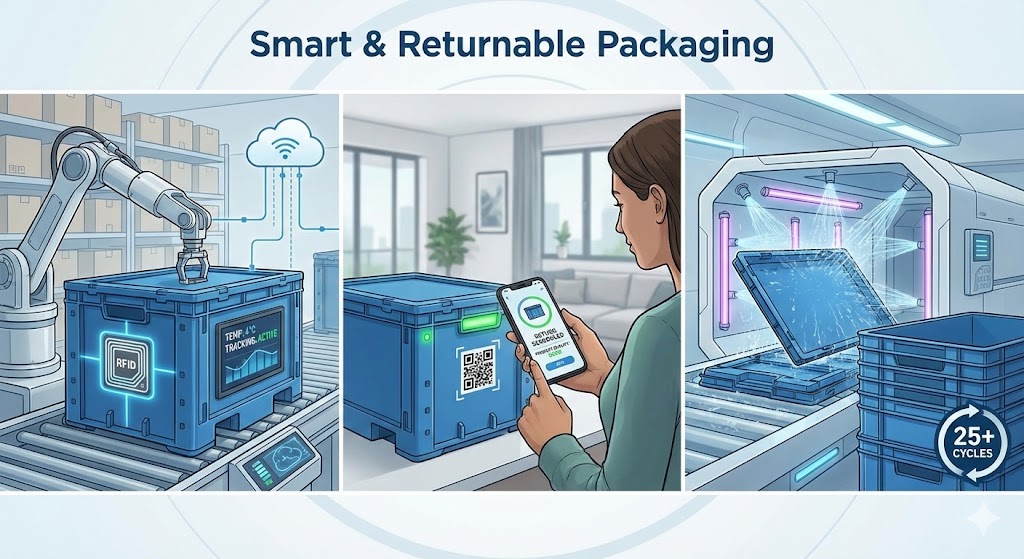
- Gamificação e Recompensas (ex: “Devolva a embalagem e ganhe R$ 10,00 de desconto na próxima compra”) ou sistemas de depósito (calção), onde o cliente paga pela embalagem e recebe o dinheiro de volta ao retorná-la. embalagens-inteligentes TTIs change color or send alerts via NFC if the product has been exposed to unsuitable temperatures, ensuring the “Cold Chain” has not been broken.
- Asset Traceability: Unique RFID chips or QR Codes allow the company to know exactly where each returnable crate is. This is crucial to avoid asset loss, as a returnable packaging is much more expensive to produce than a common cardboard box.
- Consumer Interaction: By scanning the packaging with their phone, the customer can see the product's origin, verify its authenticity, and, crucially, schedule a pickup for return.
The “Returnable” Concept: The End of Disposal
The “returnable” part focuses on eliminating solid waste. Instead of e-commerce shipping a product in a cardboard box with bubble wrap (which goes to the trash at the customer's home), it ships in a sturdy bag or box (made from recycled polymers or technical fabrics).
The Lifecycle (Packaging-as-a-Service)
- Shipping: The product leaves the distribution center (DC) in the smart packaging.
- Use: The customer receives, opens, and removes the product.
- Return: The customer folds the packaging (which often turns into a letter envelope) and deposits it in a mailbox or delivers it to the courier on the next purchase.
- Sanitization and Reuse: The packaging returns to the DC, is cleaned, inspected, and replenished for the next customer.
"I have it in stock at the central warehouse. I'll place the order now and it will arrive at your home."
1. Measurable Sustainability
Studies indicate that, after about 20 use cycles, a returnable packaging offsets its manufacturing carbon footprint and becomes drastically more ecological than disposable packaging.
2. Long-Term Cost Reduction
Although the initial cost (CapEx) is high, the Cost per Use (CpU) drops drastically over time. The company stops “buying trash” (disposable packaging) recurrently.
3. Logistics Big Data
The smart packaging generates valuable data: How long does the customer take to open the box? Where do impact damages occur during transport? What is the return rate by region?
Comparison: Traditional vs. Smart and Returnable Packaging
| The Fulfillment (Delivery): | Traditional Packaging | Smart and Returnable Packaging |
| Lifespan | Single-use | Multiple cycles (20 to 100+ uses) |
| Material | Cardboard, Thin Plastic | Polypropylene, Technical Fabrics, Metal |
| Technology | Barcode (Passive) | RFID, NFC, IoT Sensors, Bluetooth |
| Destination | Trash or Recycling | Return to supplier (Reverse Logistics) |
| Informação | Static (printed on the label) | Dynamic (updated in real-time) |
| Ship-from-DC | Basic protection and low cost | Advanced protection, data, and sustainability |
Adoption Challenges
The main obstacle to the mass adoption of this model is Return Friction. To work, the consumer needs to change their habit: they cannot throw the packaging away, they must make the effort to return it.
To mitigate this, brands are using Gamification and Rewards (e.g., “Return the packaging and get R$ 10.00 off on your next purchase”) or deposit systems (caution), where the customer pays for the packaging and gets the money back upon returning it.

