

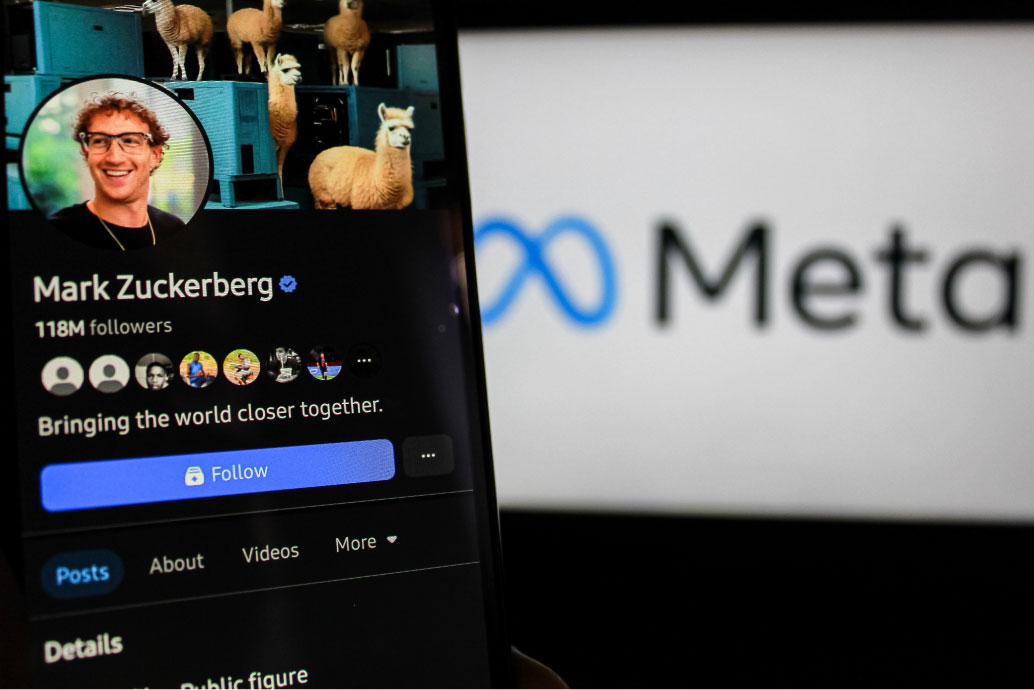
The decision released by the goal of closing its fact-checking program in the United States is not just an internal issue of BigTech with limited effects to its host country — its reverberation directly affects companies around the world, especially in Brazil, one of the most connected markets. For Brazilian brands, this means navigating a riskier digital environment, where reputation is put at risk. How to protect the image and credibility, aiming to maintain a reliable and solid online presence?
important to analyze the Brazilian context. Faced with the speech of its co-founder and executive director, Mark Zuckerberg who signals a new swipe for Instagram, WhatsApp and Facebook, the Attorney General's Office (AGU) notified the company extrajudicially, demanding explanations on how it will guarantee compliance with Brazilian laws and regulations against defamation, discrimination, disinformation and hate speech after the end of the fact checking program.
In response, the meta reported that the announced changes will initially be limited to the US, and reaffirmed its commitment to the removal of violent or misinformation content and with clear risks. The AGU, however, expressed “serious concern” with the changes, which can facilitate legal violations, in addition to opening space for misinformation and prejudice, which led to the convening of a public hearing to debate the issue.
with or without practices of fact checking, the truth is that fake news has already spread in large volume and accelerated pace among our population for some time. Almost 90% of Brazilians have already had contact with false content and 51% admit to having believed in them. This is what a research by the Instituto Locomotiva reveals. Brazil is one of the most relevant markets for the goal. To give dimension, WhatsApp is the most used network in the country, with 147 million users, according to Digital Brazil 2024, a report developed by DataReportal. Next are YouTube (144 million), Instagram (134.6 million) and Facebook (111.3 million). In this context, fake news not only affects society, but can also directly impact the brands present on the platforms. The absence of checking can increase the risk of attacks and dissemination of untrue information related to companies.
But how to avoid this movement?
Continuous monitoring is the first line of defense for companies. This includes tracking brand mentions, comments on posts and even user-generated content that could damage your image. Artificial intelligence tools play a key role in this process, as well as the look of specialized professionals, as they allow them to quickly identify and react to possible threats. Speed is required: Fake news is 70 times more likely to go viral than true information, as a study by researchers from the Massachusetts Institute of Technology has already pointed out, that is, the problem requires an immediate reaction from the brands.
It is necessary to invest in teams that can intensify these works, crossing technology, analytical capacity and human sensitivity to increase the effectiveness of responses to crises and potential problems.
Another essential point is transparent communication. Companies must ensure that all information disclosed on their networks is in accordance with laws such as the General Data Protection Law (LGPD) and the regulations against slander and defamation. Clear, truthful and supported messages by concrete actions reinforce the public's trust and demonstrate the brand's commitment to ethics.
Respect for good compliance practices is equally important. This includes performing a rigorous curatorship of content published on your channels, with priority for information that is relevant and accurate.
Overlying a single platform can expose brands to unnecessary risks. Therefore, the diversification of digital presence is a primary strategy. Networks like LinkedIn, TikTok and YouTube offer valuable alternatives to the goal to reach different audiences and minimize the impact of changes in a single company's policies. Reinforcement, it is not about abandoning important territories of connection with the public like Instagram, but of spraying their presence.
Each channel must be explored strategically. While LinkedIn is ideal for strengthening corporate and executive credibility and authority, TikTok can deliver more dynamic and creative formats for engagement. YouTube is perfect for in-depth content and with longer potential, keeping the audience engaged for longer.
Finally, prevention also involves internal education and a good crisis management structure. Companies must empower their teams to deal with digital crises, train spokespersons and establish clear protocols to respond to negative incidents on social media. This preparation helps to mitigate the damage and strengthens the organization's ability to protect its reputation.
The new meta policies have the potential to change the evolution of social networks, requiring companies to proactive and strategic. With intensive monitoring, transparent communication, digital diversification and internal education, it is possible not only to protect credibility, but also to position yourself as a reference in an increasingly challenging digital environment.


 Portuguese (Brazil)
  English
  Spanish
  German
  Chinese (Hong Kong)
  Russian
  Hindi
Hindi  French
  Italian
  Japanese
  Arabic
  Chinese (Taiwan)
  Bengali
  Bulgarian
  Czech
Czech  Danish
  Greek
Greek  Finnish
  Croatian
  Hungarian
  Indonesian
  Hebrew
  Korean
  Lithuanian
  Dutch
Dutch  Norwegian
  Norwegian
  Polish
  Portuguese (Angola)
  Portuguese (Portugal)
  Romanian
  Slovak
  Slovenian
  Swedish
  Thai
Thai  Turkish
  Ukrainian
  Vietnamese