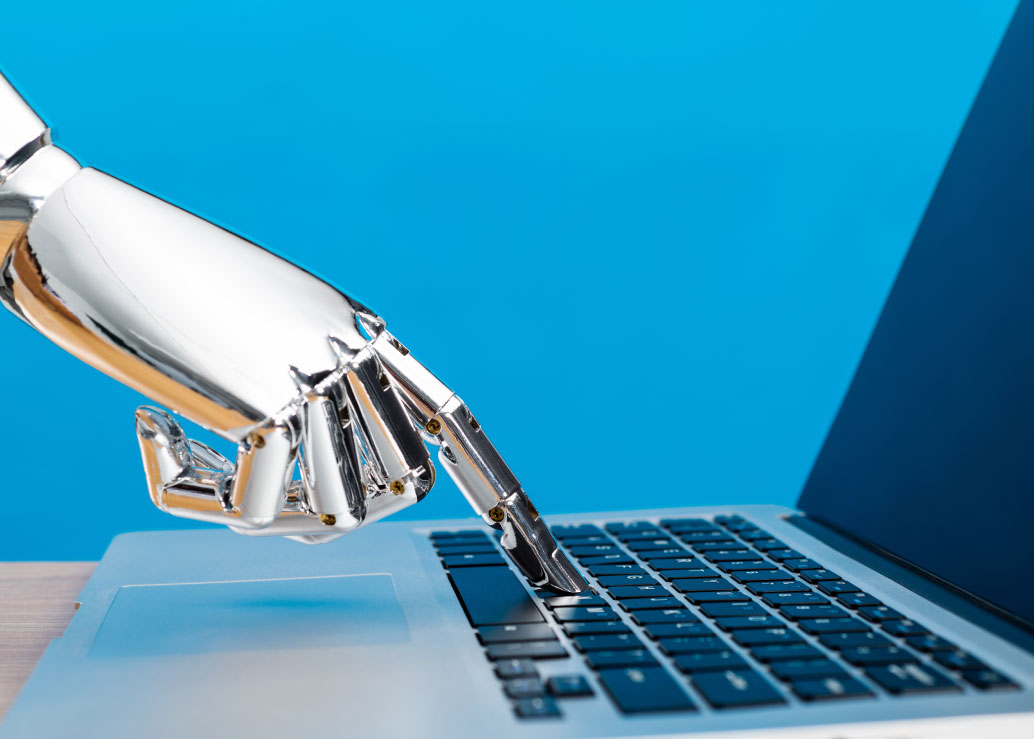
The recent history of technology is marked by the promise of disintermediation.In the beginning of the internet, there was a belief that the network would allow direct connections, in which artists would talk to their fans without labels, companies would sell to consumers without retailers, ideas would circulate without filters. It was a libertarian, almost romantic ideal of a simpler and more transparent world.For a while, this view seemed to take shape, but reality reorganized around new intermediaries, as powerful as the old ones, although disguised in the form of digital platforms.
Services such as Uber, Mercado Livre, Instagram and Amazon created closed ecosystems that facilitated interactions and transactions, but also established new layers between desire and its fulfillment.They were practical, efficient and often inevitable.The rise of software as a service (SaaS) consolidated a model in which technology presents itself as packaging, where an elegant interface that involves user intention and translates it into action, but in the process, remains a barrier.
Three out of four companies (75%) plan to prioritize SaaS application backup operations as a critical requirement by 2028, a dramatic leap from the 15% recorded in 2024, Gartner said.However fluid an interface may seem, it requires opening an application, typing, selecting, and browsing. Each microdecision represents friction, and the accumulation of these small frictions has become evident.
Currently, we live surrounded by passwords, flows and screens, in a maze of tools that should facilitate, but often complicate. With this, the perception grows that we do not seek applications themselves, but the results they deliver. And if it is possible to reach these results without going through an app, even better. Artificial intelligence is promoting this silent and integrated change, especially by popularizing natural interfaces such as voice search.
In 2025, about 20.5% of people worldwide use this form of research, a slight increase from the 20.3% recorded in the first quarter of 2024, according to Data Reportal data.In addition, the number of voice assistants in use exceeds the global population, reaching 8.4 billion devices in 2025, according to Statista. By merging intention and execution in the same act, AI eliminates the need for explicit interactions with platforms.
Online search already offers signs of this transition, in which a question is typed and the answer appears, without clicks or manual filtering. Traditional search, which required multiple steps, begins to be replaced by direct answers. This is the new disintermediation, not a visible disruption, but a gradual disappearance of tools, and this transformation shifts the role of interface technology to infrastructure.
Soon, tasks such as writing, organizing, translating or planning can be performed the moment the desire arises, without the mediation of visible applications. Technology will become as ubiquitous and silent as electricity or piped water, essential but invisible. This implies that many software and platforms, once central to the digital experience, will no longer have a noticeable form, brand or presence.
The practical consequence is that a significant part of the SaaS ecosystem can become infrastructure and no longer service to the end user. When functionality becomes internal to an automated cognitive layer, the need to access specific tools disappears. For the user, this absence will not be a loss; on the contrary, it will be perceived as a gain in fluidity. Application nostalgia will cease to exist because, in practice, they will dissolve in the flow of tasks.
The impact of this disintermediation on the market is profound. Business models based on user retention on a platform will need to reinvent themselves, because value will reside in the result, not in the way. For companies, this means competing no longer for the most attractive interface, but for the ability to integrate invisibly and efficiently into the life of the user. For consumers, the possibility of a daily life less fragmented by screens and logins, but more dependent on infrastructures controlled by few global suppliers is opened.
The great disintermediation that emerges is neither utopian nor libertarian, as dreamed in the early years of the internet. It is technical, silent and definitive. By shortening the distance between thought and action, artificial intelligence erases the center of the digital experience and relegates the interfaces to the background. In the near future, we will not notice when an application ceases to exist, we will simply move on, as if it had never been part of our daily lives. And perhaps it is exactly there that one realizes that the future has already arrived.