

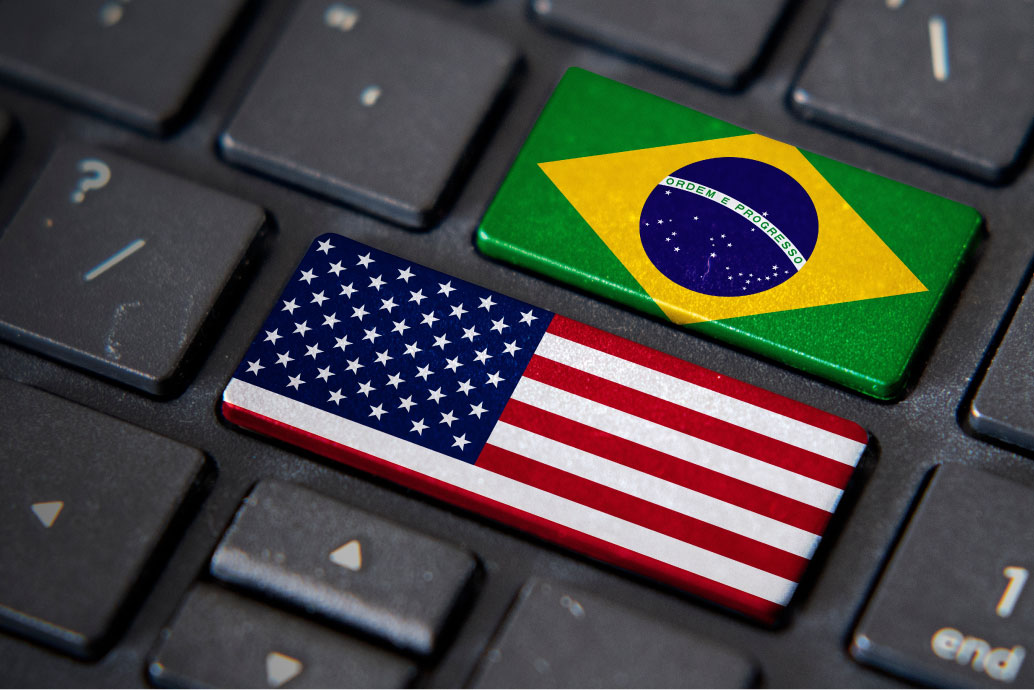
US trade policy, heavily driven by the “America First” discourse, continues to influence the global landscape and may bring challenges to Brazil.
According to Marcelo Vitali, director of How2Go, the profile of Brazilian exports to the US is differentiated compared to other trading partners, such as China.“Our trade with the United States is marked by higher value-added products, which is positive for Brazil. Unlike commodities such as soybeans or corn, we send products that represent an advance in our production chain. Still, the rhetoric of ERMade in the USA and possible trade barriers can hit us‘, says Vitali.
Another sensitive element in bilateral relations is the advancement of the BRICS agenda, which seeks to reduce the dependence of the dollar on commercial transactions, through the creation of its own currency or alternative compensation systems. This strategy has generated friction with the US and can intensify tensions, especially in the face of criticism from former President Donald Trump, who has already threatened to impose significant tariffs on countries that support the initiative.
Given this scenario, Brazil faces the challenge of balancing its diplomatic and trade relations with the US, while seeking to strengthen strategic partnerships within and outside BRICS. The diversification of markets and the investment in high value-added sectors are fundamental to mitigate the impacts of American protectionist policies and expand the economic relevance of the country on the global stage.


 Portuguese (Brazil)
  English
  Spanish
  German
  Chinese (Hong Kong)
  Russian
  Hindi
Hindi  French
  Italian
  Japanese
  Arabic
  Chinese (Taiwan)
  Bengali
  Bulgarian
  Czech
Czech  Danish
  Greek
Greek  Finnish
  Croatian
  Hungarian
  Indonesian
  Korean
  Lithuanian
  Dutch
Dutch  Norwegian
  Polish
  Portuguese (Angola)
  Portuguese (Portugal)
  Romanian
  Slovak
  Slovenian
  Swedish
  Thai
Thai  Turkish
  Ukrainian
  Vietnamese
  Chinese (China)