

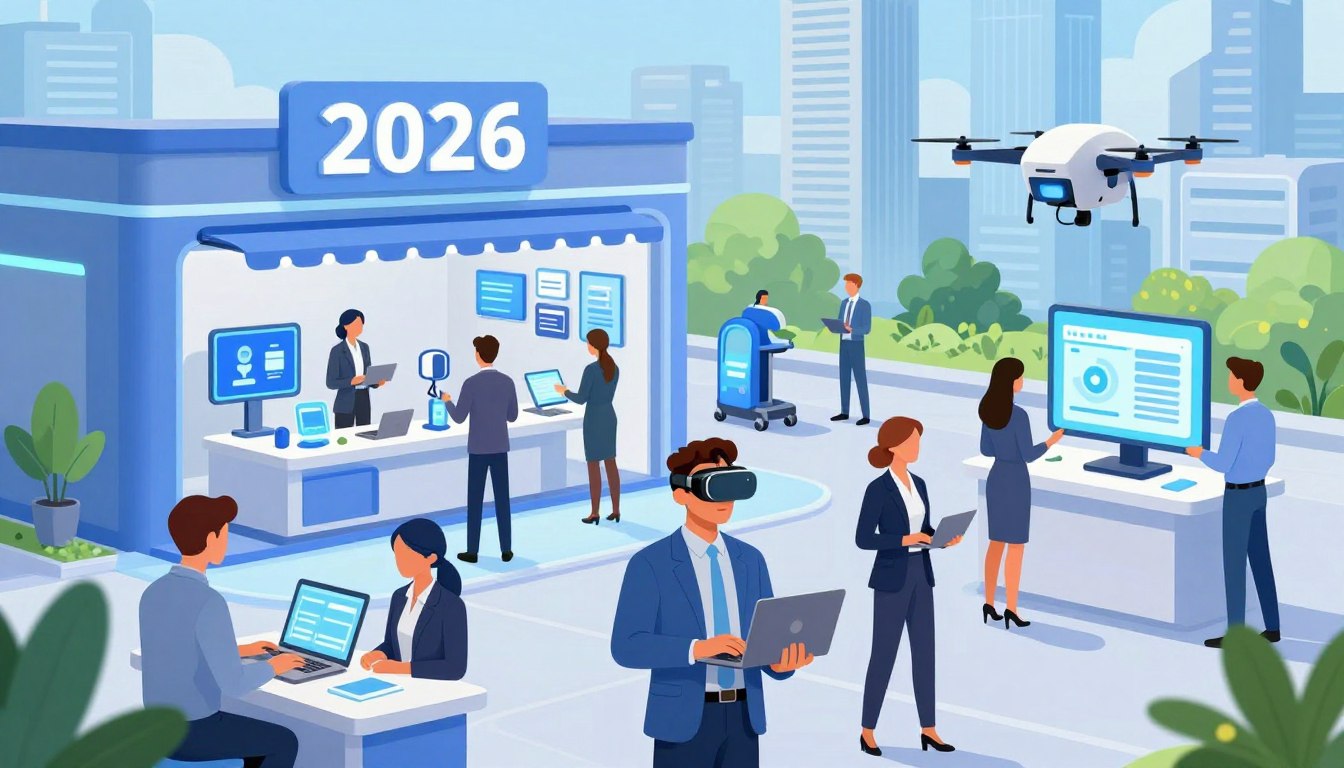
The world of digital commerce is constantly evolving. Companies need to prepare for future changes.
By 2026, the sector will be shaped by trends innovative technologies. This ranges from artificial intelligence to the metaverse..
These technologies are changing how we buy and sell online. It is crucial for companies to know how to leverage these opportunities to remain competitive.
In this article, we will explore the 50 trends most significant trends. They will impact and e-commerce in the coming years.
Key Takeaways
- Innovation Technological trends driving digital commerce
- Trends Emerging trends shaping the future do and e-commerce
- Importance of artificial intelligence and metaverse.
- Need for adaptation by companies
- Opportunities for growth and competitiveness
The landscape of Brazilian e-commerce in 2026
The Brazilian e-commerce is poised to reach new heights by 2026. The evolution of technology and changes in consumer habits are driving this expansion. The digital market Brazilian market is growing rapidly.
The evolution of the digital market in the coming years
Technology is driving the growth of and e-commerce in Brazil. Innovations such as Artificial Intelligence and Augmented Reality are transforming the online shopping experience. It is becoming more interactive and personalized.
| Technology | Impact on E-commerce |
|---|---|
| Artificial Intelligence | Personalization of the online shopping experience. |
| Augmented Reality | Visualization of products in real environments |
How Brazilian companies can prepare now
To remain competitive, Brazilian companies must adapt to new trends. This involves investing in emerging technologies and improving the online customer experience.
It is also crucial to develop effective digital marketing strategies and maintain a strong presence on social media.
Artificial Intelligence transforming the shopping journey
Artificial Intelligence is changing how people interact with online stores. It processes large volumes of data, data, enabling companies to create more personalized and efficient shopping experiences.
AI-powered shopping assistants
AI-powered shopping assistants are becoming more common. They use advanced algorithms to understand consumer preferences, thereby offering relevant product recommendations, improving the consumer experience, and increasing conversion chances.
Demand forecasting with advanced algorithms
Forecasting demand is essential for success in and e-commerce. Advanced algorithms allow companies to accurately predict demand for specific products. This helps reduce costs and improve supply chain efficiency.
Chatbots with contextual understanding in Portuguese
You chatbots have become essential for online customer service. They understand the context of conversations, providing accurate and relevant responses. Communication in Portuguese makes them even more effective in the Brazilian market.
A The integration of these AI technologies is revolutionizing the online shopping experience. online experience. Companies that adopt these technologies are better prepared to meet consumer needs and stand out in the competitive market.
Immersive experiences with augmented and virtual reality
A augmented reality and virtual reality are changing how people interact with brands. They create more engaging and interactive shopping experiences, increasing consumer engagement and reducing returns.
3D virtual fitting rooms for Brazilian fashion
3D virtual fitting rooms have become essential for Brazilian fashion brands.. They allow consumers to see how garments would look without needing to try them on physically. This is possible thanks to augmented reality.
Visualization of furniture and decor in real environments
Augmented reality is also transforming the furniture and decor sector. It allows consumers to see how products would fit into their spaces before purchasing, reducing uncertainty and improving satisfaction.
| Sector | Application of Augmented Reality | Benefit |
|---|---|---|
| Fashion | 3D virtual try-ons | Reduction of returns |
| Furniture and Decoration | Visualization in real environments | Increase in satisfaction |
Virtual stores with Brazilian cultural experiences
Virtual stores are bringing Brazilian cultural experiences to the consumer. This creates a deeper connection. Virtual decoration and the The integration integration of local cultural elements are examples of this.
With technological advancement, we expect more innovations in the use of augmented and virtual reality in Brazilian e-commerce.
Revolution in digital payment methods
Digital payment methods are undergoing a full revolution, driven by technological advances. This change is transforming the Brazilian e-commerce, landscape, bringing new opportunities and challenges for businesses.
The evolution of digital payments is essential for the growth of e-commerce. It brings greater convenience and security to consumers. With the demand for secure and efficient online transactions on the rise, companies are investing in innovative solutions.
Cryptocurrencies and PIX 2.0 in digital retail
A The integration of cryptocurrencies and the PIX 2.0 is changing online transactions. cryptocurrencies Cryptocurrencies offer a secure and decentralized alternative. Meanwhile, PIX 2.0 PIX 2.0 promises to make instant transactions in Brazil even simpler.
The adoption of these technologies can give companies a competitive advantage. They also improve the customer experience.
Biometric payments adapted to the Brazilian market
You Biometric payments are growing in the Brazilian market. They offer a secure and convenient way to make transactions. With biometric authentication, consumers pay without passwords or cards, increasing security and reducing the risk of fraud.
This technology is being adapted to the needs of the Brazilian market. It provides a more secure and efficient payment experience.
Subscription models with exclusive benefits
Subscription models are becoming popular in Brazilian e-commerce. They offer exclusive benefits to consumers. Customers enjoy premium services and products, along with advantages such as free shipping and access to exclusive content.
Companies use these models to increase customer loyalty. They also generate recurring revenue.
The future of logistics in Brazilian e-commerce
A logistics Logistics is a major challenge for Brazilian e-commerce. Understanding its future future is essential for companies that want to compete. The demand for fast and efficient deliveries is growing. Therefore, companies are investing in innovative technologies to improve their logistics.
Delivery drones and robots in major cities
Drones and Delivery robots are changing logistics logistics in major Brazilian cities. These technologies make deliveries faster and more efficient. They also reduce costs and improve the customer experience.
Brazilian regulations for autonomous deliveries
The Brazilian government is creating rules for autonomous deliveries. These rules aim to ensure the safety and efficiency of these operations. Companies must pay attention to these regulations to comply with the laws.
Success cases in São Paulo and Rio de Janeiro
São Paulo and Rio de Janeiro already have success cases with drones and Delivery robots. These initiatives show the potential of these technologies to improve urban logistics.
Distribution centers in strategic neighborhoods
Locating distribution centers in strategic neighborhoods is crucial for logistical efficiency. This allows for faster deliveries and lower costs.
| Neighborhood | Delivery Time | Delivery Cost |
|---|---|---|
| Downtown | 1 day | R$ 10.00 |
| North Zone | 2 Days | R$ 15.00 |
| South Zone | 1 day | R$ 12.00 |
Sustainable deliveries in the Amazon and major centers
Sustainable logistics is growing in Brazilian e-commerce. Companies are adopting sustainable deliveries, such as bicycles and electric vehicles. This helps reduce environmental impact.
These initiatives improve logistical efficiency, reduce costs, and promote a future more sustainable future for Brazilian e-commerce.
Hyper-personalization in the shopping experience
The demand for personalized shopping experiences is growing rapidly. hyperpersonalization becomes essential in Brazilian e-commerce. Companies use data behavioral data to create highly personalized experiences.
Recommendations based on regional behavior
Recommendations based on regional behavior are an effective strategy. Companies use geolocation and purchase history to suggest relevant products. This meets the needs of consumers in different regions of Brazil.
Customized products for the Brazilian consumer
Product customization is crucial in hyperpersonalization. Companies create personalized products according to consumer preferences. This increases customer satisfaction and loyalty.
Adaptive experiences through geolocation
Geolocation allows for the adaptation of the shopping experience. Companies offer special promotions and product recommendations. This makes the experience more relevant and attractive to the consumer.
| Hyperpersonalization Strategy | Benefits |
|---|---|
| Regional recommendations | Increased product relevance |
| Customized products | Customer satisfaction and loyalty |
| Adaptive experiences | Personalized shopping experience |
Sustainability as a pillar of e-commerce
The future of Brazilian e-commerce is deeply linked to sustainability. As consumers become increasingly aware of the environmental impact of their purchases, e-commerce companies must adopt sustainable practices. This is essential to remain competitive in the market.
A sustainability has become a fundamental pillar for long-term success in e-commerce. It encompasses everything from the choice of packaging materials to the implementation of product return programs.
Biodegradable packaging with Brazilian materials
One of the main focus areas for sustainability in e-commerce is the use of biodegradable packaging. Materials such as recycled paper, bioplastics, and organic compounds are gaining popularity.
Brazilian companies are investing in technologies to produce ecological, customized, and attractive packaging for consumers.
Transparency in the Amazon supply chain
Transparency in the supply chain is essential to ensure sustainable practices throughout the value chain. This covers product origin, manufacturing processes, and logistics.
| Sustainable Practice | Benefit |
|---|---|
| Biodegradable packaging | Reduction of environmental impact |
| Transparency in the supply chain | Consumer confidence |
| Circular economy | Waste reduction |
Circular economy and product return programs
A circular economy aims to minimize waste and maximize resource use. In e-commerce, this is achieved through product return programs, recycling, and reuse.
Companies are implementing programs that encourage the return of used products. These products are then recycled or reused, closing the loop and reducing environmental impact.
Social commerce revolutionizing online sales
With the advancement of social commerce, companies are redefining their online sales strategies. social commerce combines social media interaction with the ability to make purchases directly on the platforms. This creates a more integrated and attractive shopping experience for consumers.
This phenomenon is revolutionizing online retail in Brazil. Companies and brands are heavily investing in social commerce. strategies. They seek to connect with customers more effectively.
Live shopping with Brazilian influencers
The live shopping has become a powerful tool for brands in Brazil. With the help of influencers , companies reach an engaged audience. They conduct real-time sales during live broadcasts.
Integration with popular platforms in Brazil
Integration with platforms such as Instagram, YouTube, and TikTok is essential. They allow brands to fully leverage the potential of live shopping. These platforms offer native tools for live shopping, facilitating adoption by brands.
Monetization for content creators
Content creators also benefit from live shopping. They can monetize their live broadcasts through commissions on sales made during their sessions.
Collaborative shopping in WhatsApp groups
The collaborative shopping in WhatsApp groups is on the rise. Consumers gather in groups to discuss and decide on purchases. They often take advantage of special discounts offered by brands for group purchases.
Social gamification in online shopping
Gamification is being used to make the shopping experience more interactive and fun. Brands create campaigns that encourage customers to participate in challenges. They earn rewards and share their experiences on social media.
| Platform | Live Shopping Feature | Monetization |
|---|---|---|
| Yes | Commissions on sales | |
| YouTube | Yes | Super Chat and Super Stickers |
| TikTok | Yes | Diamonds and Commissions |
Social commerce is revolutionizing online sales in Brazil. Live shopping and collaborative shopping are leading this movement. Brands that adopt these strategies see a significant increase in sales and customer interaction.
Voice interfaces and conversational commerce
The Voice interfaces are changing the way we shop online, making everything easier and faster. With the rising popularity of voice assistants, Brazilians are exploring new ways to interact with brands. This innovation is revolutionizing the shopping experience.
Voice assistants with Brazilian accents and expressions
Voice assistants are becoming more advanced, featuring Brazilian regional accents and expressions. This makes interactions more personalized and natural, increasing user adoption and engagement.
Voice-command shopping in Portuguese
The ability to shop by voice in Portuguese is simplifying the consumer experience. With just a few words, customers can find products, compare prices, and complete purchases without typing.
Semantic search adapted to Brazilian vocabulary
Semantic search is being enhanced to better understand Brazilian vocabulary and linguistic nuances. This allows consumers to find exactly what they are looking for more quickly and efficiently.
| Technology | Benefit | Impact |
|---|---|---|
| Voice Assistants | Easier Shopping | Increased Sales |
| Voice-Command Shopping | Convenience | Improved User Experience |
| Semantic Search | Accurate Results | Customer Satisfaction |
Privacy and ethical data use in e-commerce
In e-commerce, protecting privacy two data is essential. Companies must adopt strong measures to protect consumers. They should ensure transparency in data handling.
Compliance with LGPD and new regulations
The General Data Protection Law (LGPD) sets strict rules for the processing of personal data. E-commerce companies must follow these standards. This ensures that consumer data is handled securely and transparently.
Secure tokenization of consumer data
Tokenization replaces sensitive data with non-sensitive tokens. This renders them useless to hackers. Implementing this secure technique is vital to protect consumer information. Thus, trust in e-commerce is maintained.
Predictive analysis with user transparency
Predictive analysis uses data to forecast consumer behavior. It is crucial that companies conduct this analysis transparently. They must inform users about the use of their data and ensure they have control over their information.
By adopting these practices, e-commerce companies not only comply with regulations of privacy. They also build a relationship of trust with their consumers. This promotes a safer and more reliable online shopping environment.
Evolution of Brazilian marketplaces
You marketplaces Brazilian marketplaces are undergoing a full transformation. This is due to changes in consumption habits and technological advancements. This shift opens new doors for sellers and changes the way we shop.
One highlight is the emergence of niche marketplaces to for regional products. These specialized spaces allow for finding unique and authentic products. They also help sellers focus on meeting the specific needs of their customers.
Niche marketplaces for regional products
You marketplaces Niche marketplaces stand out by offering products that reflect local culture and traditions. They enrich the shopping experience and support regional producers.
Integration between shopping malls and digital platforms
The integration between shopping malls and digital platforms is becoming common. This union enables an integrated shopping experience, both online and offline.
Shared business models among small retailers
You Shared business models allow small retailers to unite. They can compete with major market players. This encourages collaboration and innovation, benefiting both retailers and consumers.
In conclusion, the evolution of marketplaces Brazilian marketplaces is redefining e-commerce in the country. The combination of technology, innovation, and consumer focus prepares these marketplaces for continued growth in the coming years.
New interfaces for digital shopping
Innovation in interfaces for digital shopping is changing how we interact with products online. This shift is making the shopping experience more intuitive, personalized, and efficient.
Connected appliances that make automatic purchases
You Connected appliances are spreading across Brazilian homes. These smart devices make automatic purchases of essential items, such as water and food. This improves convenience and prevents shortages of essential products.
Gestural interfaces in shopping mall kiosks
The interfaces Gestural interfaces are being used in shopping mall kiosks. They allow consumers to interact with products in a natural way. With simple gestures, it is possible to browse catalogs, view details, and make purchases.
Wearable technology for instant shopping
A Wearable technology is changing how we shop. Devices such as smartwatches and smart bands enable instant purchases with a tap or gesture. This makes the shopping experience faster and more convenient.
Brazilian Metaverse and Virtual Commerce
The metaverse. is changing the landscape of virtual commerce in Brazil. It brings an immersive and interactive experience. This change can transform how people interact with brands and products online.
With the metaverse, Brazilian e-commerce gains new dimensions. It allows for the creation of digital representations of tourist sites, NFTs of art and culture, and personalized avatars. These innovations are redefining the online shopping experience.
Digital Representations of Tourist Landmarks for Shopping
Digital representations of tourist landmarks in the metaverse allow users to explore and interact with virtual replicas. This includes purchasing local products and cultural experiences.
For example, a user can visit a virtual replica of Christ the Redeemer in Rio. There, they can buy souvenirs or local products directly within the metaverse.
NFTs of Brazilian Art and Culture
You NFTs of Brazilian art and culture are becoming popular. In the metaverse, these NFTs can be displayed and traded in virtual galleries.
This trend opens doors for Brazilian artists to gain global prominence. It also offers collectors the chance to acquire unique works.
Personalized Avatars with National Characteristics
You personalized avatars in the metaverse allow for the creation of digital representations with Brazilian characteristics. This can include traditional attire, cultural accessories, and other elements reflecting Brazilian identity.
The table below summarizes some of the key aspects of the Brazilian metaverse and its impact on virtual commerce:
| Aspect | Description | Impact on Virtual Commerce |
|---|---|---|
| Digital Representations | Virtual replicas of tourist landmarks | Immersive shopping experiences |
| NFTs of Art and Culture | Non-fungible tokens of digital art | New opportunities for artists and collectors |
| Personalized Avatars | Digital representations with national characteristics | Cultural identity in virtual interactions |
The Brazilian metaverse is revolutionizing virtual commerce. It offers innovative and interactive experiences for consumers. As this technology evolves, we can expect greater integration between the physical and digital worlds.
Full Automation in E-commerce Operations
A automation is transforming e-commerce in Brazil. Companies are adopting advanced technologies to optimize processes, reduce costs, and improve the customer experience. This revolutionary change is a game-changer.
In various areas of e-commerce, automation makes a difference. From distribution centers to online customer service.. This makes Brazilian companies more competitive in the global market.
Robotic Distribution Centers in Brazil
You robotic distribution centers are spreading across Brazil. Robots perform tasks such as picking and packing, increasing efficiency and reducing errors. This innovation is essential for competitiveness.
| Advantages | Description |
|---|---|
| Increased Efficiency | Robots can work 24/7 without breaks |
| Error Reduction | Robots minimize human errors |
| Reduced costs | In the long term, the automation reduces operating costs |
AI-Powered Customer Service that Understands Regionalisms
Artificial Intelligence (AI) is changing online customer service.. Chatbots with AI provide personalized support, considering regionalisms and local preferences. This improves the customer experience.
Dynamic Pricing Based on Local Factors
Dynamic pricing is another area benefiting from automation. Algorithms adjust prices in real-time, considering demand, competition, and weather conditions. This approach makes Brazilian companies more agile and competitive.
Regulations and Compliance in Digital Commerce
The growth of digital commerce in Brazil makes regulations essential. Companies must follow laws to ensure consumer security and trust.
New Online Consumer Protection Laws
A consumer protection is paramount in digital commerce. New laws aim to ensure that the rights of online consumers are equal to those in physical stores. This encompasses the right to clear information about products and services, the, right to privacy and , and.
protection against abusive practices
A Digital taxation is a complex topic under global discussion. In Brazil, efforts are being made to simplify it Digital taxation for e-commerce. The goal is to implement a single taxation system for all digital transactions.
Ethical standards for AI use in Brazilian retail
AI is becoming common in retail. For its ethical use, standards are being created. They aim to ensure transparency in algorithms, avoid discriminatory biases and , and protect consumer data..
In conclusion, the compliance is crucial for digital commerce in Brazil. Companies must align with new laws to maintain consumer trust.
Conclusion: the future of Brazilian e-commerce
The future of Brazilian e-commerce is full of possibilities and challenges. By 2026, Artificial Intelligence, Augmented Reality, and digital payments will change how we shop. These innovations promise to transform the shopping experience.
To remain competitive, Brazilian companies must adapt to these changes. hyperpersonalization and sustainability will be essential to attract and retain customers. Companies that fail to adjust risk losing market share.
The metaverse and new interfaces shopping methods are about to revolutionize the sector. With full automation, e-commerce operations will become more efficient and personalized. This will allow companies to offer more dynamic shopping experiences tailored to consumer needs.
To stay ahead, companies must invest in emerging technologies. It is crucial to pay attention to regulations and compliance in digital commerce. This way, they can fully leverage the opportunities the future offers.
Brazilian e-commerce is on the brink of a major transformation. Companies that prepare adequately will be ready to explore the upcoming new opportunities.
FAQ
What are the main e-commerce trends for 2026?
The main trends include artificial intelligence, augmented and virtual reality, hyper-personalization, sustainability, and the metaverse.
How is artificial intelligence transforming the shopping journey?
Artificial intelligence is making the buying journey shopping journey more personalized and efficient. This is thanks to AI shopping assistants, demand forecasting, and chatbots advanced recommendations.
What is social commerce and how is it revolutionizing online sales?
Social commerce is the integration of social networks and e-commerce. It allows consumers to purchase products directly from social platforms. It includes features like live shopping and collaborative shopping.
shoppable posts.
How can companies prepare for privacy regulations and the ethical use of data? LGPD. Companies must comply with the LGPD (General Data Protection Law) . They should adopt practices of.
secure data tokenization
. Furthermore, ensuring transparency in the use of data for predictive analysis is essential. Connected appliances What are the latest developments in digital shopping interfaces? Wearable technology The latest developments include.
smart devices that make automatic purchases. Also, gesture interfaces in shopping kiosks and
one-click purchasing buttons for instant shopping.
How is the metaverse impacting virtual commerce?
The metaverse is creating new opportunities. These include digital representations of tourist spots, NFTs for art and culture, and personalized avatars. It is transforming the shopping experience. robotic distribution centers. What are the main trends in full automation for e-commerce operations?.
The main trends include
automated warehouses and logistics consumer protection . Additionally, AI-powered customer service and dynamic pricing based on local factors. Digital taxation How can companies adapt to new regulations and compliance in digital commerce?.


online taxation