

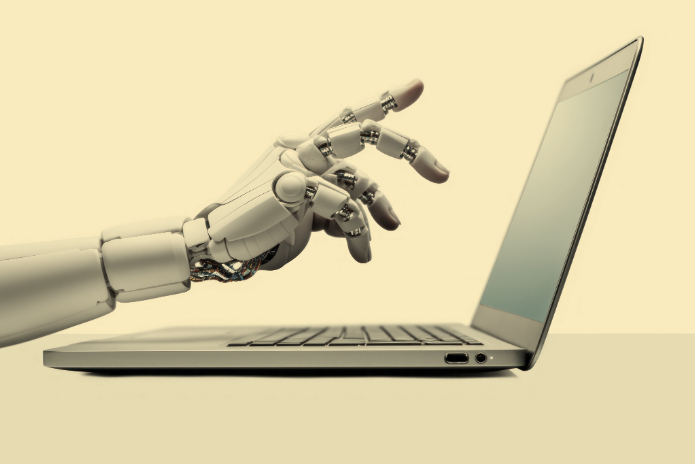
If, in these last two years, the emergence of Generative Artificial Intelligence has served us as a glimpse of the potential of this technology and, we must agree 2025, the emergence of Generative Artificial Intelligence has had a reasonable impact in areas such as customer service, we should see the development of the “IAs agentic”, which promise to substantially transform the technology landscape. Along with the ever-increasing expansion of AI models to an even wider range of companies and niches, the fact is that today, no company can ignore the potential application of AI in innovation or operations.
Unlike traditional AIs, which require constant human supervision, agentic AIs are designed to operate independently, performing complex tasks without direct human intervention.This advancement is made possible by deep learning algorithms that allow systems to understand and process large volumes of data in real time, quickly adapting to new information and contexts.
In addition, agentic AI systems use large amounts of data from various sources to analyze challenges independently, develop strategies and perform complex tasks in sequence. The potential for application of this type of AI is enormous, starting with customer service, through the processing of any type of information or company processes, and also by cybersecurity, where it is possible to automate tasks that today need to be done with human intervention, such as analyzing and correcting vulnerabilities in systems, for example.
In Brazil, the adoption of agentic AI is still in its early stages.There are already some sectors testing the new model, and according to a survey by the Institute of Applied Economic Research (IPEA), by 2025, about 40% of large Brazilian companies plan to integrate agentic AI systems into their operations.
Impact of agentic AI
Banks and financial institutions could decrease the incidence of fraud with the technology by up to 50%, according to the Brazilian Federation of Banks (FEBRABAN).
The Brazilian Medical Association (AMB) highlights that agentic AI has the potential to reduce medical errors by up to 30%, as the technology is capable of analyzing medical records, test results and patient health history to propose more accurate diagnoses.In industry, intelligent automation will be driven by agentic AI, which allows the operation of machines and processes autonomously.
Expanding generative AI into the productive environment
Even with the spread of the use of generative AI, its impact has still been low in the productive environment, with more intense use in some niches, such as image and video creation. According to Gartner, the adoption of this AI model should increase in the productive environment until 2026 80% of companies.
In Brazil, the adoption of generative AI tools by companies is growing as organizations recognize the value of these technologies in process optimization and innovation. Companies from various sectors, including advertising, media, and design, have used generative AI to create personalized content and more effective campaigns.
In addition, large corporations are beginning to integrate generative AI into their daily operations to improve data analysis, automation of repetitive tasks and prediction of market trends.The adoption of these tools can transform the way Brazilian companies operate, increasing efficiency and competitiveness in the global market.
AI will be increasingly humanized
The launch of ChatGPT-5 is expected to happen in the coming months, and one of the most anticipated features of this new version is the enhanced ability of the tool to hold natural conversations.This means that the chatbot will be able to follow the flow of a conversation, understand the context and hidden meaning, and even respond “emotionally”.
In addition, experts have suggested that GPT-5 will have reasoning skills similar to those of humans, being able to understand the context of a conversation in a more comprehensive way.
2025: the year of small AI models
When AI emerged, learning models called LLMs UD or Large Language Models were massively adopted so that popular tools emerged in the market. These models are trained on large amounts of data ^ BUT, this information is more superficial.
Small models are less expensive to build and operate and are more easily adapted to specialized applications. Instead of trying to do everything, small models are customized to perform a more limited set of day-to-day tasks for a specific business need.
LLMs have billions of parameters and require massive amounts of data and computational power to train and execute. Small models, on the other hand, can be trained effectively with less data and require much less computational power (and therefore energy) to execute.
In short, these changes promise to transform diverse sectors and bring significant innovations to the daily lives of people and companies. Advancing AI, both in terms of accessibility and sophistication, will further democratize access to advanced technologies, paving the way for a future in which technology will be deeply integrated into all aspects of society.
With the proliferation of small and more specialized AI models, personalization and efficiency are expected to reach new heights, providing solutions that are increasingly aligned with the specific needs of each sector. Therefore, 2025 promises to be, without a doubt, a year of great revolutions for AI.

