

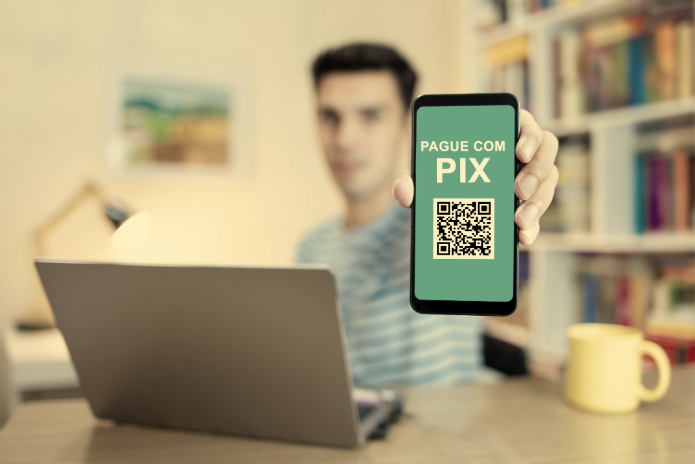
Five years after its launch, Pix has become one of the main vectors of financial inclusion and digitalization in Brazil. According to the new study “O New Digital Consumer Profile”, conducted by Koin in partnership with the Datafolha Institute, the instant payments system already reaches 84% of penetration among online consumers, with R$ 2.4 trillion moved between January 2024 and January 2025 $ 1.7 trillion from the previous period.
More than numbers, Pix has redesigned the role of money in the life of the Brazilian. There are already 836 million active keys, and 33 million people use Pix as their main financial instrument, instead of cards or slips. “We are facing a cultural turn. Pix has become a behavior, not just an” tool, analyzes Raphael Valente, Risk Director at Koin.
Pix Parcelado: digital credit and financial autonomy
The study also points to a second wave of innovation driven by Pix: the Pix Parcelado, an alternative that allows consumers to split payments even without credit card DO with instant release to the shopkeeper and installment in direct debit.
Although still little explored by retail 33% of companies claiming to know the modality 'Partcelado Pix already arouses high interest among Brazilian consumers. According to the study conducted by Koin in partnership with Datafolha, 72% of respondents showed willingness to use the Pix Parcelado in their next purchases. The solution, which allows to split payments without relying on credit card, is seen as a more accessible, digital and compatible with the consumption profile of CDE classes.
“By bringing installment payments to Pix, we have expanded the power of choice of the consumer, especially of the CDE classes, which often do not have access to formal credit”, highlights Valente. “It is a silent revolution, which allows Brazilians to buy as they want, when they want, and without relying on traditional cards or banks.”
Revolution that crosses borders
Inspired by the success of Pix, countries such as Argentina (Transfers 3.0), Mexico (CoDi) and Colombia (Transfiya) have been studying the replication of similar models, with support from local central banks. The study highlights that the A2A (account to account) system (on which Pix is based (Must become the standard in emerging countries, by eliminating intermediaries, reducing costs and facilitating immediate liquidity.
Koin already evaluates the integration of Pix Parcelado to regional ecosystems, studying partnerships with e-commerce and fintech players in Latin American countries.The objective is to adapt Brazilian innovation to the reality of markets with high informality and low bankability (a scenario similar to that of Brazil pre-Pix.
In the view of the Director of Risks of Koin, “o Pix Parcelado is not just a way to buy without a card. It is the realization of a new phase of the Brazilian digital economy.We are talking about autonomy, access and scale. Brazil today is a global reference in digital payments & what we are creating here can be exported to all of Latin America”.
Key insights from the study:
- Digital penetration: 84% of online consumers use Pix regularly.
- Transacted volume: From R$ 1.7 tri (2024) to R$ 2.4 tri (2025) 40% growth.
- Active keys: 836 million (annual growth of +100 million).
- Pix as the main medium: 33 million Brazilians use Pix as a priority financial channel.
- Pix Parcelado: 72% of consumers show interest; only 33% of companies know the solution.
- App preference and instantaneousness: mobile payments grew 251% in five years.
- BNPL booming: Koin leads Brazil with digital native alternative, no card, and with focus on inclusion.
About study
“O New Consumer Profile Digital” this is a study developed by fintech Koin in partnership with the Datafolha Institute, with data collected in 2025 on payment habits, technology use, financial behavior and emerging trends in the Brazilian digital landscape. The survey has clippings by age group, social class and purchase profile, including unprecedented data on the use of Pix and BNPL solutions.


 Portuguese (Brazil)
  English
  Spanish
  German
  Chinese (Hong Kong)
  Russian
  Hindi
Hindi  French
  Italian
  Japanese
  Arabic
  Chinese (Taiwan)
  Bengali
  Bulgarian
  Czech
Czech  Danish
  Greek
Greek  Finnish
  Croatian
  Hungarian
  Indonesian
  Korean
  Lithuanian
  Dutch
Dutch  Norwegian
  Polish
  Portuguese (Angola)
  Portuguese (Portugal)
  Romanian
  Slovak
  Slovenian
  Swedish
  Thai
Thai  Turkish
  Ukrainian
  Vietnamese
  Chinese (China)