

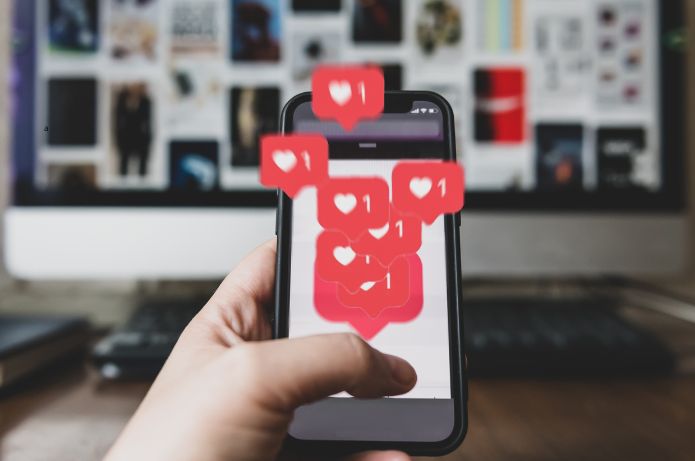
Every moment, we take that look at Instagram to see what friends are doing. A quick read of a text about politics on Facebook, a like in a new dance on TikTok. On WhatsApp, friends send funny stickers, while corporate groups discuss activities and meetings. This happens before, during and after work. Attention: your mental health is being affected by so many stimuli, which can impair your professional performance.
Brazil is the 3rd country that uses more social networks in the world, with an average of 3 hours and 42 minutes per day. When considering all countries, Brazil is behind only the Philippines and Colombia, which spend on average 4 hours and 15 minutes and 3 hours and 45 minutes, respectively. These data were revealed by a study released by the platform CouponValido.com.br, which compiled information from Hootsuite and WeAreSocial on global social media usage. We are also above average in the percentage of the population that uses social networks: 70% of Brazilians, which represents more than 150 million users. Globally, more than 4 billion people, or 53.6% of the population, use social networks.
The importance of social networks today for entertainment, communication and work is undeniable. Its impact on the mental health of the individual is also clear and has been increasingly studied. A study conducted by the Royal Society for Public Health (RSPH) of the United Kingdom, in partnership with the Youth Health Movement, pointed out that the most used social networks cause positive or harmful effects on human health, depending on how they are used.In addition, they are described as more addictive than cigarettes and alcohol.
This new universe of communication can affect professional performance in several ways. Firstly, generating lack of focus and concentration. The addiction to stay connected to several networks at the same time already has a name: FOMO, acronym of the English expression “fear of missing out”, which means something like “fear of staying out”. Like all addiction, the constant need to know what is happening in networks takes away the concentration and focus of work, disrupts reasoning and reduces productivity, which can result in delays in delivery deadlines and distractions that even cause security risks, such as using the mobile phone while driving.
Thus, it is certain that another effect of the abusive use of social networks is anxiety. The impression that the lives of others are more interesting, complete, colorful and important than your own, and the speed with which images and texts succeed each other, give a sense of impotence (while a successful post can cause instant euphoria. There are many ups and downs within reach of a touch of mobile phone.
Excessive negative news and unpleasant comments are constant stimuli that affect mood and sense of security. At the same time, social networks exert pressure for optimism, success, consumerism and an impossible-to-achieve perfection.
Photo-sharing apps are especially damaging to self-image, creating a false reality of perfect life through editing the best moments of ordinary lives. Instagram itself, knowing that 70% of young people revealed that the app made them feel worse about their own self-image (a number that rises to 90% among women 2022 changed the view of the number of likes.
Intellectual and professional losses are not limited to distraction. All this load of frustrations, desires, anger and fear comes to the surface in the day to day and can be discounted in co-workers, friends or family. The avid user of social networks does not rest his mind and becomes a distressed person. It is essential that companies are attentive to this scenario and promote this dialogue in the work environment, creating safe spaces so that employees can share their experiences and seek help when necessary. In addition, it is necessary that organizations establish a protocol of use of mobile phones during work, in a healthy way, favoring everyone without the workers losing focus or feeling uncomfortable and repressed areas of work that they need to act as leaders and managers.
We have developed some tips that can help leaders and teams develop a healthier relationship with social networks, thus protecting their emotional health:
- Make a self-criticism about your presence on the networks. If you think that you are harming your productivity, make a detox: disable mobile notifications, choose only one network to consult during the day and do it at break times.
- Keep your focus and put your phone aside during conversations, meetings and other interactions. Look into the eyes of the speaker, write down your instructions by hand, listen carefully.
- Inquire about the limits of use of social networks in your work.You may be risking until your dismissal.
- If your business requires the use of networks like WhatsApp, discuss with your team about boundaries, such as the need for conversations outside of working hours.
- Avoid responding to conversations that are not work-related.
- Do not use corporate email to receive social media notifications.
- Practice physical activities. Endorphins can bring as much pleasure as a like!
- Seek meditation and mindfulness practices.
- Try to spend time with yourself without needing to know what is happening to others: read a book, watch a program, listen to music.
- Rest deeply: disconnect from electronic devices at least an hour before bedtime. Establish a sleep routine that promotes tranquility: have a tea, read a book, take a relaxing bath.
Detaching yourself from social networks is also self-care, it is taking care of your mental health. By disconnecting for a few minutes, you can begin to see a universe of possibilities around you. Over time, you can find a balance for a life with more well-being and harmony.

