

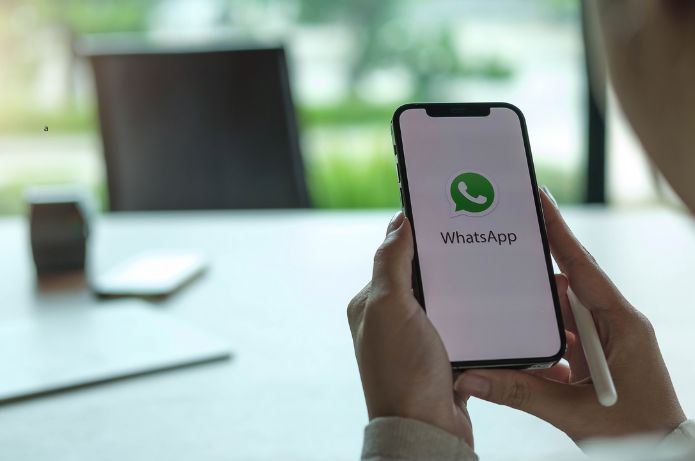
WhatsApp has over 2 billion users in more than 180 countries, making it the most accessed messaging application in Latin America. 96% of the Brazilian population uses WhatsApp (according to Statista's research). This implies that, regardless of your target audience, it is almost certain that they have WhatsApp as one of their favorite communication channels, and it may already be one of the best channels to establish a commercial dialogue with that audience.
For a culture in which the customer should be at the center of any and all communication, marketing, promotion, or advertising actions, starting the dialogue through the customer's favorite channel, or simply having it as an option for a transfer, is already a step in the right direction to achieve much greater engagement.
That said, it's important to remember that engagement goes beyond "communicating"; it represents a much greater proximity between consumer and brand and doesn't come without efforts linked to personalization. Twilio's 2024 Customer Engagement Report indicated that 82% of interactions between customers and brands are digital and that 36% of people spend more with companies that personalize their communications. Through personalization, engagement is achieved, which ultimately generates financial return.
With this line of thought laid out, it's time to think about how to achieve financial returns, in this case starting with WhatsApp as a tool for personalized and engaging dialogue. Recently, Twilio launched an e-book titled "The power of WhatsApp to engage customers: a practical guide." It presents a lot of relevant information on this subject, in addition to bringing powerful insights on the topic.
Based on this, I want to give you an overview of what is discussed in the material, in order to make you curious to check out the full material and start embracing WhatsApp in your journey to improve the relationship between you and your customers. So, let's reflect on the direction of WhatsApp in the customer journey and on six hot tips on how to start using WhatsApp for customer engagement.
Which functions should WhatsApp be directed to?
WhatsApp can be a tool used to send promotional messages, such as loyalty programs, engagement campaigns, customer acquisition, lead qualification, after-sales and loyalty, self-service via chatbot, among other possibilities.
Meta recently launched, and Twilio is now beta testing with customers the new WhatsApp Business Calling functionality, where users can make a voice call to a business using the WhatsApp application with Twilio Programmable Voice. With WhatsApp Business Calling, customers and brands will have a voice channel to communicate for various use cases, such as customer service, support, sales, post-sales, and more.
This powerful application, when combined with customer engagement platforms, becomes a channel for automated yet personalized campaigns. It's even possible to use predictive AI to collect, integrate, and deeply analyze customer data, which will then be used in conversations via the app.
Despite this, it's important to remember that for more robust personalization, it's crucial to collect quality data – first-party data or primary customer data – and an open communication channel, such as WhatsApp, is ideal for this purpose.
Using WhatsApp in marketing and sales
- Know your audience in detail – everything begins with understanding who your audience is. There is no strategy without prior knowledge of preferences, needs, pain points, desires, language, service channels, most loved products/services, etc.;
- Segmentation – personalization is closely linked to segmentation, which defines common characteristics and behaviors among customers. Here, it's possible to use AIs to analyze large volumes of data and track changes;
- Plan – the customer journey needs to be thought through step by step. It's not enough to start a dialogue; there needs to be a marketing flow that leads to sales within the communication designed for WhatsApp;
- Be creative – it's important to explore various message formats, sending conversational messages with text, images, videos, and links to your website, blog posts, or even news related to the segment. To make this more automated, you can implement an intelligent chatbot to interact with the audience through selected buttons or based on keywords;
- Mental triggers – Since messages are instant, you have little time to capture someone's attention. Mental triggers are techniques that stimulate a person to take a certain action. There are several types of triggers, such as urgency, social proof, and authority;
- Click-to-WhatsApp Ads – the idea is to have a link that directs the customer directly to the brand's WhatsApp, allowing them to start a conversation without needing to save the number in their contacts. It's important to remember to monitor the click-through rate, the number of people who actually start a conversation, and the average response time of the attendants.
Additionally, as a bonus tip, using the WhatsApp Business API integrated with Twilio's customer engagement platforms provides scalability and personalization for campaigns and messages; high deliverability; integration of chatbots and intelligent virtual assistants into the app; multichannel support through a single API; more secure and legally compliant third-party data collection; data transfer to over 400 applications with predefined integrations; and automation of processes and the sending of campaigns, content, and notifications.
With these tips, I hope to have piqued your interest in learning more about how to start using this communication channel as a powerful tool to personalize, engage, and achieve better returns, both financially and in customer relationships. If you want to know more, the complete e-book on the topic is available at: The power of WhatsApp to engage customers: a practical guide.
*Vivian Jones's is Vice President for Latin America at Twilio.


 Portuguese (Brazil)
  English
  Spanish
  German
  Chinese (Hong Kong)
  Russian
  Hindi
Hindi  French
  Italian
  Japanese
  Arabic
  Chinese (Taiwan)
  Bengali
  Bulgarian
  Czech
Czech  Danish
  Greek
Greek  Finnish
  Croatian
  Hungarian
  Indonesian
  Korean
  Lithuanian
  Dutch
Dutch  Norwegian
  Polish
  Portuguese (Angola)
  Portuguese (Portugal)
  Romanian
  Slovak
  Slovenian
  Swedish
  Thai
Thai  Turkish
  Ukrainian
  Vietnamese
  Chinese (China)