

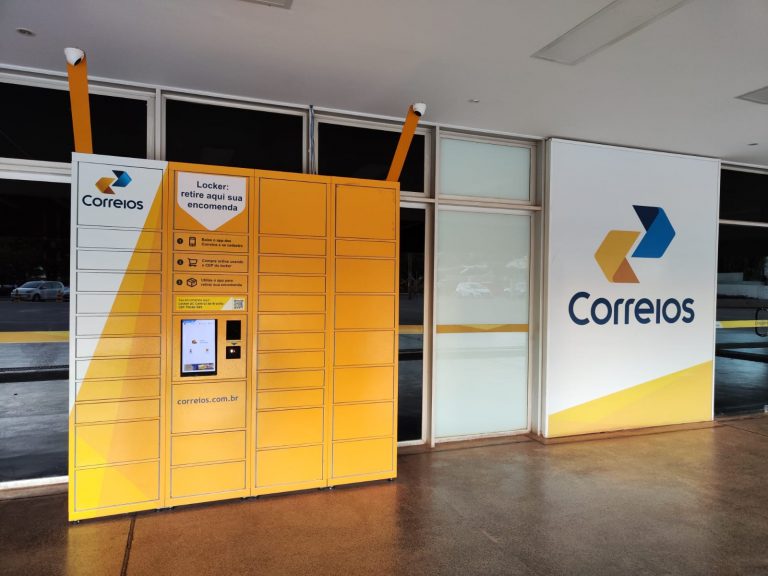
Returning products purchased online has just become more practical. Since January 22, the Post Office has expanded the functionality of its smart lockers, known as Lockers, to include the reverse logistics service. The novelty allows consumers to return their orders to sellers in a simple and fast way, without the need to face queues at agencies.
The initiative, which had been a pilot project in the federal capital since August 2023, is now available in all 184 terminals of the state-owned company. The service serves consumers in the Federal District, Minas Gerais, Paraíba, Rio de Janeiro, Rio Grande do Sul, in addition to the metropolitan and interior regions of São Paulo.
To use the service, the consumer must first contact the store or seller to communicate their return intention. The seller will provide an e-ticket or code specific to the reverse logistics process. With this code in hand, the customer must properly pack the product, leaving the code visible, and attach the content statement.
In Locker, just select the “Send” option, enter the code provided and deposit the package in the compartment that will open automatically. After closing the door, the system will send an email confirming the deposit. The official confirmation of the post will arrive by email within 24 hours.
One of the main advantages of lockers is their location. Installed in large circulation points such as shopping malls and public transport terminals, they offer wider access hours than conventional post offices. This makes the service particularly useful for people who cannot be at home to receive deliveries, do not have a doorman in their condominiums or reside in areas with restriction of delivery.
It is important to note that some additional services, such as checklist or sending multiple objects, are not available in lockers because they require human interaction. For these cases, the services at the agencies remain the recommended option.
The expansion of the reverse logistics service for lockers represents another step in the modernization of the Post Office, aligning with the growing demands of electronic commerce in Brazil.


 Portuguese (Brazil)
  English
  Spanish
  German
  Chinese (Hong Kong)
  Russian
  Hindi
Hindi  French
  Italian
  Japanese
  Arabic
  Chinese (Taiwan)
  Bengali
  Bulgarian
  Czech
Czech  Danish
  Greek
Greek  Finnish
  Croatian
  Hungarian
  Indonesian
  Korean
  Lithuanian
  Dutch
Dutch  Norwegian
  Polish
  Portuguese (Angola)
  Portuguese (Portugal)
  Romanian
  Slovak
  Slovenian
  Swedish
  Thai
Thai  Turkish
  Ukrainian
  Vietnamese
  Chinese (China)